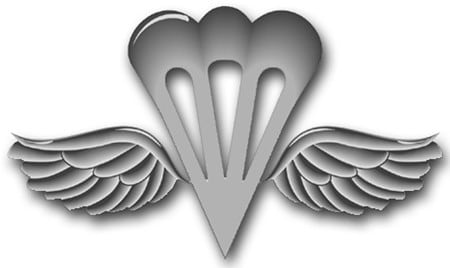
Aircrew Survival Equipmentman (PR)
Aircrew survival equipmentman From Wikipedia, the free encyclopedia (Redirected from Aircrew Survival Equipmentman ) This article may be in need of reorganization to comply with Wikipedia's layout guidelines . Please help by editing the article to make improvements to the overall structure. (September 2013) Aircrew survival equipmentman Parachute rigger badge Issued by: United States Navy Type Enlisted rating Abbreviation PR Specialty Survival Systems Aircrew Survival Equipmentman 1st Class Charles Hall, of Anti-Submarine Squadron Seven (HS-7), makes adjustments to a pilot's helmet Aircrew survival equipmentmen , better known as " parachute riggers ", are personnel of the United States Navy . [ 1 ] They perform a wide range of duties, which include inspecting, maintaining, and repairing parachutes, search and rescue equipment, along with survival kits, medical kits, flight clothing, protective wear, night vision equipment, aircrew oxygen systems, liquid oxygen converters, anti-exposure suits, and anti-gravity suits. PRs operate and maintain carbon dioxide transfer and recharge equipment, operate and repair sewing machines as well as train aircrew and other personnel in parachute rigging and the use of safety and survival equipment. Contents 1 History 2 Training 2.1 Naval Aviation Technical Training Center 2.2 Organizational level course 2.3 Intermediate level course 2.4 Advanced training 2.5 Credit recommendations 2.6 Senior and master rigger licensing 3 Rating badges and parachutist insignia 4 Special operations parachute rigger 5 United States Navy Parachute Team (Leap Frogs) 6 Notable parachute riggers 7 References History The PR rating was established in 1942 to help meet World War II parachute survival requirements. When founded, the PR rating consisted only of the general service rating with career progression from striker status through PRC. Due to safety reasons service members are no longer allowed to "strike" for PR and must attend the appropriate technical schools to be designated in this rating. The original title of the rating was parachute rigger. The rating title was changed to its present title of aircrew survival equipmentman in December, 1965. The reason for changing the title from parachute rigger to aircrew survival equipmentman was to provide a more realistic description of the types of duties performed by PRs. However, aircrew survival equipmentmen maintained their official abbreviated title of "PR" after the 1965 name change. Following a fatal training accident in the 1980s, students are no longer required to complete the basic parachute jump to earn their rating badge. Training Naval Aviation Technical Training Center United States Navy parachute riggers are now trained at Naval Air Station Pensacola during a twelve-week (55 training days) school (the initial school, or "A school", for the rating). The school includes nine courses: three courses of "common core" skills over 19 days, three courses of organizational-level (O-level) skills for 17 days, and three courses of intermediate-level (I-level) skills for 19 days. Throughout the course of instruction, students undergo physical training at least three times a week, are subjected to rigorous inspections every Monday, and march between buildings. Students must maintain a grade average of 80 to remain in the course. Organizational level course O-level begins with instruction in sewing. Students are then taught to manufacture a complete rigger bag from scratch and learn the importance and policies of tool control. The next course is NB-8 parachutes, in which students learn the basics of parachute rigging, inspection cycles, and nomenclature. This is followed by a course about general survival equipment named ESE. The organizational series of courses follows, beginning with survival I fixed wing followed by survival II rotary wing, in which students learn inspection and maintenance concepts unique to squadron-level work. The final O-level subject is survival radios. While the rating is closed to non graduates, O-level certification may be attained by flight crew personnel who maintain and repair equipment at sea in the absence of a parachute rigger. Intermediate level course I-level series of courses starts with NES-12, the Navy's most complicated parachute system, for advanced rigging concepts. Seat survival kits and life preservers complete the course of instruction. One class graduates from the PR A school every seven training days. [ citation needed ] Aircrew survival equipmentmen whip and fold gores of a parachute during a 224-day inspection in the paraloft aboard the USS Abraham Lincoln Advanced training In addition to "A" School, "C" and "F" schools offer specialty training in oxygen systems and sewing machine repair. These schools require the student to enlist for a period of 6 years and are often a prerequisite for senior level positions in a paraloft. Credit recommendations The American Council on Education recommends that tw