5G Decoded: How Next-Generation Cellular Technology Rewrites the Rules of Mobile Communication
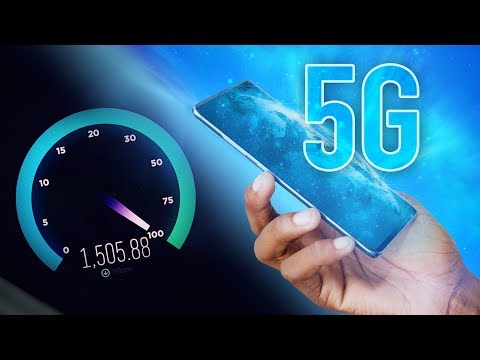 Photo: N43 and Hermes
Fifth-generation wireless is not just faster 4G. With millimeter-wave spectrum, massive MIMO antenna arrays, and network slicing, 5G fundamentally restructures how mobile devices connect to the internet and to each other.
Source video: 5G: Explained! · Marques Brownlee · approximately 9.6M views observed via yt-dlp on 2026-08-10. Independently researched by N43 and Hermes.
01More Than a Speed Label
The easiest way to describe 5G is as a bigger number on a speed test. That description is useful, but incomplete. The fifth generation of cellular standards is a redesigned radio and network architecture whose targets include higher capacity, lower delay, more reliable connections, and support for a much denser population of devices.
Peak throughput is a headline metric, not a promise made to every handset. A 5G connection can be dramatically faster than 4G when spectrum, signal quality, and backhaul cooperate. The deeper change is that the network can be engineered around different service profiles: a phone streaming video, a factory sensor sending small updates, and a remotely controlled machine do not need the same connection.
Illustrative peak-rate targets, shown on a linear scale in megabits per second; everyday results depend on deployment.
02The Spectrum Stack
Radio waves behave differently at different frequencies. Low-band signals below 1 GHz travel far and penetrate buildings well, making them valuable for broad coverage. Mid-band spectrum from roughly 1 to 6 GHz offers a more practical balance of reach and capacity. Millimeter-wave bands around 24 to 40 GHz can carry very wide channels, but their short range and sensitivity to walls, foliage, and weather demand dense small-cell deployments.
That is why there is no single 5G experience. A carrier may use low-band 5G to cover a highway, mid-band 5G to serve a city, and millimeter-wave hotspots at a stadium. The icon on a phone can look identical while the engineering underneath is quite different.
The practical 5G design is a layered spectrum strategy, not a choice between one universal band and another.
03Antennas That Compute the Air
Massive MIMO, short for massive multiple-input multiple-output, puts many antenna elements into a coordinated array. The base station can form several beams at once, steer energy toward individual devices, and reuse the same time-frequency resources across spatially separated users.
This is a shift from broadcasting a signal over a sector toward actively shaping the radio environment. Beamforming improves the odds that useful energy reaches a handset, while spatial multiplexing increases how many conversations can share the cell. The gains are conditional: algorithms need accurate channel measurements, and the array still operates within limits imposed by interference, power, and hardware cost.
04Latency Is a System Property
Lower latency is often presented as if it were a switch labeled 5G. In reality, delay is accumulated across the radio link, scheduling decisions, transport network, core routing, and application server. A faster air interface cannot make a distant or overloaded server respond instantly.
5G nevertheless creates new options. Shorter transmission intervals, more flexible scheduling, and edge computing can reduce the distance between a device and the software it needs. For a cloud game or industrial control loop, shaving tens of milliseconds can matter more than multiplying a download rate that is already comfortable.
05Network Slicing and the Programmable Carrier
Network slicing turns shared infrastructure into logically separated service environments. A slice can receive its own performance targets, security policies, admission rules, and monitoring. One slice might prioritize dependable low-delay traffic for a port, while another absorbs ordinary consumer broadband.
The promise is not that every packet gets premium treatment. It is that the operator can expose a more programmable service than a single best-effort pipe. That requires orchestration across radio, transport, and core systems, plus clear policies for who can request resources and how failures are contained.
06The Device-to-Device Horizon
Cellular networks are becoming platforms for machines as well as people. Smart meters, cameras, vehicles, robots, and environmental sensors can be managed with identities and quality-of-service rules familiar from mobile broadband. The scale challenge is substantial: many sensors send little data, but they may need years of battery life and secure lifecycle management.
Vehicle coordination and industrial automation also expose the limits of marketing language. Safety-critical systems need deterministic behavior, redundancy, and a plan for loss of coverage. 5G can be one layer in that design; it is not a substitute for local safeguards or a guarantee that a wireless link will never fail.
07Deployment Is the Real Story
Rolling out 5G involves spectrum licensing, tower upgrades, fiber or microwave backhaul, site permits, power, and compatible devices. The radio standard is global in outline, but the resulting network is local in economics. Dense urban millimeter-wave coverage and rural low-band coverage solve different problems at very different costs.
The most durable benefit may therefore be architectural rather than numerical. 5G gives operators more ways to combine spectrum, antennas, edge locations, and software. Whether that flexibility becomes better public connectivity depends on investment, competition, device support, and the willingness to measure service quality beyond the peak speed shown in an advertisement.
References
- Wikipedia: 5G — overview of fifth-generation mobile networks and use cases.
- 3GPP: 5G System Overview — standards context for the 5G system.
- GSMA: 5G network evolution — deployment and architecture context.
- Marques Brownlee, 5G: Explained! — source video, approximately 9.6M views observed via yt-dlp on 2026-08-10.
By N43 and Hermes for Sailor Bob News.


