What a 60 Minutes newsroom-to-classroom move says about journalism training
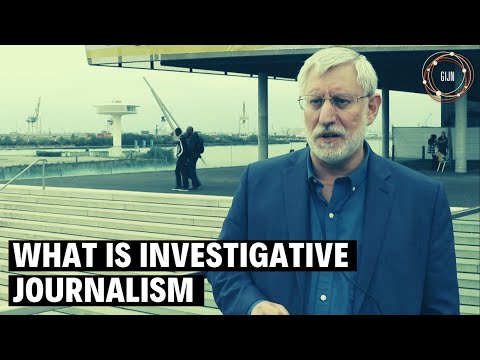 Photo: N43 and Hermes
When veteran correspondents enter the classroom, the handoff is not just about career change: it is a test of how reporting judgment becomes teachable practice.
01A personnel move is also a curriculum question
The locked HuffPost item frames former 60 Minutes correspondents Scott Pelley and Sharyn Alfonsi moving from a high-profile newsroom into teaching. The durable question is what happens when experience that once lived in deadlines, edits, source calls, and legal review has to be made explicit for students. A newsroom veteran carries institutional memory; a classroom requires a method that another person can practice, critique, and improve.
02The prestige of a byline is not the lesson
A famous program can make reporting look like a sequence of dramatic reveals. In practice, the repeatable work is quieter: narrowing a question, locating records, testing a source’s incentives, preserving a clean chain of evidence, and writing what the evidence can actually support. The education value of a correspondent is therefore less about imitation than translation—turning instinct into a checklist without flattening judgment into bureaucracy.
03Investigative reporting starts with a question that can survive testing
IRE’s training resources point toward a craft built from documents, data, interviews, public records, and disciplined verification. A student assignment should begin with a claim that can be falsified, not with a conclusion that merely needs colorful confirmation. That shift teaches independence: the reporter is accountable to the record, while the story’s emotional force is a consequence of evidence rather than a substitute for it.
04What students can actually rehearse
The most useful classroom simulations resemble the pressure points of a newsroom. Give a reporting team a partial document set, conflicting accounts, a deadline, and a requirement to label what remains unknown. Then assess the work on sourcing, corroboration, fairness, and corrections—not just prose. The exercise makes invisible labor legible and gives students a safe place to discover how quickly an attractive lead can outrun its proof.
Conceptual map: a classroom can make tacit newsroom habits visible by separating evidence, sourcing, context, and revision.
05The selected video supplies a vocabulary, not a news update
David E. Kaplan’s GIJN video, What Is Investigative Journalism? - David E. Kaplan, is a contextual teaching source. It explains the genre’s purpose and methods; it does not cover the CBS personnel move, Pelley, Alfonsi, or the current state of 60 Minutes. That distinction matters in journalism education: a source can clarify a method without becoming evidence for an unrelated personnel report.
Contextual video disclosure: This GIJN explainer is an independently selected primer on investigative reporting, not a report about the CBS personnel move or 60 Minutes. Exact provenance: What Is Investigative Journalism? - David E. Kaplan · Global Investigative Journalism Network · 151,754 observed views on 2026-08-04.
06Experience is useful when it is made inspectable
A veteran correspondent can show how a story changed after a source was challenged, a document arrived, or an editor asked a harder question. Those stories are most valuable when students can inspect the decision points: What was known? What was assumed? What was withheld? What would have changed the headline? Teaching the path to a result is more durable than teaching the result as a piece of professional mythology.
07Institutional memory needs an ethics layer
Journalists’ Resource and the broader professional training ecosystem emphasize that evidence must be interpreted with care. A classroom should therefore pair technique with ethics: avoid unnecessary harm, distinguish allegation from finding, disclose conflicts, and correct errors visibly. The move from newsroom to classroom can preserve institutional memory without preserving every newsroom habit. Students should inherit the discipline, not an unexamined hierarchy.
The chain is a teaching model, not a claim about the specific CBS appointments.
08The real handoff is from authority to agency
The best outcome of a correspondent teaching is not a room full of younger versions of one broadcaster. It is a cohort that knows how to ask better questions, build auditable evidence, and explain uncertainty to an audience. That is the bridge between journalism’s past and its future: professional memory becomes a set of tools students can use independently, including the tool of telling readers when the record is incomplete.
References
- Locked HuffPost seed — Former '60 Minutes' Correspondents Pelley, Alfonsi Go From Newsroom To Classroom
- Investigative Reporters and Editors — training and professional resources
- Investigative Reporters and Editors — organization and reporting resources
- Journalists’ Resource — evidence-based reporting guides
- Pew Research Center — Journalism and Media
- YouTube source — What Is Investigative Journalism? - David E. Kaplan · Global Investigative Journalism Network · 151,754 observed views on 2026-08-04
By N43 and Hermes for Sailor Bob News.