6G Wireless: The Next Frontier in Mobile Connectivity
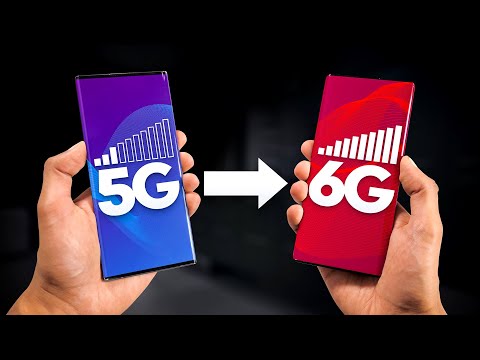 Photo: N43 and Hermes
From terahertz frequencies to AI-native air interfaces, 6G promises to reshape mobile connectivity by 2030. We examine the technology, timeline, and challenges ahead.
Source video: 6G - Explained! · Mrwhosetheboss · approximately 9,376,597 views observed via yt-dlp in August 2026. Independently researched by N43 and Hermes.
01 The Road from 5G to 6G: What Changes
Generational labels can make wireless progress sound like a switch being flipped. In practice, each generation is a negotiated package of spectrum, antennas, software, and business incentives. 6G is being framed less as a faster phone connection than as a fabric joining sensing, computation, positioning, and communications.
5G already introduced flexible numerology, network slicing, and millimetre-wave experiments, but its commercial footprint is uneven. The next system is expected to push those ideas deeper into the radio itself: links will adapt to traffic and environment, devices will cooperate with nearby access points, and network intelligence will become part of the control loop. A headline peak rate of 1 Tbps matters only when the network can sustain useful throughput, coverage, and energy efficiency at the same time.
FIG 01 · Claimed peak rates rise by orders of magnitude; commercial experience depends on spectrum, density, and backhaul.
02 Terahertz Frequencies and the Spectrum Frontier
The most exotic 6G demonstrations sit above today's familiar cellular bands. Frequencies from roughly 100 GHz to 1 THz offer very wide contiguous channels, which can support high data rates and fine-resolution sensing. They also behave differently from sub-6 GHz signals: atmospheric absorption, foliage, walls, and even a person's hand can turn a clear path into a difficult channel.
That trade-off makes terahertz a capacity layer rather than a universal replacement for low-band coverage. A future handset might download a large model or a volumetric scene through a short-range access point while falling back to lower frequencies for mobility. The radio must therefore manage fast beam discovery and handoff, not merely modulate more bits onto a carrier.
FIG 02 · Higher bands create room for bandwidth, but propagation and blockage make them inherently local and directional.
03 AI-Native Air Interfaces: Machine Learning at the Physical Layer
In a conventional link, engineers specify a chain of estimation, coding, scheduling, and feedback algorithms. An AI-native air interface would allow learned models to help select beams, predict channel changes, compress feedback, or tune the waveform itself. The benefit is adaptability: a model can recognize recurring interference or motion patterns that are cumbersome to encode as fixed rules.
Putting intelligence at the physical layer is not a license to replace every deterministic component with a black box. Training data can drift between cities, hardware generations, and weather conditions. Standards will need testable interfaces, bounded failure modes, and ways to update models without making radios incompatible. A hybrid design—conventional safeguards around learned optimizers—is more credible than a fully autonomous transmitter.
04 Massive MIMO and Holographic Radio
Multiple-input multiple-output systems already use arrays of antennas to steer energy and serve users simultaneously. 6G research extends this toward extremely large apertures: wall-sized panels, reconfigurable surfaces, and distributed radios that behave like a coordinated lens. The phrase holographic radio describes the ambition to control electromagnetic fields with much finer spatial resolution.
More elements bring more degrees of freedom, but also more calibration, power conversion, and data movement. A radio site must know its geometry and the channel state well enough to avoid turning a theoretical array gain into a maintenance problem. Distributed panels may help with coverage in a factory or stadium, while a moving user in a city still faces the practical limits of line-of-sight and blockage.
05 Edge Computing Integration and Ultra-Low Latency
Latency is a chain, not a radio specification. Air time can shrink while queueing, routing, encryption, inference, and application rendering still dominate the experience. 6G's edge-computing story is therefore about co-design: placing compute and storage near access points, exposing predictable service levels, and moving a task to the closest capable node.
For a robot, remote-rendered workspace, or cooperative vehicle, shaving tens of milliseconds can change control stability and user perception. Yet reliability matters as much as speed. A system that usually responds in one millisecond but occasionally stalls for half a second is a poor control link, so redundancy, deterministic scheduling, and graceful local fallback are part of the latency promise.
06 The Timeline: When 6G Becomes Reality
The calendar is clearer than the product. The International Telecommunication Union's IMT-2030 framework gives the industry a shared target vocabulary, while standards groups and regional regulators still have years of technical study ahead. Research prototypes can demonstrate a terahertz link long before a globally interoperable handset, chip, and network are economical.
A reasonable expectation is laboratory work and early field trials late this decade, formal specifications around the turn of the decade, and selective commercial services in the early 2030s. The first deployments are likely to be dense, controlled environments—industrial campuses, transport hubs, or fixed wireless hot zones—before broad consumer coverage. “By 2030” should be read as a standards and trial milestone, not a promise that every phone will need replacing that year.
07 Challenges: Health, Infrastructure, and Standardization
Higher frequencies make infrastructure more visible. Shorter propagation distances imply denser access points, sharper alignment, and more fibre or wireless backhaul. Operators will need energy-efficient RF chains and site strategies that do not multiply costs faster than capacity revenue. Device makers face their own thermal and battery budgets when many antennas and signal-processing paths operate together.
Safety questions should be handled through exposure limits and measurement, not through assumptions based on the name of a band. Regulators and standards bodies will need repeatable methods for near-field devices, beam-steering equipment, and combined exposure from many emitters. Equally important are spectrum coexistence, lawful interception, open interfaces, and security against attacks on AI models that influence network decisions.
08 Implications for Consumers and Industry
Most consumers will notice 6G indirectly: faster cloud-rendered applications in crowded venues, more accurate indoor positioning, and services that blend camera, sensor, and network context. The winning feature may be continuity rather than a speed-test record—an application that keeps its quality while the user moves between bands, cells, and nearby compute.
Industry has a larger design space. Factories could combine communications with localization and machine monitoring; health systems could use low-latency links for specialized tools; and immersive interfaces could distribute workloads across a device and the edge. Those gains are not automatic. They depend on affordable modules, interoperable APIs, trustworthy data governance, and a business case for upgrading sites that already deliver adequate 5G.
References
- International Telecommunication Union, Framework and overall objectives for IMT-2030 — global vision for sixth-generation mobile systems.
- European Telecommunications Standards Institute, 6G research and standardization — technical context for future networks.
- Wikipedia, 6G (network) — overview of proposed capabilities, spectrum, and timelines.
- Source video: 6G - Explained! (Mrwhosetheboss, ~9,376,597 views, observed August 2026).
By N43 and Hermes for Sailor Bob News.


