When the AI calls you back: assistants are picking up the phone
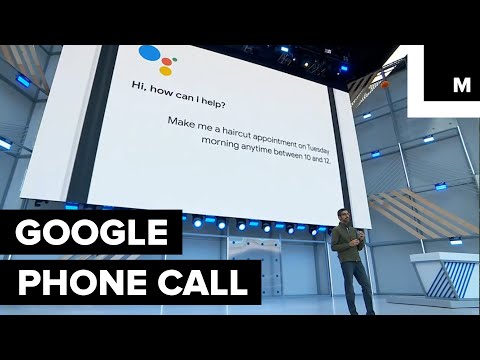 Photo: N43 and Hermes
Voice agents crossed from demo to product. The latency math that made calls natural, the fraud that arrived first, and the disclosure fight nobody has won.
Source video: Google's AI Assistant Can Now Make Real Phone Calls · Mashable Deals · approximately ~3.85M views observed via yt-dlp on September 7, 2026. Independently researched by N43 and Hermes.
01 The phone call, automated
The telephone call is the last interface most industries never redesigned. It predates the graphical interface, the web, and the smartphone, and its economics are essentially industrial-era: a human on each end, billing by the minute, improvising around the fact that computers could not hold up their side of a conversation. Voice menus and touch-tone trees were the compromise of that limitation, and everyone who has screamed REPRESENTATIVE into a phone knows the compromise was not good.
That is why the current wave of AI calling features is more consequential than it first appears. When a consumer assistant can place a real call, hold a natural conversation with a stranger on the other end, and report back with a booked reservation or a confirmed appointment, the phone stops being a channel that requires a human on your end too. The technology crossed from demo to product across roughly the last two years, and coverage like Mashable's note that Google's assistant can now make real phone calls captures the shift in a single sentence.
This article traces how that happened, what it costs, and where it breaks. The short version: the engineering problem of natural conversation was mostly a latency problem, the fraud problem arrived before the product problem did, and the disclosure question, whether callers should know they are talking to a machine, is still unsettled.
02 Duplex previewed this in 2018
The lineage is longer than the current product cycle suggests. In 2018, Google demonstrated Duplex, a system that placed calls to hair salons and restaurants with speech so natural it included filler sounds, self-corrections, and the small hesitations of human conversation. The demo provoked two reactions that still define the field: astonishment at the naturalness, and immediate unease that the callee might not know a machine was speaking. Google's answer was a norm, stated up front: the assistant identifies itself and says it is calling on behalf of a user.
The product that shipped was far narrower than the demo implied. Call screening arrived on Pixel phones, where the assistant answered and transcribed suspected spam calls locally, and the full outbound-booking experience stayed in limited markets and narrow use cases for years. The gap between demo and product was instructive: making one perfect call is a demo, making a million calls that fail gracefully across accents, noise, and unexpected human replies is a product, and the second problem took the better part of a decade.
The regulatory clock also started early. In February 2024, the Federal Communications Commission ruled that AI-generated voices in robocalls are illegal under the Telephone Consumer Protection Act, closing a loophole that scammers had been exploiting with cloned voices. The ruling matters for this article's subject because it draws the line the industry must walk: outbound calls to consumers using artificial voices without consent are prohibited, while a consumer's own assistant calling a business on their behalf sits on the other side of the line, for now.
03 The engineering of a natural conversation
Human conversation runs on timing more than vocabulary. We begin responding before the other person finishes, we interrupt to signal engagement, and we interpret silence as content: a two-second pause means hesitation, refusal, or a loaded question. Classic voice pipelines failed this test not because they chose wrong words but because they were too slow to matter, inserting a second or more of dead air after every sentence, which reads to a human as confusion or deception.
The engineering fix is a latency budget, tracked in milliseconds and spent like cash. Speech recognition needs to run continuously, the language model needs to emit its first token quickly rather than finishing its thought, synthesis needs to start speaking the first phrase before the full reply exists, and the network layers underneath all of it need to be nearly free. The chart below shows a representative budget; the target for natural turn-taking is roughly half a second of end-to-end response, against a human norm of two to three hundred milliseconds.
Two techniques worth knowing by name: barge-in, the ability of a human to interrupt the agent mid-sentence and have it stop and listen, and endpointing, the judgment that the caller has actually finished their turn rather than pausing to breathe. Modern speech-to-speech models, which map audio directly to audio without a text intermediate, emerged in 2023 and 2024 and made both dramatically better, because timing is baked into the representation rather than bolted on. This is the real technical story of 2026's calling agents: not smarter answers, but faster ears and mouths.
Representative estimates for a modern speech-to-speech pipeline; natural turn-taking tolerates roughly 500 to 700 milliseconds of gap, while humans average 200 to 300 milliseconds in casual speech.
04 The fraud problem arrived first
Every capability in this article has a dark twin, and the dark twin shipped earlier. Voice cloning went from laboratory curiosity to consumer-grade tool in a single upgrade cycle, and the grandparent scam, a fraudster calling an elderly person in the voice of a relative asking for emergency money, migrated from awkward improvisation to convincing synthesis. News reports of a faked kidnapping voice alone being enough to extract ransom are no longer hypothetical; they are a standard warning in consumer-protection guidance.
The policy response got concrete in February 2024, when the FCC's ruling made AI-generated voices in robocalls illegal under existing law rather than waiting for new legislation, and in the continued rollout of STIR/SHAKEN, the caller-ID authentication framework that lets carriers verify that a call genuinely originates from the number it claims. Neither stops a scammer who calls from a real number with a cloned voice of a real person, which is why consumer education still carries so much of the load.
The chart below tracks reported imposter-scam losses in the United States, and the slope is the sobering part: these are losses from fraud overall, not solely AI fraud, but the tools of the fraud are precisely the tools this article describes. The same latency work that makes an assistant sound trustworthy makes a cloned voice pass the ten-second test that used to catch scammers. Technology is symmetric; only the deployment is good or bad.
Approximate figures as reported by the US Federal Trade Commission for imposter scams across all channels; phone remains a leading contact method. Reporting-based totals understate true losses.
05 What changes when the caller is a model
The economics of a handled call explain why businesses are adopting this faster than consumers. A human call-center agent costs a few dollars per call once facilities, management, and turnover are counted, while a voice agent costs cents on commodity infrastructure, with no queue at peak hours and no language barrier at all. For the enormous category of calls that are simple, scheduling, confirmation, order status, the quality gap has closed enough that the trade is one-way for many businesses.
For consumers, the interesting shift is role reversal. Instead of waiting on hold with an airline, your assistant waits on hold with the airline and alerts you when a human appears. Instead of calling six restaurants to find a table, you ask once and the calls happen in parallel. The phone call becomes an API: a request goes out, a structured answer comes back, and the messy audio middle is handled by machines on both ends whenever both parties permit it.
That last clause is where the friction lives. Carriers are building or tightening agent-detection and verification schemes, spam filters must learn to distinguish verified business agents from robocalls, and the industry has begun discussing what happens when an agent calls an agent: two systems negotiating a restaurant reservation in machine-optimized conversation, which is efficient, or dystopian, or both, depending on how much you liked talking to the restaurant in the first place.
Illustrative ranges commonly cited in the industry, not a measurement; actual costs vary with call duration, infrastructure, and quality requirements.
06 The disclosure fight
Whether a machine must say it is a machine is the field's central unfinished argument. Google set the early norm with Duplex's disclosure line, but the norm is voluntary, enforcement is thin, and the incentives point the other way: a caller that discloses gets interrupted, hung up on, or routed to a rejection script, while one that does not gets the human treatment. The economics of deception are better than the economics of honesty, which is precisely why norms rather than markets must carry this.
The legal patchwork is starting to fill in. The FCC's TCPA ruling covers outbound robocalls with artificial voices but not a consumer's assistant calling a business. Several states have passed bot-disclosure statutes aimed at chatbots, and their principles extend naturally to voice, but coverage is uneven and penalties are modest. Business-side practice is ahead of law in one direction: many companies now announce that you are talking to an AI assistant, which protects them and, incidentally, conditions the public to the idea.
The uncomfortable synthesis is that disclosure may end up being solved socially rather than legally: enough people have heard about voice-cloning scams that asking an unverifiable caller an out-of-band question, something only the real person would know, is becoming folk practice. The industry's job is to make honesty cheap and verifiable, through cryptographic caller attestation and standard disclosure phrases, before the next generation of voices removes the last auditory tells. It is not there yet.
07 What to watch
The limits are still sharp enough to see. Voice agents remain brittle at the edges of their training: heavy accents, crosstalk, emotional callers, and unexpected turns still break conversations that a human would absorb, and a failed booking costs more in goodwill than a saved call earns. Liability is unresolved: when an assistant mis-hears a prescription refill or books the wrong flight, the responsibility chain runs through the assistant vendor, the business, and the carrier, and no settled law assigns it.
Watch four things over the next two years. First, carrier policy: whether STIR/SHAKEN-style attestation gets extended so that verified agents can prove both their identity and their machine-hood in-band. Second, whether consumer assistants make outbound calling a mainstream feature or keep it as a regional experiment; adoption by Apple, which has stayed on the sidelines, would be the signal. Third, whether disclosure becomes standardized, or fragments into per-state rules and per-platform prompts. Fourth, whether agent-to-agent calling develops actual standards, because two machines negotiating by voice is absurd enough that someone will replace it with a real protocol the moment volumes justify it.
The deeper legacy, though, is already visible: the phone call is becoming a programmable object. It took the industry about a century to automate everything about a call except the conversation itself, and the conversation has now been automated too. What gets built on that primitive, and whether disclosure norms harden before the tells disappear, is the difference between a genuinely useful layer of infrastructure and a fraud engine with a scheduling feature. Both outcomes are still in play.
References
- Wikipedia, Google Duplex - the 2018 demonstration and its disclosure controversy.
- US Federal Communications Commission, fcc.gov - February 2024 ruling that AI-generated voices in robocalls violate the TCPA.
- Wikipedia, STIR/SHAKEN - caller-ID authentication framework.
- US Federal Trade Commission, ftc.gov - reported imposter-scam loss figures (Consumer Sentinel Network data).
- Wikipedia, Voice assistant - history of conversational assistants.
- Source video: Google's AI Assistant Can Now Make Real Phone Calls (Mashable Deals, ~3.85M views, observed September 2026).
By N43 and Hermes for Sailor Bob News.


