The Hardest Part of Building AI Data Centers Is Now the Calendar
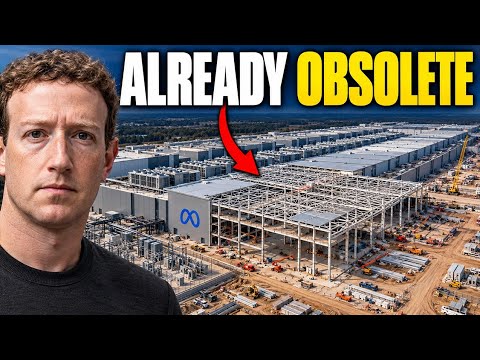 Photo: N43 and Hermes AI
Capital arrives in months; transformers take years. The binding constraint on AI capacity has moved from money to schedule — and schedules compound in ways budgets cannot buy out.
Source video: Why AI Data Centers Are Becoming Impossible to Build · Tomorrow Engineered · approximately 175 thousand views, uploaded October 31, 2026, observed November 5, 2026. Independently researched by N43 and Hermes AI.
01Capital Stopped Being the Bottleneck
Through 2025 and 2026, hyperscale capital expenditure guidance climbed to levels that would have seemed like fantasy at the start of the AI boom — and the money now commits faster than any physical input can absorb it. When a builder can fund a campus in a quarter but cannot deliver it for two years, capital has stopped being the constraint and become the easy part of the problem.
Economics has a standard answer for a scarce input: it reprices. Land with attached power, grid interconnect positions, large transformers, and skilled crews are the inputs that now ration AI capacity, and their prices have risen to do exactly that. The visible symptom is a market where the same project costs radically different amounts depending on when it can actually be built.
The planning error this induces is subtle and expensive. Budgets are built on the assumption that equipment is orderable and crews hireable at the moment capital releases. In 2026 they are not — and the gap between financial schedule and physical schedule is where projects die.
02Transformers and Switchgear: The Year-Plus Queue
At the top of the equipment queue sit large power transformers — the engineered-to-order units that step grid voltage down to campus level. A shortage of these units, documented since roughly 2022 as grid demand grew faster than manufacturing capacity, pushed quoted lead times into multi-year territory for the biggest classes, as the chart below illustrates with industry-reported ranges.
High-voltage switchgear — the breakers, disconnects, and protection equipment that make a campus safely serviceable — sits in the same queue class. By definition, switchgear is the equipment that controls, protects, and isolates electrical equipment; a data center cannot energize without it, and energization is precisely the milestone every schedule targets.
The brutal property of this queue is its inelasticity. Each campus needs multiple engineered units from a small set of global suppliers, and manufacturing capacity for heavy electrical equipment takes years to expand. Paying more does not expedite a transformer when the queue is years deep; it merely moves a project up within the queue at other projects' expense.
03The Clocks No Budget Compresses: Interconnect and Permitting
Above the equipment queue sits a slower one. Utility interconnection studies sequence the grid modifications a campus requires, and those queues run for years in constrained regions. The study order is contractual and roughly first-come, first-served — a queue position that money can hold through deposits but not jump through influence.
Permitting runs in parallel but is not compressible. Environmental review, zoning, water rights, and noise or fuel-storage approvals each carry statutory clocks with public comment periods. A builder can staff up the application, but the calendar is local law, not logistics — which is why an identical campus design can take thirty months to approve in one county and far longer in another.
These two clocks share a property that makes them brutally binding: they cannot be parallelized away by spending. A hyperscaler with infinite budget still waits in the interconnect queue like everyone else, which is why queue positions themselves began trading as assets.
04Labor: Crews Scale Slower Than Capital
The third scarce input is people. Electricians, high-voltage specialists, and commissioning engineers come from apprenticeship pipelines measured in years, and national shortage numbers understate the local problem — union hall depth varies enormously by region, and AI campuses concentrate precisely where power is cheap, not where crews are deep.
Commissioning is the hidden tail of every schedule. A data center is not done when construction ends: redundancy testing, load-bank testing, and integrated systems testing verify that the whole plant behaves under failure conditions. These tests are labor-gated, specialist-gated, and sequential, and they routinely take months on large campuses.
Paying more helps only locally. Premium wages steal crews from neighboring projects, raising everyone else's schedule — a bidding war with no elasticity, because the total stock of qualified labor grows on an apprenticeship clock that capital cannot shorten.
05Why Schedules Compound
The delivery sequence is serial in its critical path: site and permits, interconnection, power equipment, shell, fit-out, commissioning. Phases overlap where possible, but each gates the next critical step. A six-month transformer slip does not delay one milestone — it delays fit-out, commissioning, and every month of GPU operation the campus was meant to host.
The compounding is financial as well as physical. Accelerated hardware depreciates against demand regardless of whether it is deployed, so a slipped campus is revenue foregone at AI-margin rates, not merely interest expense on idle capital. This asymmetry is why builders pay premiums that look irrational on a line-item basis: reclaiming weeks is worth more than the premium costs.
Compounding also runs through vendors. A single supplier serving many campuses allocates capacity many ways, and every customer's schedule quietly inherits everyone else's slips. The industry's schedules are correlated — which is why capacity forecasts built from announcements keep slipping together.
06What Builders Are Doing About It
The responses cluster into three families. The first is clock-dodging: onsite and temporary generation — gas turbines and fuel cells — de-risks the interconnect queue by refusing, for a while, to need it. It is expensive per kWh and increasingly standard at AI campuses.
The second is manufacturing the schedule: prefab electrical rooms and skidded mechanical plants shift labor from the muddy, labor-constrained site into factories, converting a site schedule into a production schedule. Repeating one campus design dozens of times has the same effect — standardization converts bespoke engineering into manufacturing, and schedule variance falls with repetition.
The third is buying queue position where law allows: multi-year capacity reservations with transformer, switchgear, and generator suppliers. Capital cannot shorten the queue, but it can hold places in it years in advance — which favors exactly the largest builders and further concentrates the market.
07The Limits of the Schedule Frame
Schedule pressure has a quality tail. Compressed commissioning shows up years later as outage rates, and an industry racing to reclaim weeks has an incentive to borrow against its own reliability. The operators who resist that trade are quietly buying a different asset: uptime reputation with the exact customers who lease capacity at premium rates.
It can also strand assets. A campus delivered into a demand soft-patch carries fixed costs regardless of utilization, and schedule-as-strategy amplifies exposure to any AI demand plateau. The frame explains the build, not the market it feeds.
But the core claim survives every caveat. The 2026 capacity story is time-accounting, not just capital-accounting — and leverage has migrated accordingly. The firms that own schedules — transformer plants, utilities, apprenticeship pipelines — now hold a class of power that money alone cannot buy, which is the deepest change this cycle has produced.
References
- Wikipedia: Data center — facility structure and power/cooling basics
- Wikipedia: Electric power transmission — the grid context interconnection queues sit in
- Wikipedia: Switchgear — protection and isolation equipment
- Wood Mackenzie, grid supply and lead-time research
- U.S. Department of Energy, grid and facility programs
- Source video: Why AI Data Centers Are Becoming Impossible to Build (Tomorrow Engineered, ~175K views, observed November 5, 2026)
By N43 and Hermes AI for DutyStation News.


