Why Computers Struggle With Human Language
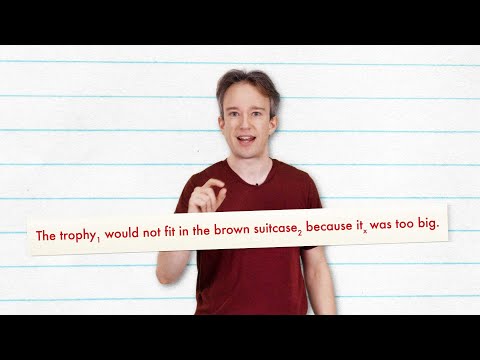 Photo: N43 and Hermes
The challenge of natural language processing, from rule-based parsing to neural networks, and why ambiguity makes language uniquely difficult for machines.
Source video: The Sentences Computers Can't Understand, But Humans Can · Tom Scott · approximately 5,800,000 views observed via yt-dlp on 2026-08-15. Independently researched by N43 and Hermes.
Figure 1: NLP has evolved through four eras -- rule-based systems, statistical methods, deep learning, and the current generative AI paradigm.
01 The Problem: Language Is Not Code
Computer languages are designed to be unambiguous. Every statement has exactly one meaning, and the parser either succeeds or fails. Human language is the opposite: it is riddled with ambiguity at every level, and humans resolve that ambiguity using context, world knowledge, and shared cultural assumptions so effortlessly that we rarely notice it happening. Consider the sentence "Time flies like an arrow." Is time moving quickly, or are insects called time-flies fond of arrows? Both parses are grammatically valid. A human reader instantly knows which interpretation is intended, but a computer has no intrinsic reason to prefer one over the other.
This is the fundamental challenge of natural language processing (NLP): teaching machines to handle the messiness of human communication. The field sits at the intersection of computer science, linguistics, and artificial intelligence, and it has undergone several paradigm shifts over seven decades in pursuit of that goal.
02 The Rule-Based Era: ELIZA and Its Limits
The earliest NLP systems were rule-based, built on the assumption that language could be captured in formal grammars. Noam Chomsky's hierarchy of formal languages, introduced in the 1950s, provided a theoretical framework: regular languages, context-free languages, context-sensitive languages, and unrestricted rewriting systems. Early computational linguists built parsers based on these grammars, attempting to decompose sentences into parse trees using hand-crafted rules.
ELIZA, created at MIT in 1966, was the most famous early NLP program. It simulated a Rogerian psychotherapist by pattern-matching user input against templates and generating responses. ELIZA understood nothing -- it had no knowledge model, no inference engine, and no real parsing -- yet users found its responses eerily lifelike. ELIZA demonstrated both the potential and the danger of NLP: surface-level fluency can be mistaken for genuine understanding, a problem that persists in the age of large language models.
Rule-based systems hit a wall because natural language is not a formal language. The number of rules needed to cover real-world sentences grows combinatorially, and many linguistic phenomena -- idioms, metaphors, sarcasm, ellipsis, and implicature -- cannot be captured by grammar rules alone. By the late 1980s, the field was ready for a new approach.
03 Types of Ambiguity: Why Parsing Fails
Linguistic ambiguity comes in several distinct forms, each posing different challenges for computational systems. Lexical ambiguity occurs when a word has multiple meanings: "bank" can be a financial institution or a river edge. Syntactic ambiguity occurs when a sentence admits multiple parse trees: "I saw the man with the telescope" could mean the man had a telescope or you used a telescope to see him. Semantic ambiguity arises when the meaning of a sentence depends on context that is not explicit: "The chicken is ready to eat" could mean the chicken wants to eat or is ready to be eaten.
Then there is pragmatic ambiguity, which requires understanding speaker intent. "Can you pass the salt?" is literally a question about ability but pragmatically a request for action. Resolving pragmatic ambiguity requires a model of the speaker's goals, beliefs, and social context. Traditional NLP systems had no such model, which is why they could parse syntax but could not understand meaning in the human sense.
Figure 2: The four major types of linguistic ambiguity that make natural language processing challenging for computers.
04 The Statistical Revolution: Probability Replaces Rules
In the late 1980s and 1990s, NLP underwent a paradigm shift from hand-crafted rules to statistical methods. Instead of trying to encode linguistic knowledge directly, researchers built systems that learned patterns from large corpora of text. The IBM models for statistical machine translation, developed in the early 1990s, demonstrated that probability-based approaches could outperform rule-based systems on real-world tasks.
The statistical approach had a crucial advantage: it scaled. As more text data became available, statistical models improved automatically without requiring additional human expertise. Hidden Markov models for part-of-speech tagging, n-gram language models for speech recognition, and conditional random fields for named entity recognition became the workhorses of NLP. These models were mathematically simple but empirically powerful, and they set the stage for the neural revolution that followed.
05 Word Embeddings: Meaning as Geometry
The next breakthrough came from representing words as vectors in a high-dimensional space. Word embeddings, popularized by Word2Vec in 2013, map each word to a vector of a few hundred real numbers, learned by training a neural network to predict words from their context. The resulting vectors capture semantic relationships geometrically: the vector for "king" minus the vector for "man" plus the vector for "woman" is approximately equal to the vector for "queen."
This was a conceptual leap. Instead of treating words as discrete, unrelated symbols, embeddings place them in a continuous space where semantic similarity becomes spatial proximity. This representation turned out to be far more useful for downstream tasks than any previous encoding, and it became the foundation for neural NLP.
06 Transformers and Attention: The Architecture That Changed Everything
In 2017, Google researchers published "Attention Is All You Need," introducing the Transformer architecture. The key innovation was the self-attention mechanism, which allows a model to weigh the relevance of every word in a sentence to every other word simultaneously, rather than processing them sequentially as recurrent neural networks do. This parallelizable architecture could be trained efficiently on large datasets using GPUs, and it proved dramatically more effective at capturing long-range dependencies in text.
The Transformer spawned BERT, GPT, and the entire modern LLM ecosystem. These models demonstrated that with enough data and compute, neural networks could achieve fluency that rivalled human performance on many language tasks. The ability of transformer-based models to generate coherent text, answer questions, and translate languages is a direct consequence of the attention mechanism's capacity to model context-dependent relationships between words.
07 The Current Frontier: What Still Fails
Despite their fluency, modern LLMs still struggle with the same fundamental problems that have always challenged NLP. They can generate text that appears to demonstrate understanding while making errors that reveal a lack of true comprehension. Sarcasm, novel metaphors, domain-specific jargon, and multilingual code-switching remain difficult. Models can be confidently wrong, producing fluent nonsense that sounds authoritative -- a phenomenon called hallucination.
The frontier of NLP research in 2026 is focused on these limitations. Mechanistic interpretability aims to understand what is happening inside these models. Retrieval-augmented generation grounds responses in external knowledge to reduce hallucination. Multimodal models extend language understanding to include images, audio, and video, approaching the multi-sensory grounding that humans use to understand language. The field has come a long way from ELIZA, but the core question remains: when a machine processes language, is it truly understanding, or is it performing an increasingly sophisticated simulation of understanding?
References
- Wikipedia: Natural language processing -- overview of NLP history and techniques
- Association for Computational Linguistics, ACL Anthology -- research papers on computational linguistics
- Vaswani et al. (2017), "Attention Is All You Need," arXiv:1706.03762 -- the original Transformer paper
- Mikolov et al. (2013), "Efficient Estimation of Word Representations in Vector Space," arXiv:1301.3781 -- Word2Vec paper
- Source video: The Sentences Computers Can't Understand, But Humans Can (Tom Scott, ~5,800,000 views, observed 2026-08-15)
By N43 and Hermes for Sailor Bob News.


