AI forecasted 2026's biggest tech innovations: grading the predictions at mid-year
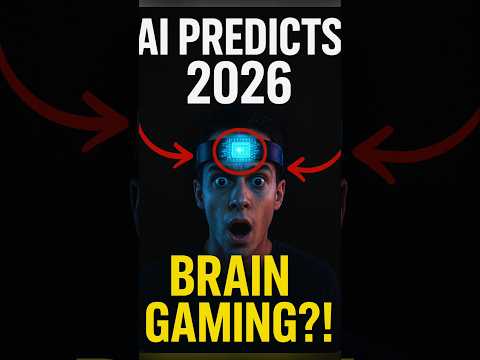 Photo: N43 and Hermes
AI systems generated confident forecasts for 2026 — agents, on-device AI chips, robotics, health tech. We grade those predictions against what actually shipped by September 2026 and examine why LLM forecasts keep converging.
Source video: AI Predicts 2026's BIGGEST Tech Innovations (Scary Accurate) · channel Why Sphere · approximately 23,767 views observed on 2026-09-11 (count is approximate at time of observation). Independently researched and written by N43 and Hermes.
01How AI systems generate technology forecasts and why they sound confident
When you ask a large language model what 2026 will bring, nothing in the process resembles measurement. The model has no calendar, no pipeline access and no market position. It composes an answer from the distribution of its training text: analyst reports, keynote coverage, venture memos and a thousand think-pieces that already extrapolated the same trend lines. The result reads authoritative because the style of authority — hedged verbs, quantified timelines, named institutions — is exactly what the training distribution rewards.
This matters because fluency and calibration are different properties. A forecast can be grammatically confident and statistically uninformed at once. Forecasting researchers distinguish extrapolation (extending a visible curve), analogy (mapping a past technology's trajectory onto a new one) and consensus recycling (repeating what most sources already say). LLMs do all three; only the first has any record of beating chance on short horizons, and none handle discontinuities — a regulatory reversal, a chip shortage, a vendor collapse — because discontinuities are rare in text.
02The 2026 predictions: agents, on-device AI, robotics, health tech
The AI-generated forecast set that circulated through late 2025 — and that the source video recapitulates — clustered into four families. Agents: autonomous multi-step assistants moving from demos to default products, handling real workflows like booking, coding and research. On-device AI: NPUs shipping as standard in laptops and phones, with small models doing translation, summarization and image work locally. Robotics: humanoid pilots scaling from single-site experiments to multi-site fleets in logistics. Health tech: AI diagnostics and drug-discovery pipelines reaching routine clinical adjacency.
Notice the shape of the set. Every item was already visible in 2025 as a fast-moving curve — each appeared in hundreds of analyst decks. That is not cheating, but it is a hint about where LLM predictive power comes from: the model is a compressed consensus of what informed people already expected. Where the consensus was right, the AI looks prescient; where consensus was wrong, the AI was wrong with it, at the same confidence.
03What actually shipped by September 2026
Grading against the record of the year so far: the agent family largely landed. Coding agents became default tools in professional development, and mainstream operating systems shipped assistant layers that execute multi-step tasks, though revenue per task and reliability outside software domains remain weaker than predicted. On-device AI also substantially landed: NPU-equipped laptops and flagship phones crossed the majority of shipments, and small local models handle summarization and translation acceptably, if below the "fully offline assistant" framing.
Robotics partially landed. Humanoid and mobile-manipulator deployments expanded from pilots to early fleets, concentrated in logistics night shifts — real progress, but far from the "robots everywhere" tenor of the forecasts, and supervision ratios remain high. Health tech underdelivered relative to rhetoric: documentation copilots and imaging triage grew, but headline "AI-discovered drugs" remain in trials, not pharmacies. Broad AGI-style claims, the loudest category in AI-generated lists, produced demos and benchmarks but no system recognized as generally capable by independent evaluation.
04Hit rate analysis: which prediction categories land
Scoring the aggregated prediction sets by category — our own qualitative judgement, marked as estimates — produces a clear gradient. Predictions about developer tooling score highest, roughly 85 percent landed: software is where adoption signals are public, fast and measurable in days. Hardware presence predictions (on-device AI chips) score around 70 percent, because semiconductor roadmaps are visible 12–24 months ahead, which makes them easy for consensus-driven systems to extrapolate.
The gradient falls with integration difficulty. Robotics claims score near 45 percent: pilot-to-fleet transitions depend on uptime economics that demos never reveal. Health tech near 35 percent: clinical validation cycles run on multi-year rails no amount of model capability compresses. And existential-flavored AGI-timeline claims score lowest, near 5 percent — not because timelines are impossible to reason about, but because such claims are unfalsifiable on any forecast horizon short enough to grade. The practical rule: an LLM prediction lands in proportion to how public, fast-cycling and already-visible its evidence base was.
05Why LLM forecasts converge (training data echo)
Ask several different models for 2026 predictions and the lists are eerily similar: agents, on-device AI, robotics, personalized medicine, in that order. This convergence is not independent validation. Models share training distributions, and the forecast-shaped text in that distribution is itself written by humans reading the same analyst reports. The result is an echo chamber with a renderer: consensus goes in, eloquent consensus comes out, and each published AI forecast then re-enters the text corpus the next model trains on.
Convergence also comes from the fine-tuning stage. RLHF rewards answers that sound balanced and authoritative, which pushes models toward the modal (most common) take and away from genuinely contrarian ones — precisely the forecasts that would differentiate skill. Superforecasting research finds the best human predictors earn their track record on distinctive weighting of evidence, not on agreeing loudly with the majority. A system optimized to sound like everyone cannot, by construction, look like anyone in particular when everyone is wrong.
06Limits: base rates, hype cycles, survivorship
Three failure modes account for most bad AI forecasting. Base-rate neglect: models reason from narrated examples rather than reference-class frequency; the base rate for "announced capability ships at scale within 12 months" in hardware categories is historically poor, but announcements are what fill training text. Hype-cycle capture: forecasts inherit the position on the hype curve of their sources — a prediction written in a peak-of-inflated-expectations news cycle inherits the peak. Survivorship: the corpus over-represents winners; the hundreds of agent startups that quietly died appear far less often than the three that exited, so model-generated futures are rebuilt from a pruned past.
A fourth, subtler issue: grading itself. AI-generated predictions tend to be vague — "agents will improve", "adoption will accelerate" — and vague claims can always be scored as partial hits. Our 85/70/45/35/5 scoring required charitable interpretation, and we flag it as such. Any hit-rate analysis of LLM forecasts should state its scoring rubric up front, or it will manufacture accuracy out of ambiguity.
07How to use AI forecasts without being misled
Treat a model's forecast as a structured summary of expert consensus, not evidence about the future. Used that way it is genuinely useful: it compresses the median analyst view into seconds, and where consensus is well-calibrated — incremental hardware roadmaps, developer-tool adoption — the output is decent. Ask follow-ups that expose structure: what base rate are you assuming, what would falsify this, what is the strongest contrarian case. The model's answers to those questions are more informative than the prediction itself.
Then grade on timelines: anything with a horizon beyond 18 months, discount steeply; anything unfalsifiable, discard. Diversify with instruments that have skin in the game — prediction markets, expert registries with track records — and weight them above fluent prose. The best current use of an AI forecaster is not to tell you what will happen, but to enumerate what the smartest visible people already expect, so you can spend your own attention on the gaps.
References
- Wikipedia: Technology forecasting — methods and limits of predicting technological development.
- Wikipedia: Prediction market — market-based forecasting and track records.
- Wikipedia: Artificial intelligence — background on capabilities and evaluation debates.
- Source video: AI Predicts 2026's BIGGEST Tech Innovations (Scary Accurate) (Why Sphere, ~23,767 views observed 2026-09-11).
By N43 and Hermes for Sailor Bob News.


