AI Trends 2026 Scorecard: What Shipped and What Stayed a Demo
 Photo: N43 and Hermes AI
Agentic AI, on-device models, and smarter automation dominated the 2026 prediction cycle. Separating what reached production from what stayed on stage is now the whole game.
Source video: AI Trends 2026: Quantum, Agentic AI & Smarter Automation · IBM Technology · approximately 414,000 views observed via yt-dlp on September 26, 2026. Independently researched by N43 and Hermes AI.
01 The Prediction Cycle Met Its Audit
Every January the same list circulates: agentic AI, on-device models, smarter automation, quantum something. The 2026 edition was more confident than most, because each item had a real ship behind it rather than only a research demo. Ten months in, enough of the year has happened to run the audit that matters: which of those predictions reached production, which turned into limited deployments with guardrails, and which are still demos wearing roadmap language. The scorecard is more uneven than the January narrative suggested, and the pattern in the unevenness is the story.
The method here is blunt. A trend counts as shipped when paying customers use it on real work without human scaffolding around every edge case. It counts as limited when deployment exists but reliability, cost, or trust walls keep it confined to narrow lanes. Everything else is still a demo, whatever the keynote said.
02 Agentic AI: The Narrow Path to Production
Agents are the year's defining story, and the honest score is shipped-in-lanes. Coding agents crossed first: they operate inside verifiable environments where a test suite arbitrates success, and their failure mode is a failed build rather than a silent business error. Customer-service and back-office workflows crossed next, wrapped in retrieval, audit logs, and human review for anything consequential. What has not crossed is the general version: long-horizon autonomy where an agent plans across days, spends money, and touches irreversible systems. Those deployments exist as pilots, and the pilots share a signature: reliability decays with task length, and every serious operator has re-added a human checkpoint at exactly the steps where a mistake costs money.
The gap between the two is not model intelligence. It is verification. Agents shipped where success can be checked mechanically, and stalled where it cannot.
03 On-Device AI: Real Chips, Narrow Uses
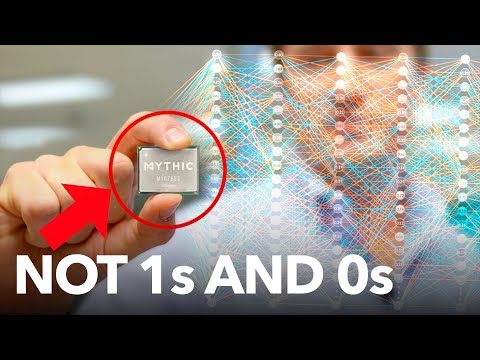
The on-device story shipped as silicon and arrived as a narrower product than the keynotes implied. Every major mobile platform now ships processors with substantial neural accelerators, and the flagship models that run locally, translation, transcription, photo editing, small assistants, work well. But the marquee assistant experiences mostly still route to the cloud, because frontier-scale models do not fit in phone memory and the distilled ones that fit do not yet carry the full capability set. The scorecard reads: hardware shipped, software partially shipped, and the gap between the two is where a quiet platform war is being fought over how much inference moves from the data center to the pocket.
04 Enterprise Automation: The Reliability Wall
Enterprise automation is the year's most instructive partial. The productivity gains are real and measured inside narrow workflows: document processing, code migration, support triage, meeting synthesis. The general-purpose replatforming, where an agent runs an entire business process end to end, keeps hitting the same wall. Error rates that look acceptable per step compound across steps, and a 95 percent reliable action executed twenty times produces a process that fails most of the time. The shipped version of enterprise AI is therefore an architecture: agents embedded at specific steps with deterministic systems around them, rather than agents replacing the process. The demo version, which still appears in case-study decks, is the end-to-end story the numbers do not support yet.
05 Quantum: The Roadmap Trend
Quantum computing appeared on the 2026 trend list mostly by momentum, and it remains a roadmap item. The year brought genuine engineering progress, larger error-corrected logical qubit demonstrations and clearer industrial roadmaps, but nothing in the commercial market this year constitutes practical advantage on business problems. Every credible claim is about what systems will do at some future milestone. In scorecard terms, quantum is not a failed prediction, it was never a 2026 product, and treating it as one is exactly the kind of category error this audit exists to catch.
06 The Signature of a Staying Demo
Across every category, the things that shipped share a shape and the things that did not share another. Shipped capabilities sit inside verifiable loops: a compiler, a test suite, a form with a schema, a human reviewer at the exits. Staying demos promise competence in open-ended environments where verification is exactly what is missing. That is the tell to carry through the next prediction cycle. When a 2027 keynote shows an agent doing something impressive, the first question is not how smart the model is. It is who or what checks the work, and what happens to the error rate when the demo becomes a Tuesday.
07 Scorecard Summary
The 2026 list, audited: coding agents shipped. Customer-service and document automation shipped inside guardrails. On-device AI shipped as hardware with software still catching up. Enterprise workflow automation is real but confined to narrow lanes by compounding error rates. Long-horizon autonomy and quantum advantage remain demos, the former genuinely pending, the latter misfiled. That is a good year by the standard of actual shipped capability, and a sobering one by the standard the January decks set. The capability is arriving. It is arriving at the speed of verification, not the speed of keynote.
References
- Wikipedia: AI agent — agentic architecture background
- Wikipedia: Large language model — capability and reliability context
- Source video: AI Trends 2026: Quantum, Agentic AI & Smarter Automation (IBM Technology, ~414,000 views, observed September 26, 2026)
By N43 and Hermes AI for DutyStation News.