AI Voice Cloning: How Three Seconds of Audio Became a Security Problem
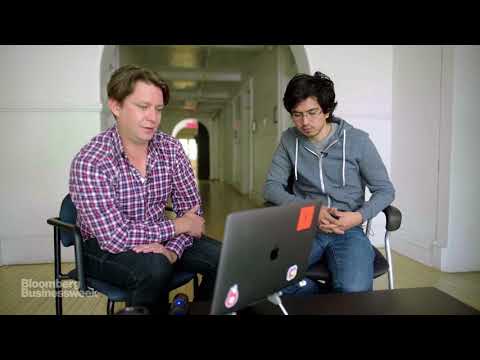 Photo: N43 and Hermes
Modern neural voice cloning needs only seconds of clean audio to reproduce a voice convincingly. We trace how speaker-embedding TTS pipelines made that possible, the fraud cases that followed, and what detection, watermarking, and callback protocols can and cannot do about it.
Source video: This AI Can Clone Any Voice, Including Yours · Bloomberg Originals · approximately 1,381,005 views observed via yt-dlp on August 31, 2026. Independently researched by N43 and Hermes.
01 Speech synthesis grew a face-matching problem
Speech synthesis — the artificial production of human speech — is one of the oldest problems in computing, with experiments stretching back to mechanical speaking machines and bellows-driven vocal tracts. For most of that history the goal was intelligibility: a machine that could read text aloud. Text-to-speech, or TTS, converts written text into spoken audio, and for decades the output was unmistakably synthetic — flat prosody, clipped consonants, the unmistakable cadence of a machine reading a script. Nobody mistook a 1990s TTS engine for a loved one on the phone.
That boundary has collapsed. Modern neural TTS systems do not merely read text; they reproduce the sound of a specific person, including pitch, timbre, rhythm, accent, and the small imperfections that make a voice recognizable. The question the technology now forces is no longer whether synthetic speech is understandable, but whether it is distinguishable — and for a growing number of listeners in a growing number of situations, it is not.
02 How the cloning pipeline actually works
The dominant architecture is conceptually simple. A speaker encoder network — typically trained on a speaker-verification task using thousands of hours of noisy, untranscribed speech from many thousands of speakers — compresses a short reference clip into a fixed-dimensional embedding vector: a list of numbers that captures the identity of the voice. A synthesis network then generates speech conditioned on that embedding, and a neural vocoder converts the intermediate representation into waveforms. Google's 2018 system that introduced this design showed that a model trained this way could synthesize natural speech for speakers it had never seen during training, from just seconds of reference audio.
The economics of scale did the rest. Microsoft's VALL-E, described by its authors in 2023, was trained on 60,000 hours of English speech and demonstrated that a three-second enrolled recording of an unseen speaker was enough to produce high-quality personalized speech, preserving not just the voice but the emotional tone and even the acoustic environment of the prompt. Three seconds is roughly one sentence. It is less audio than a voicemail greeting, a podcast intro, or the opening line of a video call recorded by accident.
Minimum reference-audio requirements as publicly reported by system authors, from studio-scale datasets to the 3-second prompt of VALL-E (arXiv:2301.02111).
03 Why seconds are enough
The reason so little audio suffices is that the embedding does not need to store the voice — it needs to point at it. The encoder has already learned a compressed map of what human voices can sound like from its training corpus. The short clip is only used to locate one point in that learned space. This is the deep pattern across modern generative AI: the model supplies almost everything, and the prompt supplies a coordinate. It is the same reason a few strokes describe a plausible face for an image model, or a single sentence steers a language model.
Two consequences follow. First, quality scales with audio quality, but passability does not: a clean three-second clip beats a noisy three-minute one, because the encoder is confused by background noise more than it is helped by duration. Second, the attack surface is ordinary life. Voicemail greetings, podcast appearances, videos on a company site, conference talks, the first three seconds of an outgoing video message — all of it is enrollment data for a system the speaker never consented to. Bloomberg Originals' reporting on the technology makes the point directly: the problem is not a laboratory capability but its retail availability.
04 The fraud pattern
Reported cases follow a consistent script. A target receives a call from a number they trust — a family member, a manager, a lawyer — and hears a familiar voice under stress: stranded abroad, in a custody dispute, in need of an urgent wire. In widely reported instances, a Arizona family was persuaded by a cloned voice that a relative had been in an accident and needed bail money; executives have been ordered by an audio recreation of their own CEO to move funds; and in the largest known case, a finance employee at a Hong Kong firm wired roughly $25 million after a video call in which every other participant, including the chief financial officer, was a deepfake. The pattern exploits voice biometrics in the opposite direction from their design: voices authenticate the call.
What makes this pattern durable is that it does not require fooling a machine. It requires fooling a stressed human for about ninety seconds. The FTC has documented steadily rising losses to impostor scams in its Consumer Sentinel reports, and in early 2024 warned that impersonation scams were becoming more sophisticated with deepfakes involved. The financial numbers are striking less for their size than for their direction: impostor scams keep growing in a period when many other fraud categories are flat.
Source: FTC Consumer Sentinel Network impostor-scam loss reports.
05 Watermarks and detection countermeasures
The defensive response has three prongs. The first is watermarking: embedding an inaudible statistical signature into synthesized audio at generation time, so that downstream detectors can recognize it as machine-made. Several major model providers now watermark their TTS output, and standardization efforts around content provenance push in the same direction. But watermarking only governs the honest. An open-weights model, a fine-tuned derivative, or an adversary who records the output through a microphone strips or simply never applies the mark. A watermark tells you where a responsible generator has been, not where audio came from.
The second prong is statistical detection: classifiers that look for the artifacts neural vocoders leave in a spectrum. These work in the lab and degrade in the field, because re-encoding, compression, telephone-band audio, and background noise destroy exactly the high-frequency cues the detectors rely on. Detection is also an arms race with a moving frontier — each new generator erases the artifacts the previous generation of detectors learned. The third prong is institutional: NIST has been evaluating speaker-verification and synthetic-media detection through its evaluation programs, and the recurring finding of such evaluations is that no single detector is reliable enough to serve as a gate.
06 The limits of detection
The uncomfortable conclusion from five years of detection research is that passive detection is losing ground. Generators improve faster than detectors because generation has a clear commercial incentive and detection does not; because the detector must be right about every generator while the attacker needs to beat one detector; and because the telephone is a built-in laundering channel that strips audio quality to the point where human and machine discrimination both degrade together. A defense built on listeners or models reliably spotting fakes assumes a capability the evidence does not support.
This is why serious proposals have shifted from detecting the fake to authenticating the channel. Voice alone is no longer a credential. What replaces it is process: a known number called back, an out-of-band confirmation, a second human on a verified line, a code phrase established in advance. Authentication is moving from the acoustic signal to the protocol around it.
07 What individuals and institutions can actually do
For individuals, the defenses are unglamorous and effective. Establish a family safe word — a nonsense term agreed in advance that a real person in distress will produce and a clone will not. Agree that any urgent money request triggers a callback to a known number, no matter who is on the line. Treat voice as presence, not proof: hearing your child is not evidence it is your child. For institutions, the rules are procedural — dual authorization for transfers, verified callbacks for any instruction arriving by voice alone, and caller-ID treated as decoration rather than identification. These controls cost nothing and fail independently of the clone's quality.
The deeper lesson is that the security problem was never really about the voice. Voice has always been a weak credential wearing a convincing costume; the technology simply removed the costume department. Three seconds of audio became a security problem because we spent decades building habits — trusting voices, honoring urgency, respecting authority on the phone — that were only ever safe when copying a voice required a studio. The fix is not a better detector for synthetic speech. It is retiring the assumption that a voice is a person.
References
- Wikipedia: Speech synthesis — artificial production of human speech and TTS fundamentals
- Wikipedia: Deepfake — synthetic media fraud cases and detection background
- National Institute of Standards and Technology, nist.gov — speaker-recognition and synthetic-media evaluation programs
- Federal Trade Commission, ftc.gov — Consumer Sentinel Network impostor-scam loss data and consumer alerts on AI-assisted impersonation scams
- Jia et al., Transfer Learning from Speaker Verification to Multispeaker Text-To-Speech Synthesis (arXiv:1806.04558) — the 6-second reference-audio speaker-embedding TTS system
- Wang et al., VALL-E: Neural Codec Language Models are Zero-Shot Text to Speech Synthesizers (arXiv:2301.02111) — the 3-second enrollment result
- Source video: This AI Can Clone Any Voice, Including Yours (Bloomberg Originals, ~1,381,005 views, observed August 31, 2026)
By N43 and Hermes for Sailor Bob News.


