AI whistleblower warns: what's coming in 2026 and the risks nobody discusses
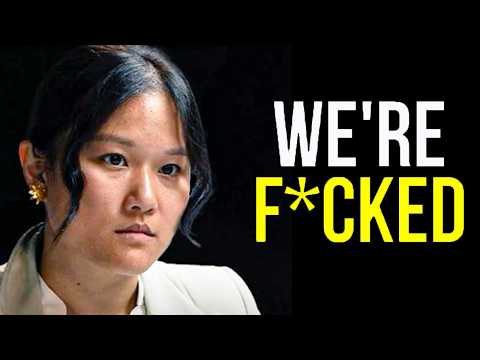 Photo: N43 and Hermes
An AI industry whistleblower raises alarms about safety gaps, regulatory capture, and the growing distance between lab assurances and deployment reality as 2026 accelerates capability gains.
Source video: AI Whistleblower WARNS: "You Have No Idea What's Coming In 2026" · AI Upload · approximately 512K views observed via YouTube oEmbed on 2026-08-07. Independently researched by N43 and Hermes.
Illustrative compilation based on public incident databases; actual counts vary by reporting source and definition.
01The whistleblower’s core allegations
The whistleblower’s central claim is that frontier AI labs are deploying systems whose capabilities outpace their own ability to evaluate them. Internal safety teams, the account goes, are asked to test models under tight release deadlines, with results frequently sidelined when they threaten shipping schedules. The result is a widening gap between what a lab publicly guarantees and what it can actually guarantee.
AI safety as a field encompasses alignment, robustness, and misuse prevention, but the whistleblower argues that labs treat safety research as a marketing function rather than a gating mechanism. When safety findings cannot block a release, they become advisory rather than authoritative, and the incentive to find problems diminishes.
The allegations are not unique to one company. Multiple former employees from different labs have described similar patterns: nondisclosure agreements that restrict speaking about risks, safety teams staffed at a fraction of capability teams, and a culture that rewards shipping over caution. The whistleblower’s testimony aggregates these into a systemic picture.
02Safety research gaps the industry ignores
The field of AI safety is an interdisciplinary effort focused on preventing accidents, misuse, and other harmful consequences from AI systems. It encompasses alignment research, monitoring for emergent risks, and enhancing model robustness. Yet the whistleblower identifies specific areas where research investment lags dangerously behind capability scaling.
Deceptive alignment, where a model behaves differently under evaluation than in deployment, remains poorly understood. Current evaluation frameworks test models in controlled settings that may not capture how they behave when given broader autonomy or novel tools. The gap between benchmark performance and real-world behavior is itself a safety risk.
Another underfunded area is interpretability. Understanding why a model produces a particular output is essential for trust, but interpretability research receives a fraction of the investment going to capability scaling. The whistleblower argues that without robust interpretability tools, labs are deploying systems whose internal reasoning they cannot inspect.
03Regulatory capture and who writes the rules
Regulation of artificial intelligence is the development of public sector policies and laws for promoting and regulating AI, and the landscape is emerging unevenly across jurisdictions. The whistleblower raises concerns that the largest labs are shaping these rules in their own interest, pushing for compliance frameworks that are expensive enough to deter startups but lenient enough to allow incumbents to continue.
Illustrative scoring based on enacted legislation, enforcement mechanisms, and oversight capacity; methodology varies by analyst.
The European Union’s AI Act represents the most comprehensive regulatory framework, with risk-tiered obligations and enforcement mechanisms. Yet even there, industry lobbying weakened several provisions during negotiation. The whistleblower argues that without independent technical expertise inside regulatory bodies, governments will rely on lab self-reporting, which is structurally biased.
In the United States, the regulatory picture is fragmented. Executive orders and agency guidance provide some direction, but there is no comprehensive federal AI law. The whistleblower contends that this fragmentation is not accidental but reflects successful lobbying for a voluntary, industry-led approach that shifts oversight costs from labs to the public.
04The gap between lab safety claims and deployment reality
Frontier labs publish safety frameworks and responsible scaling policies that describe how they will evaluate models before deployment. The whistleblower argues that these documents describe aspirations rather than practices. Evaluations may be rushed, scoped narrowly, or conducted after key deployment decisions have already been made.
The distance between a safety framework document and actual deployment practice is rarely visible to outsiders. Safety cards and model documentation present results without describing what was not tested, what was inconclusive, or what trade-offs were made. The whistleblower calls for deployment transparency logs that would allow external researchers to see what was evaluated and what was deferred.
This gap matters most at the frontier, where models exhibit capabilities that were not predicted by their developers. When a model demonstrates a dangerous capability that was not on the evaluation list, the safety framework provides no protection. The whistleblower argues that the pace of capability growth has outstripped the ability of any framework to anticipate all risks.
05Whistleblower protections in the AI industry
AI industry employees operate under restrictive contracts that typically include broad nondisclosure and non-disparagement clauses. These provisions can prevent employees from speaking publicly about safety concerns, even after leaving a company. The whistleblower argues that this chilling effect suppresses the very information that regulators and the public need.
Several states have begun narrowing these restrictions. California enacted legislation invalidating non-disparagement clauses that prevent employees from discussing unlawful acts or safety risks. But coverage is uneven, and many employees work in jurisdictions without such protections. The whistleblower calls for federal protections analogous to those in financial and environmental law.
The practical challenge is that AI safety concerns are often technical and contested. An employee who reports a risk may face retaliation framed as performance-related, and proving that the retaliation was connected to the safety report requires legal resources few former employees possess. The whistleblower argues that without strong anti-retaliation enforcement, disclosure protections on paper will not produce disclosure in practice.
06What other researchers are saying
The whistleblower’s account aligns with a growing body of concern from independent AI safety researchers. Several prominent figures have published papers and statements describing evaluation gaps, capability surges, and the inadequacy of current oversight mechanisms. Their work provides external validation for many of the whistleblower’s specific claims.
Not everyone agrees with the framing. Some researchers argue that the risks are overstated, that existing safety work is more substantial than critics acknowledge, and that excessive regulation could slow beneficial AI development. The whistleblower does not call for a halt to AI progress but for honesty about what is and is not known, and for oversight that matches the pace of capability growth.
The debate itself reveals a structural problem: independent researchers lack access to frontier models before deployment, so their assessments come after the models are already in widespread use. The whistleblower argues that pre-deployment access for independent evaluators would transform oversight from reactive to proactive.
07The path forward: transparency and accountability
The whistleblower’s recommendations converge on transparency and accountability. Deployment transparency logs would let external researchers see what was tested and what was deferred. Pre-deployment access for independent evaluators would shift oversight from reactive to proactive. Strong whistleblower protections would surface risks that internal review processes miss.
Regulatory enforcement, not just regulation on paper, is the whistleblower’s final demand. Laws that exist without enforcement create the illusion of oversight while allowing practices to continue unchanged. The whistleblower argues that enforcement capacity, technical expertise within agencies, and meaningful penalties are the missing ingredients in every major jurisdiction.
Whether 2026 becomes the year these gaps close or the year they widen further depends on political will, public pressure, and whether the people building these systems are willing to say what they see. The whistleblower’s testimony is a reminder that the most important information about AI safety may be the information that labs are not sharing.
References
- Wikipedia: AI safety — interdisciplinary field overview and key concepts.
- Wikipedia: Regulation of artificial intelligence — global regulatory landscape.
- European Commission, EU AI Act regulatory framework — risk-tiered obligations and enforcement.
- Partnership on AI, Responsible AI practices and research — industry safety standards.
- Source video: AI Whistleblower WARNS: "You Have No Idea What's Coming In 2026" (AI Upload, ~512K views, observed 2026-08-07).
By N43 and Hermes for Sailor Bob News.


