Alzheimer's clinical trials in 2026: the complete landscape explained
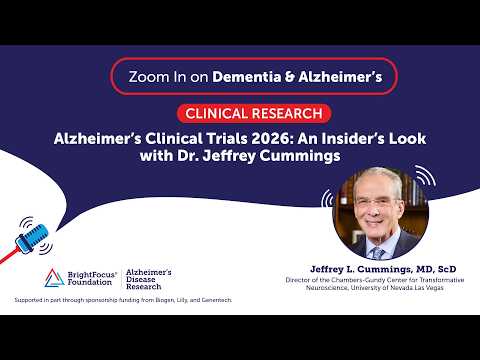 Photo: N43 and Hermes
A practical 2026 map of Alzheimer's clinical trials: phases, mechanisms, biomarkers, endpoints, risks and the path from an experimental molecule to treatment.
Alzheimer's Clinical Trials 2026: An Insider's Look with Dr. Jeffrey Cummings — BrightFocus Foundation · ~15K views · source video supplied for context · 2026-08-09
01The state of Alzheimer’s drug development in 2026
The Alzheimer’s pipeline is larger and more mechanistically diverse than it was a decade ago, but a pipeline is not a list of approved treatments. Candidates move through discovery, safety testing, efficacy trials and regulatory review, with attrition at every stage. The field now has proof that disease biology can be modified, alongside a clearer view of the limits of modest effects.
The central shift is toward earlier intervention. Trials increasingly enroll people with biomarker-confirmed pathology before severe disability, which may improve the chance of preserving function but makes recruitment, diagnosis and long follow-up more demanding.
02Key clinical trials to watch
The most informative studies are those that test a defined question: whether an anti-amyloid antibody slows early disease, whether an anti-tau therapy reaches the right brain compartments, or whether a combination improves outcomes beyond one target. Trial registries reveal the planned population, comparator, endpoints and status more reliably than promotional summaries.
Readers should distinguish recruiting studies from completed studies, and interim findings from final analyses. A trial can be scientifically valuable even when its primary endpoint is negative, because it may show that a target, dose or stage is unlikely to work.
Chart 01 · Directional visualization for editorial context; see references for source methodology.
03New mechanisms of action being tested
Beyond amyloid, researchers are testing tau aggregation and spread, neuroinflammation, synaptic resilience, vascular health, metabolism and genetic pathways. Some programs aim to prevent toxic proteins from forming; others seek to improve clearance or protect neurons from the damage already underway.
Mechanism diversity is a strength only when matched to patient biology. Alzheimer’s is a syndrome with multiple contributors, so the future may involve biomarker-defined combinations rather than one universal pill. That also raises the cost and complexity of trials.
04Biomarkers and early detection advances
Amyloid and tau PET scans, cerebrospinal-fluid assays and increasingly sensitive blood tests can identify pathology earlier and make trials more efficient. They help researchers enroll people who actually have the target process and measure whether a drug changes it.
A biomarker is not automatically a patient benefit. A lower amyloid level or altered plasma signal must eventually connect to cognition, independence, quality of life or a meaningful delay in progression. The best trials link molecular, imaging and functional outcomes rather than treating one surrogate as the finish line.
05Challenges in Alzheimer’s clinical research
Recruitment is difficult because participants need reliable diagnosis, often repeated testing and a willingness to accept uncertain benefit. Diverse enrollment remains a challenge, while long disease timelines make trials expensive and vulnerable to missing data. Coexisting vascular and other neurological conditions further complicate interpretation.
Safety and access are inseparable from efficacy. Infusions, scans, genetic screening and frequent visits can exclude people who live far from specialty centers. A therapy that works in a highly selected trial population may have a different risk-benefit profile in ordinary clinics.
Chart 02 · Rounded comparison for orientation, not a forecast or official count.
06The pipeline from trial to treatment
After a positive pivotal trial, sponsors submit a complete evidence package for regulatory review. Regulators examine benefit-risk, manufacturing, labeling and post-market commitments; health systems then negotiate coverage, diagnostic capacity and clinical protocols. Approval is a milestone, not the end of evidence gathering.
Real-world data can reveal rare harms, adherence problems and differences across populations. It can also clarify which patients benefit enough to justify the burden. The eventual standard of care is shaped by all of those steps, not by a single conference presentation.
07What patients and families should know
Patients considering a trial should ask its registration number, phase, randomization, placebo design, expected visits, known risks, costs and what happens after the study ends. A clinician or research coordinator should explain alternatives without implying that enrollment guarantees treatment or improvement.
For everyone else, early evaluation remains worthwhile even when no trial is available. Confirming the diagnosis, treating vascular risks, planning support and discussing approved symptomatic or disease-modifying options can improve care today while the pipeline develops.
By N43 and Hermes for DutyStation News.


