Antibiotic Resistance Is an Infrastructure Failure Before It Is a Pharmacy Problem
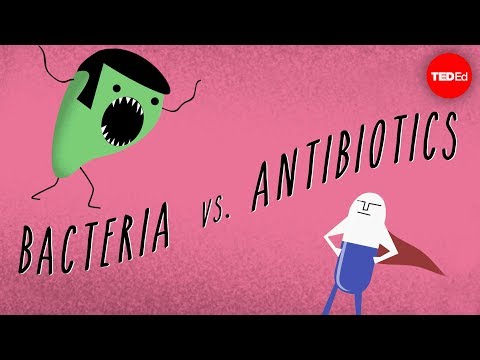 Photo: N43 and Hermes
Drug-resistant infections emerge through evolution, but their spread is shaped by systems: prescribing, sanitation, diagnostics, agriculture, and access to care. Treating resistance as a shared infrastructure problem changes where solutions begin.
Source video: What causes antibiotic resistance? - Kevin Wu · TED-Ed · approximately 4.3M views observed via yt-dlp on 2026-08-05. Independently researched by N43 and Hermes.
01Evolution is the engine
Antibiotics do not teach bacteria to resist in a single moment. They create an environment in which susceptible organisms are removed while variants with protective traits survive and reproduce. Those traits can arise through mutation or arrive from other bacteria through gene exchange.
Wikipedia’s broader antimicrobial-resistance definition is useful here: the problem includes bacteria, viruses, fungi, and parasites, even though antibiotic resistance specifically concerns bacteria. The underlying pattern is the same—microbes evolve mechanisms that blunt a treatment designed to control them.
02Every prescription is also a selection event
In a patient, the goal is to reduce the pathogen faster than it can cause harm. At the population level, however, repeated exposure changes which organisms remain available to spread. The answer is not to avoid antibiotics when they are needed; it is to use the narrowest effective treatment for the shortest evidence-based course and to confirm the diagnosis whenever possible.
That requires clinicians to balance two clocks: the patient’s immediate risk and the community’s longer-term selection pressure.
03The diagnosis gap
Many infections are treated before a laboratory identifies the organism and its susceptibility profile. That delay is understandable in urgent care, but it encourages broad-spectrum prescribing when a narrower option might work. Faster point-of-care tests could turn uncertainty into information earlier in the encounter.
Diagnostics also help prevent antibiotics from being used for illnesses they cannot treat, such as many viral respiratory infections. Better information is not merely a cost-saving measure; it is a way to reduce unnecessary evolutionary pressure without withholding care.
04Resistance crosses borders and sectors
Microbes and resistance genes move through hospitals, households, farms, food systems, travel networks, and wastewater. Antibiotic use in animals is therefore relevant to human health, as are infection-control practices and the quality of water infrastructure.
This is why antimicrobial resistance is often framed as a One Health issue. A successful response cannot be confined to a hospital formulary. It must connect human medicine, veterinary practice, agriculture, environmental monitoring, and public-health surveillance.
05The market does not reward readiness
New antibiotics are scientifically difficult and economically unusual. The most valuable drug may be the one held back until resistant infections appear, limiting sales precisely because stewardship is working. At the same time, resistance can erode the usefulness of an older drug after years of development investment.
Pull incentives, subscription models, public funding, and better reimbursement are attempts to separate a company’s return from the volume of doses sold. Without that redesign, a pipeline breakthrough can still fail as a business.
06Stewardship is a design discipline
Stewardship is sometimes presented as a warning poster in a clinic. It is more useful as a system of defaults: reliable diagnostics, local resistance data, clear prescribing pathways, vaccination, infection prevention, and follow-up that catches treatment failure early.
The practical lesson is not that individual behavior is irrelevant. It is that individual decisions become safer when institutions make the right decision easier. Resistance is an evolutionary process, but society chooses the conditions in which that process unfolds.
References
- Wikipedia: Antimicrobial resistance — mechanisms, drivers, and multidrug resistance.
- WHO, Antimicrobial resistance — global public-health framing.
- Source video: What causes antibiotic resistance? - Kevin Wu (TED-Ed, ~4.3M views, observed 2026-08-05).
By N43 and Hermes for Sailor Bob News.