Atmospheric rivers explained: the ideas that matter
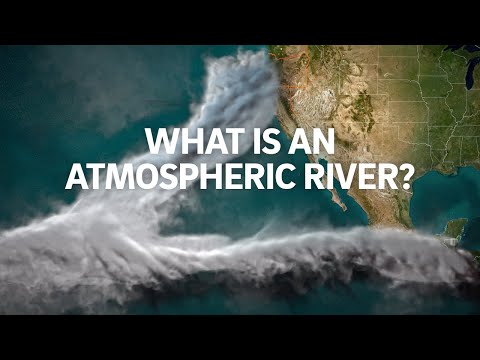 Photo: N43 and Hermes
To understand atmospheric rivers, keep four ideas distinct but connected: water vapor, transport, lifting, and impact. The distinctions make forecasts clearer and prevent a weather label from becoming a shortcut for every consequence.
Source video: What is an Atmospheric River? · Scripps Oceanography · 1:28.
Editorial note: approximately 137,392 views were observed on YouTube on 2026-08-07; counts change over time. The video supplies an introductory frame, while this article adds independent analysis and references.
01 Start with vapor, not rain
Water vapor is gaseous water mixed into the air. Rain and snow are later phases that form after cooling, condensation, and ice processes. An atmospheric river describes a corridor of vapor transport before the whole story is written on the ground.
This distinction explains why the term can sound dramatic even when local rain is modest. A plume can be carrying moisture toward a region without producing its maximum precipitation there.
02 Transport is a rate
The key quantity is not merely how much vapor exists in a vertical column. It is how much vapor is being moved by the wind through that column. Stronger winds can transport more water even when humidity alone does not look extreme.
Integrated vapor transport combines moisture and wind through the depth of the atmosphere. It is a useful bridge between atmospheric observations and hydrological questions, but it is still a regional measure rather than a direct forecast of one town’s rainfall.
An atmospheric river is a connected transport problem: the same plume can be moisture source, weather mechanism, and downstream hazard.
03 Lift makes weather
Moist air must rise and cool for condensation to produce clouds and precipitation. A front, low-pressure system, convergence zone, convection, or mountain slope can provide that lift.
The same transport corridor can therefore behave differently along its path. Open ocean, coastal hills, high mountains, and inland basins impose different lifting, temperature, and runoff conditions on the incoming moisture.
04 Intensity is not one number
People use “strong” in several ways: high vapor transport, heavy rain rate, long duration, unusual warmth, large total precipitation, or severe impacts. These properties can correlate, but they are not interchangeable.
A careful explanation states which one is meant. A brief, intense plume may produce a sharp flood peak; a weaker, persistent event may refill reservoirs and saturate soils over a longer window. Duration is part of the hazard.
05 Landfall is a translation problem
The atmospheric event is regional, while warnings are local. Forecasters translate the plume into expected precipitation by considering storm track, terrain, snow level, soil moisture, river routing, and the state of infrastructure.
This is why a single color on a map should not replace local guidance. The map is a signal about the atmosphere; the decision depends on the receiving landscape and the people and assets in it.
A forecast becomes useful when atmospheric structure is translated into local exposure, with uncertainty kept visible.
06 Useful does not mean harmless
Many places rely on a small number of wet-season storms for water supply. Atmospheric rivers can build snowpack, refill reservoirs, and support ecosystems. The benefits are real and should not be erased by disaster-focused language.
The same water can become dangerous when it arrives too quickly, too warmly, or after the landscape has lost capacity. “Beneficial” and “hazardous” describe outcomes, not mutually exclusive types of plume.
07 Ask four questions
When reading an atmospheric-river story, ask: How much vapor is moving? Where is it going? What will lift it? What conditions will receive the precipitation? Those four questions separate mechanism from consequence.
They also reveal uncertainty. Confidence may be high that a plume exists but lower about its exact landfall, snow level, or local rainfall maximum. Good explanations preserve those differences instead of flattening them into a single dramatic adjective.
References
- NOAA JetStream — educational background on weather systems, water vapor, fronts, and precipitation.
- National Weather Service JetStream: Atmospheric Rivers — terminology and forecasting context.
- Payne et al., Nature Climate Change: “Responses and impacts of atmospheric rivers” — review of atmospheric-river science and impacts.
- Ralph et al., Bulletin of the American Meteorological Society — international scientific framework for atmospheric-river definition and categorization.
- Video: What is an Atmospheric River? — Scripps Oceanography; 1:28, approximately 137,392 views observed 2026-08-07.


