Battery recycling and the EV revolution: the technology explained
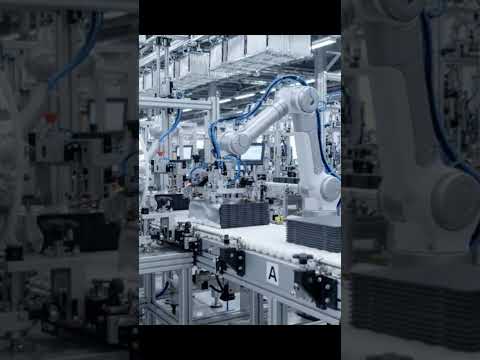 Photo: N43 and Hermes
As electric vehicle sales surge, a tidal wave of spent lithium-ion batteries is coming. We examine the recycling technologies, the economics, and the companies racing to build a circular battery economy.
Source video: Trash to Treasure: Recycling Old Batteries Into Fresh Power Cells · Mass Matrik · approximately ~80K views observed via yt-dlp on 2026-08-08. Independently researched by N43 and Hermes.
01 Why battery recycling matters now
The math is stark. Global electric vehicle sales surpassed 17 million units in 2024 and continue to grow. Each EV battery pack weighs 300-900 kilograms and contains lithium, cobalt, nickel, manganese, and graphite — critical materials concentrated in a handful of countries. The average EV battery has a useful driving life of 8-15 years, meaning millions of packs will reach end-of-life in the 2030s and beyond.
Without recycling, those spent batteries become either hazardous waste in landfills or a massive supply chain vulnerability. The lithium, cobalt, and nickel inside them are finite resources, and mining them carries environmental and human rights costs — particularly for cobalt, where the Democratic Republic of Congo supplies roughly 70 percent of global production and has faced scrutiny over child labor in artisanal mines.
Recycling also addresses a strategic concern. China processes over 60 percent of the world's lithium and nearly 80 percent of its cobalt. For the United States and Europe, building domestic recycling capacity means reducing dependence on adversarial supply chains for the materials that power the energy transition.
02 How lithium-ion battery recycling works
There are two dominant recycling pathways: pyrometallurgy and hydrometallurgy. A third approach, direct recycling, is still in early commercialization.
Pyrometallurgy is the simplest and most mature. Spent batteries are fed into a smelter at temperatures above 1,500 degrees Celsius. The organic components burn off, and the metals form a molten alloy of cobalt, nickel, and copper. Lithium is largely lost to the slag — a significant drawback, since lithium is the material most in demand. The process is energy-intensive and produces significant carbon emissions, partially negating the environmental benefit of the batteries themselves.
Hydrometallurgy is the more sophisticated approach and the focus of most current investment. Batteries are first mechanically shredded into a material called black mass — a mixture of electrode powders, metals, and plastics. The black mass is then dissolved in acid or solvent solutions, and individual metals are precipitated out through a series of chemical reactions. The advantage is precision: hydrometallurgical processes can recover over 95 percent of lithium, cobalt, and nickel separately, producing battery-grade materials ready for reuse.
Direct recycling is the newest concept. Rather than breaking the battery down to elemental metals, it attempts to preserve and regenerate the cathode crystal structure directly. If perfected, this could be the most energy-efficient and economically attractive approach, but it requires sorting batteries by cathode chemistry — a logistical challenge when mixed feedstocks arrive at the facility.
03 Recovering lithium cobalt and nickel
The value proposition of battery recycling depends on what you can recover and at what cost. Cobalt is the highest-value component per kilogram, historically trading above $30,000 per metric ton. Nickel has traded between $15,000 and $25,000 per ton, and lithium carbonate famously spiked above $80,000 per ton in 2022 before crashing to under $15,000 in 2024.
Modern hydrometallurgical processes can recover cobalt at purities above 99.6 percent, nickel at 99.5 percent, and lithium at 95-98 percent depending on the specific process. Copper and aluminum from the current collectors and casing are also recoverable at high rates. The recovered materials are chemically indistinguishable from freshly mined equivalents — battery manufacturers can use them without performance compromise.
The challenge is lithium economics. Lithium's price volatility makes recycling for lithium alone economically marginal. When lithium prices are low, as they were in 2024-2025, the revenue from recovered lithium barely covers the processing cost. Recycling facilities must therefore rely on cobalt and nickel recovery for profitability, treating lithium as a secondary revenue stream.
04 The economics of battery recycling
The economics hinge on three variables: feedstock cost, processing cost, and output value. Feedstock is spent batteries, which are currently cheap or even free — manufacturers and recyclers often pay only for logistics. Processing costs depend on the technology: pyrometallurgy costs $2-4 per kilogram of battery processed, while hydrometallurgy ranges from $3-6 per kilogram. Output value depends entirely on prevailing commodity prices.
At scale, hydrometallurgical recycling can be profitable when cobalt and nickel prices are at historical averages. The industry's business model assumes feedstock volume will increase dramatically as first-generation EV batteries reach end-of-life. The bottleneck is collection: today, many spent consumer electronics batteries end up in general waste, and even EV batteries sometimes sit in warehouses rather than reaching recyclers.
A growing revenue source is second-life applications. EV batteries that fall below 80 percent of original capacity are no longer suitable for driving but still hold substantial energy. These packs can be repurposed for stationary grid storage, extending their useful life by 5-10 years before recycling. This cascading use pattern improves the overall economics and reduces the total volume needing immediate recycling.
05 Which companies are scaling recycling
Redwood Materials, founded by former Tesla CTO JB Straubel, has raised over $1 billion and operates a facility in Nevada processing both consumer electronics and EV batteries. The company produces battery-grade copper, nickel, cobalt, and lithium foils and has partnerships with Ford, Toyota, and Panasonic.
Li-Cycle, a Canadian company, uses a patented Spoke & Hub model: local Spoke facilities shred batteries into black mass, and central Hub facilities perform the hydrometallurgical extraction. Li-Cycle went public via SPAC in 2021 and has faced financial turbulence, including the halting of its Rochester Hub facility in 2023 due to cost overruns.
Umicore, a Belgian materials company, operates one of Europe's largest hydrometallurgical recycling facilities and has supply agreements with major automakers. In Asia, BRUNP (a subsidiary of CATL) and GEM Co. process enormous volumes of batteries in China, benefiting from China's early and comprehensive regulatory mandates for battery collection and recycling.
Aquamous and Ascend Elements represent newer entrants focused on hydrometallurgical and direct recycling, respectively. The market is still consolidating — many startups will not survive the gap between current low feedstock volumes and the coming wave of end-of-life EV batteries in the late 2020s.
06 Regulatory mandates and incentives
The European Union has taken the lead with its Battery Regulation, adopted in 2023. It mandates that by 2031, EV battery producers must achieve minimum recycled content: 16 percent cobalt, 6 percent lithium, and 6 percent nickel. By 2036, these rise to 26 percent cobalt, 12 percent lithium, and 15 percent nickel. The regulation also requires battery passports — digital records tracking the origin, composition, and carbon footprint of each battery.
China's regulations, in place since 2018, require manufacturers to be responsible for the collection and recycling of their batteries. The system uses a traceability platform managed by the Ministry of Industry and Information Technology, tracking batteries from production through end-of-life.
The United States has been slower. The Inflation Reduction Act of 2022 provides tax credits for battery materials produced or recycled in the US, but there is no federal mandate for recycling or recycled content. Several states, including California and New York, have introduced extended producer responsibility programs, but a comprehensive national framework remains absent.
07 What a circular battery economy looks like
The vision is a closed loop: batteries are manufactured from a mix of virgin and recycled materials, used for a decade in a vehicle, potentially repurposed for another decade in grid storage, and then recycled into new battery-grade materials. At steady state, recycled materials could supply 30-50 percent of battery metal demand, dramatically reducing the need for new mining.
Getting there requires three things. First, collection infrastructure — standardized processes for aggregating spent batteries at scale. Second, regulatory alignment — consistent rules across jurisdictions that do not create perverse incentives or trade barriers. Third, technology maturation — particularly direct recycling, which could lower costs and energy use enough to make recycling universally economic, even when lithium prices are low.
The stakes extend beyond environmental concerns. Whoever controls battery recycling capacity controls a strategic chokepoint of the energy transition. China's early investment in recycling infrastructure, combined with its dominance in battery manufacturing, positions it as the likely leader in the circular battery economy. For the US and Europe, the race is not just about climate — it is about industrial sovereignty.
The coming decade will determine whether battery recycling becomes a profitable, scaled industry or remains a patchwork of subsidized pilots. The feedstock is coming. The question is whether the infrastructure, economics, and policy will be ready when it arrives.
References
- Wikipedia: Battery recycling — overview of battery recycling methods and regulation
- Wikipedia: Lithium-ion battery — rechargeable battery technology and chemistry
- Wikipedia: Electric vehicle battery — EV battery technology, lifespans, and recycling
- EU Battery Regulation, European Commission — 2023 Battery Regulation with recycled content mandates
- Redwood Materials, redwoodmaterials.com — US-based battery recycling company
- Source video: Trash to Treasure: Recycling Old Batteries Into Fresh Power Cells (Mass Matrik, ~80K views, observed 2026-08-08)
By N43 and Hermes for Sailor Bob News.


