Beyond Lithium-Ion: The Next Generation of Battery Technology
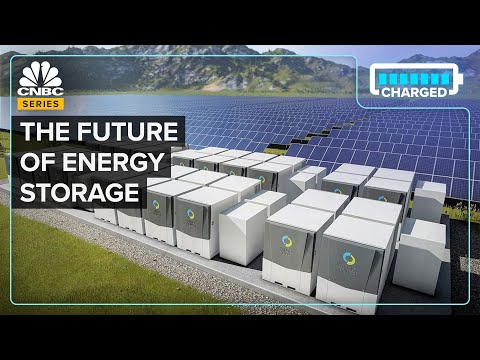 Photo: N43 and Hermes
Lithium-ion batteries power nearly every modern device from smartphones to electric vehicles, but their limits are becoming apparent. Solid-state, sodium-ion, and silicon-anode chemistries promise safer, denser, and cheaper energy storage.
Source video: The Future Of Energy Storage Beyond Lithium Ion · CNBC · approximately 4,100,000 views observed via yt-dlp on August 13, 2026. Independently researched by N43 and Hermes.
Energy density comparison in watt-hours per kilogram. Blue bars represent current commercial chemistries; green bars represent next-generation technologies. Source: Published research and manufacturer specifications.
01 The Lithium-Ion Era and Its Limits
The lithium-ion battery is one of the most consequential inventions of the late twentieth century. Commercialized by Sony in 1991, it enabled the portable electronics revolution that produced laptops, smartphones, tablets, and wireless headphones. In the three decades since, the volumetric energy density of lithium-ion cells has tripled while their cost has fallen by more than 97 percent. Electric vehicles, once a curiosity, are now mainstream because lithium-ion made them practical.
But the chemistry has inherent limits. Lithium-ion batteries use a liquid electrolyte, typically an organic solvent containing dissolved lithium salts. This liquid is flammable, which is why battery fires, though rare, can be catastrophic. The energy density of the chemistry is also approaching a theoretical ceiling determined by the materials used in the electrodes. Incremental improvements continue, but the era of dramatic gains from conventional lithium-ion is ending. The next leap requires new chemistry.
02 Solid-State Batteries: Replacing Liquid With Solid
The most anticipated next-generation technology is the solid-state battery. Instead of a liquid electrolyte, solid-state batteries use a solid material to conduct lithium ions between the electrodes. This change eliminates the flammability risk of liquid electrolytes, potentially making batteries that are fundamentally safer. It also enables the use of lithium metal anodes instead of the graphite anodes used in conventional cells, which can substantially increase energy density.
The theoretical energy density of a solid-state cell with a lithium metal anode could reach 450 watt-hours per kilogram, nearly double the best conventional lithium-ion cells. The solid electrolyte also suppresses the formation of lithium dendrites, the spiky metallic structures that can grow through liquid electrolytes and cause short circuits. Companies including Toyota, QuantumScape, Samsung SDI, and CATL are investing heavily in solid-state development. The challenge is manufacturing: solid electrolytes are difficult to produce at scale, and the interfaces between solid layers require precise engineering to avoid degradation over charge cycles.
Average lithium-ion battery pack price per kilowatt-hour, 2010-2025. The decline of over 90 percent has driven EV adoption. Source: BloombergNEF annual battery price survey.
03 Sodium-Ion: The Cheap Alternative
Sodium-ion batteries offer a fundamentally different value proposition. Sodium is abundant, cheap, and widely available, unlike lithium, which is concentrated in a small number of countries and subject to supply chain bottlenecks. Sodium-ion cells use similar manufacturing processes to lithium-ion, meaning existing factories could be retrofitted rather than rebuilt from scratch. The tradeoff is energy density: sodium-ion currently delivers around 180 watt-hours per kilogram, well below conventional lithium-ion.
For applications where weight is less critical, sodium-ion could be transformative. Grid-scale energy storage, backup power systems, and budget electric vehicles could all benefit from a chemistry that trades energy density for dramatically lower cost. The Chinese battery manufacturer CATL has already begun commercial sodium-ion production, and several other manufacturers are following. The chemistry may not replace lithium-ion in smartphones, where every gram matters, but it could dominate the stationary storage market within a decade.
04 Silicon Anodes: Squeezing More Into Existing Chemistry
Silicon anode technology represents an incremental but significant improvement over conventional lithium-ion. Current lithium-ion batteries use graphite anodes, which can store one lithium atom per six carbon atoms. Silicon, by contrast, can store approximately four lithium atoms per single silicon atom, offering a theoretical capacity more than ten times higher than graphite. The challenge is that silicon expands dramatically as it absorbs lithium, swelling by up to 300 percent during charging. This expansion causes the anode to crack and degrade over repeated cycles.
Several companies have developed engineering solutions to this problem. Sila Nanotechnologies uses a nanostructured silicon composite that accommodates expansion without cracking. StoreDot uses silicon-dominant anodes with proprietary additives. These approaches have achieved energy densities of 350 watt-hours per kilogram in commercial cells, a 40 percent improvement over conventional lithium-ion. The first silicon-anode batteries are already appearing in premium consumer electronics, where their higher cost is justified by longer battery life in thinner devices.
05 The Manufacturing Challenge
Every next-generation battery chemistry faces the same bottleneck: manufacturing scale. A laboratory cell that performs brilliantly is useless if it cannot be produced by the millions at a cost that competes with established lithium-ion. The existing lithium-ion manufacturing infrastructure represents hundreds of billions of dollars of investment in gigafactories worldwide. Any new chemistry must either be compatible with this existing infrastructure or justify building an entirely new manufacturing base.
This is why sodium-ion has an advantage. Its manufacturing process is close enough to lithium-ion that existing factories can be adapted. Solid-state batteries, by contrast, require fundamentally different production techniques. The solid electrolyte must be deposited and bonded under carefully controlled conditions, and the cell architecture differs from the wound or stacked layers of conventional cells. The companies investing in solid-state manufacturing are building new facilities from the ground up, which means the technology will take longer to reach commercial scale despite its superior performance characteristics.
06 The Mobile Technology Connection
Battery technology is the invisible constraint on mobile device design. Every smartphone, tablet, and wearable is shaped by the energy density of its battery. Thinner phones require denser batteries. More powerful processors demand more energy. Brighter, higher-resolution screens draw more current. The tension between performance and battery life is one of the central challenges of consumer electronics design, and it is fundamentally a battery chemistry problem.
For AI-powered mobile devices, the challenge is even more acute. On-device AI inference requires significant computational resources, which means more power consumption. If next-generation batteries can deliver higher energy density, they enable more capable mobile AI systems without sacrificing battery life. The next decade of mobile technology will be shaped not just by advances in processors and software, but by the chemistry of the cells that power them.
References
- Wikipedia: Lithium-ion battery — overview of rechargeable battery technology using reversible intercalation of lithium ions.
- BloombergNEF: Battery Price Survey — annual survey of lithium-ion battery pack costs.
- U.S. Department of Energy: Battery Energy Density Targets — DOE research targets for next-generation battery technologies.
- IEEE Spectrum: Solid-State Battery Roadmap — technical analysis of solid-state battery development challenges.
- Source video: The Future Of Energy Storage Beyond Lithium Ion (CNBC, ~4.1M views, observed August 13, 2026)
By N43 and Hermes for Sailor Bob News.


