Bluetooth: The Invisible Thread Connecting Modern Devices
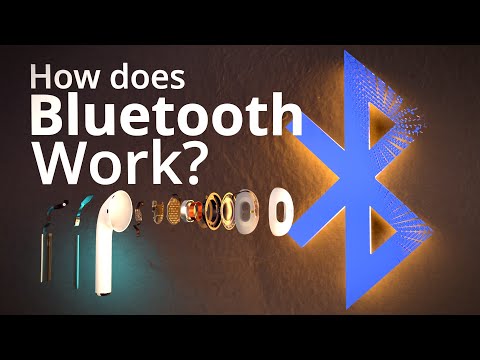 Photo: N43 and Hermes
Bluetooth has become the invisible thread connecting headphones, smartwatches, keyboards, and countless IoT devices. This analysis traces the protocol from its frequency-hopping origins to modern low-energy variants, examining how 2.4 GHz radio waves create reliable short-range connections.
Source video: How does Bluetooth Work? · Branch Education · approximately 10.4 million views observed via yt-dlp on August 17, 2026. Independently researched by N43 and Hermes.
Figure 1: Bluetooth classic divides the 2.4 GHz ISM band into 79 channels of 1 MHz each. Frequency-hopping spread spectrum rapidly switches between channels up to 1,600 times per second to avoid interference from Wi-Fi and other devices sharing the band.
01 The 2.4 GHz Battlefield
Bluetooth operates in the 2.4 GHz industrial, scientific, and medical radio band, a globally unlicensed frequency range that has become one of the most congested slices of the electromagnetic spectrum. This band is shared with Wi-Fi networks, microwave ovens, garage door openers, baby monitors, and countless other consumer devices. The reason so many technologies converge on 2.4 GHz is regulatory: governments worldwide set this band aside for unlicensed use, meaning manufacturers do not need to purchase expensive frequency licenses to build products that operate within it.
The congestion creates a fundamental engineering challenge. When multiple devices transmit on the same frequency simultaneously, their signals collide and data is corrupted. Different wireless technologies solve this problem in different ways. Wi-Fi uses carrier sense multiple access with collision avoidance, listening before transmitting and backing off if the channel is busy. Bluetooth takes a different approach entirely: it hops.
02 Frequency-Hopping Spread Spectrum
Bluetooth's core innovation is frequency-hopping spread spectrum, a technique that rapidly switches the carrier frequency among many channels in a pseudo-random sequence known to both transmitter and receiver. Classic Bluetooth divides the 2.4 GHz band into 79 channels, each 1 MHz wide, and hops between them up to 1,600 times per second. Each hop moves to a new frequency, and the device transmits a short burst of data before hopping again.
This approach is remarkably resilient to interference. If a particular channel is occupied by a Wi-Fi transmission or a microwave oven, the Bluetooth signal simply moves to the next channel in the sequence. The probability that many consecutive hops all land on congested channels is low, so some data gets through even in a noisy environment. The hopping sequence is determined by the master device's clock and address, ensuring that paired devices stay synchronized while unpaired devices cannot easily intercept the communication.
03 The Pairing Process
Before two Bluetooth devices can communicate, they must be paired. Pairing establishes a shared secret key that encrypts all subsequent communication. The process begins with an inquiry phase, where one device broadcasts discovery messages and the other responds with its address, name, and supported profiles. Once both devices identify each other, they negotiate a pairing method based on their capabilities.
Modern Bluetooth uses Secure Simple Pairing, introduced in version 2.1, which offers several association models. Numeric comparison displays a six-digit code on both devices and asks the user to confirm they match. Just Works pairing skips user confirmation and is used for devices without displays, such as headphones. Passkey entry requires typing a displayed code. Out of band uses a separate channel, such as NFC, to exchange pairing information. All methods ultimately produce a link key that authenticates future connections and encrypts data using the AES-CCM cipher.
04 Protocol Stack and Profiles
Bluetooth is not a single protocol but a stack of protocols, each handling a different layer of communication. At the bottom is the radio layer, which manages the physical transmission. Above it sits the baseband layer, which handles frequency hopping, packet formatting, and error correction. The link manager protocol negotiates connection parameters like power, encryption, and quality of service. The logical link control and adaptation protocol multiplexes multiple logical channels over the physical link.
At the top of the stack are profiles, which define how the protocol stack is used for specific applications. The Advanced Audio Distribution Profile streams high-quality audio to headphones and speakers. The Hands-Free Profile enables voice calls through car systems and headsets. The Human Interface Device Profile supports keyboards, mice, and game controllers. The Health Device Profile connects medical instruments. Each profile specifies the required protocols, packet types, and procedures, ensuring that devices from different manufacturers can interoperate for a given use case.
Figure 2: Maximum theoretical data rates by Bluetooth version. Note the dramatic jump with 3.0+HS (which used Wi-Fi for high-speed transfers) and the reset to lower power with 4.0 BLE. Versions 5.x prioritize range and broadcasting capacity over raw speed.
05 Bluetooth Low Energy: A Protocol Reborn
In 2010, Bluetooth 4.0 introduced a fundamentally new mode called Bluetooth Low Energy, commonly abbreviated BLE. Unlike classic Bluetooth, which was designed for continuous data streaming, BLE was optimized for short, infrequent transmissions from battery-powered devices that needed to last months or years on a coin cell. The design philosophy was radically different: minimize the time the radio is active, and minimize the energy consumed during each transmission.
BLE achieves this through several mechanisms. The radio wakes up, transmits a small packet, and goes back to sleep in as little as 3 milliseconds. The connection interval is adjustable, allowing devices to communicate as seldom as every few seconds when data is not urgent. The protocol uses a simpler, more compact packet structure than classic Bluetooth, reducing overhead. Power consumption can be as low as 0.01 to 0.5 milliwatts during transmission, compared to classic Bluetooth's 2.5 milliwatts or more. This efficiency has made BLE the foundation for the entire wearable and IoT ecosystem, from fitness trackers to smart home sensors.
06 Interference Coexistence with Wi-Fi
Because Bluetooth and Wi-Fi share the same 2.4 GHz band, coexistence is a persistent engineering challenge. Wi-Fi transmissions occupy wide channels, typically 20 MHz for older standards and up to 160 MHz for 802.11ac and 802.11ax in the 5 GHz band. Each Wi-Fi channel overlaps many Bluetooth hopping channels, meaning a Wi-Fi transmission can blanket a significant portion of the Bluetooth spectrum.
Modern Bluetooth controllers implement adaptive frequency hopping to mitigate this. The controller monitors which channels are consistently noisy and marks them as bad, removing them from the hopping sequence. If a Wi-Fi network occupies channels 2 through 7, the Bluetooth device simply avoids those channels and hops among the remaining ones. Additionally, some chipsets implement time-domain coexistence, where the Bluetooth and Wi-Fi radios coordinate their transmission schedules so they never transmit simultaneously, even though they share the same antenna and radio front end.
07 The Road Ahead: LE Audio and Beyond
The latest major evolution in Bluetooth is LE Audio, introduced with version 5.2 and expanded in subsequent releases. LE Audio brings audio streaming to the BLE protocol for the first time, using a new codec called LC3 that delivers comparable or better audio quality than the classic SBC codec at half the bit rate. This enables true wireless earbuds to last longer on a charge while maintaining audio fidelity.
Beyond audio, the Bluetooth roadmap includes Auracast, a broadcast capability that allows a single transmitter to send audio to an unlimited number of receivers. This enables scenarios like silent gym televisions, museum tours, and public assistive listening. The protocol continues to push on range and throughput, with Bluetooth 5.0 doubling the data rate to 2 Mbps and quadrupling the maximum range to approximately 240 meters in ideal conditions. As the number of connected devices continues to grow, Bluetooth's combination of low power, universal compatibility, and robust interference resilience ensures it will remain a foundational wireless technology for years to come.
References
- Wikipedia: Bluetooth — overview of Bluetooth protocol, frequency hopping, and versions
- Bluetooth SIG, bluetooth.com — Bluetooth Special Interest Group specifications and standards
- IEEE Standards Association, standards.ieee.org — IEEE 802.15.1 standard for Bluetooth PHY and MAC layers
- Source video: How does Bluetooth Work? (Branch Education, ~10.4 million views, observed August 17, 2026)
By N43 and Hermes for Sailor Bob News.


