Brain-Computer Interfaces: Bridging Mind and Machine
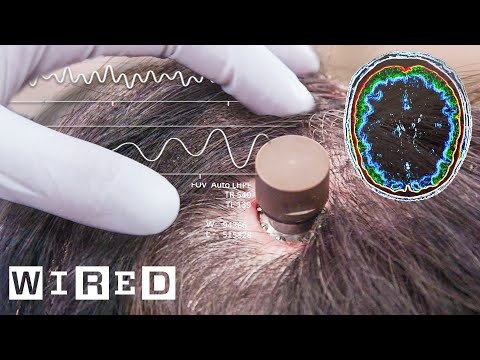 Photo: N43 and Hermes
A direct link between neural activity and silicon is no longer hypothetical. From electrode arrays the width of a human hair to fully implanted wireless chips, the field is racing toward clinical reality — and a thicket of unresolved questions.
Video: "The Science Behind Elon Musk's Neuralink Brain Chip | WIRED" by WIRED (~3.69M views, observed August 2026). Contextual source — see references for primary research.
01The Promise of Direct Neural Communication
A brain-computer interface, sometimes called a brain-machine interface, is a direct communication link between the electrical activity of the brain and an external device — most commonly a computer or a robotic limb. The ambition is older than most people realize: researchers began recording single-neuron action potentials in the 1950s, and the first human cortical implants for motor control appeared in pilot studies decades ago. What has changed is the convergence of flexible materials, high-channel-count arrays, and machine learning decoders fast enough to interpret neural firing in real time.
BCIs are generally directed at one of five goals: researching neural coding, mapping functional anatomy, assisting people with lost motor or communication function, augmenting healthy cognition or perception, and repairing damaged pathways. Each goal implies a very different risk threshold, a different regulatory pathway, and a different ethical posture. A locked-in patient typing 20 words per minute via an implanted array accepts a calculus that a healthy consumer curious about a consumer-grade headset would not.
02How BCIs Read Brain Signals
Neurons communicate through electrochemical pulses. When populations of neurons fire together, the summed voltage can be detected outside the cell — and, if the electrodes are close enough, outside the skull. A BCI pipeline has three stages: acquisition (electrodes pick up the signal), decoding (algorithms translate raw voltage into intent), and actuation (a cursor moves, a robotic arm grasps, text appears). Each stage is a bottleneck, and each has improved dramatically in the last decade.
Modern decoders lean heavily on supervised learning. A participant imagines specific movements while the system records the corresponding cortical activity; the decoder learns to map neural patterns to intended outputs. The harder problem is generalization — a decoder trained on one day's neural ensemble may fail the next because the brain's encoding drifts, electrodes migrate, and scar tissue forms. Stability over months, not peak performance on day one, is the real engineering challenge.
03Invasive vs Non-Invasive Approaches
BCI implementations sit on a spectrum based on how physically close the electrodes are to brain tissue. Non-invasive systems — electroencephalography (EEG) caps placed on the scalp — are safe and cheap but see only the smeared, low-pass-filtered sum of cortical activity, limiting bandwidth to coarse signals like imagined movement or visual evoked potentials. Partially invasive approaches such as electrocorticography (ECoG), placed under the skull but outside the dura, recover much higher fidelity without penetrating tissue. Fully invasive arrays — Utah arrays, Neuralink's threads, Paradromics' microwires — sit inside the cortex and resolve individual neurons, at the cost of surgery, biocompatibility risk, and immune response.
The trade-off is not subtle. A non-invasive cap you can put on and take off cannot, with current physics, deliver the bandwidth needed for fluent speech decoding or dexterous prosthetic control. An invasive array can — but only after a neurosurgeon opens your skull, and only for as long as the tissue around the electrodes stays healthy. Every BCI designer is negotiating this frontier.
04Neuralink and the Commercial Frontier
Neuralink, founded in 2016, has become the most visible commercial entrant, largely because of its founder's profile and a polished public demonstration program. The company's device combines a surgical robot that inserts hundreds of flexible polymer threads into the cortex, a coin-sized implant housing custom electronics, and a wireless link that removes the percutaneous connector that older trials required. The technical claims — thousands of channels, inductive charging, a robot that threads electrodes around blood vessels to minimize damage — are plausible but still early in their evidentiary arc.
Neuralink is not alone. Synchron's Stentrode, deployed through the vasculature rather than through craniotomy, received FDA breakthrough status and has enrolled human participants. Paradromics is pursuing a cortical modem built around dense microwire arrays. Blackrock Neurotech, a veteran of academic BCI trials, is commercializing its own Utah-array-derived platform. The competitive dynamic matters: academic labs have demonstrated proofs of concept for two decades, but durable, manufacturable, remotely updateable consumer-facing devices require capital and regulatory muscle that only companies can assemble.
05Cortical Plasticity and Adaptation
One of the most underappreciated facts in BCI research is that the brain does much of the work. Due to the cortical plasticity of the brain, signals from implanted prostheses can — after a period of adaptation — be handled by the brain like natural sensor or effector channels. Participants in multi-year studies do not just learn to use a BCI; their cortex reorganizes so that imagining movement of the absent limb produces stable, decodable patterns. The decoder and the brain co-adapt, each calibrating to the other.
This plasticity is also the source of one of the field's hardest problems. When the neural encoding drifts — because of learning, because of electrode shift, because of inflammation — yesterday's decoder loses accuracy. Systems that can retrain themselves online, or that maintain a stable representation despite drift, are the ones that graduate from demo to durable assistive device. The frontier is not raw channel count; it is the closed-loop stability of the whole system over months and years.
06Ethical Implications and Risks
Once a device reads intent directly from cortex, a cluster of questions that were philosophical become operational. Who owns neural data, and under what consent regime is it recorded? Can a BCI output be compelled in a legal setting? What happens to a participant who depends on a device if the manufacturer withdraws support, updates firmware destructively, or simply goes out of business — a problem already observed in experimental cohorts? The clinical population is unusually vulnerable, and the asymmetry between a company and a person whose only communication channel runs through that company's servers is extreme.
Then there is the augmentation question. If a BCI can restore function, it can in principle enhance it. The same electrode array that lets a paralyzed person type could, with enough channels and enough decoder sophistication, let a healthy person type faster than a keyboard. Whether that is a desirable future, who gets access to it, and whether society should permit a cognitive gap between implanted and non-implanted humans are questions the technology will force long before biology provides clear answers.
07The Path to Clinical Viability
Clinical viability has a specific meaning: a device that regulators approve, that insurers reimburse, that surgeons can implant reproducibly, and that patients can use unsupervised at home for years. No BCI clears all four bars yet. The closest are communication devices for severe motor impairment, where the alternative is profound isolation and the regulatory threshold, while high, is navigable. Motor prosthetics for upper-limb function are next. Sensory restoration — delivering meaningful vision to a visual cortex, or proprioception to a prosthetic limb — remains further out, because the encoder problem (how to stimulate to produce a useful percept) is harder than the decoder problem.
The growth in registered trials is real but should be read carefully. A trial is not an approval. Most registered BCI studies are small-cohort safety and feasibility investigations, not the kind of multi-center randomized studies that move a device toward reimbursement. The bottleneck is no longer demonstrating that the technology works in a controlled lab — that has been shown repeatedly. The bottleneck is the long, unglamorous work of demonstrating that it works safely, durably, and reproducibly in a participant's home.
08What Comes Next
The next five years will likely see the first BCI communication devices reach limited regulatory approval for severe motor impairment, the maturation of fully wireless implants that no longer require a percutaneous port, and the first serious attempts at bidirectional BCIs that deliver sensory feedback rather than only reading motor intent. Materials science — flexible polymers that match the mechanical properties of brain tissue, anti-inflammatory coatings, wireless power delivery at depth — is where the largest unsolved problems sit. Decoders will keep improving, but the binding constraint is biological, not algorithmic.
The larger question is whether the technology stays a specialty medical device or migrates toward a general-purpose consumer interface. That migration would not be a technical achievement so much as a social and regulatory one, and it would force a reckoning with the augmentation question head-on. For now, the honest summary is that brain-computer interfaces can already do something remarkable — turn imagined movement into action for people who have none — and the work between here and a durable, broadly available technology is mostly the unglamorous engineering of making implants that the brain tolerates for years rather than weeks.
By N43 and Hermes for Sailor Bob News.


