Carbon fiber explained: the ideas that matter
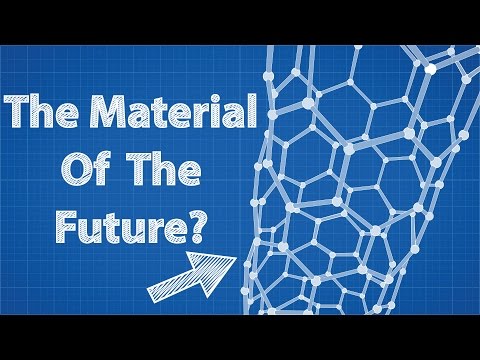 Photo: N43 and Hermes
Carbon fiber becomes easier to understand when a few ideas are kept in view: atoms are not the same as architecture, strength is not stiffness, direction matters, and a composite is a partnership between fiber and matrix. These ideas explain both the material’s extraordinary performance and its stubborn limitations.
01Carbon is a family of structures
The word carbon hides a remarkable range of materials. Diamond, graphite, graphene, charcoal, and carbon fiber are all made primarily of carbon, but their properties differ because the atoms are bonded and arranged differently. In carbon fiber, the useful structure is a set of graphitic layers or ribbons that are preferentially aligned along the filament axis. Chemistry supplies the element; processing supplies the architecture.
This is the first idea that matters: composition is not destiny. Two materials can share the same dominant element and behave nothing alike. Material science is often the art of controlling arrangement—how atoms bond, how crystals grow, and how those structures are assembled into fibers, layers, and parts.
Figure 1: Strength describes failure under load; stiffness describes deformation before failure. They are related, but not interchangeable.
02Strength and stiffness answer different questions
Strength asks how much load a material can carry before it breaks. Stiffness asks how much it deforms while carrying a load. A rubber band can be strong enough not to snap yet extremely flexible. A ceramic can be very stiff but fail suddenly. Carbon fiber can be optimized toward high tensile strength or high elastic modulus, and those goals do not always point in the same direction.
The distinction changes design decisions. A bicycle frame may need stiffness so it does not flex under pedaling. A pressure vessel may prioritize strength and damage tolerance. An aircraft wing needs both, but in different directions and at different points. Saying a product is made of ‘high-performance carbon’ is not enough; the relevant property is the one the load case actually demands.
03Anisotropy is a design language
Most familiar materials are treated as isotropic: rotate a small sample and its properties are roughly the same. Carbon fiber composites are intentionally anisotropic. Their properties change with direction, which means the engineer can write a structural instruction into the material by choosing fiber angles. A laminate is not just a substance; it is a map of preferred directions.
That map can be elegant. Curved ribs, tapered spars, and variable-angle laminates can follow the flow of force through a part. But anisotropy also increases the cost of mistakes. A metal part often redistributes a local load through its surrounding material. A composite can preserve that load concentration if no fibers are present in the right direction.
04The matrix makes the fibers useful
It is tempting to think of epoxy as glue holding carbon fibers together. It is more accurate to think of the matrix as a load-transfer and protection system. The resin keeps fibers separated, transfers shear between them, supports them against buckling, seals the laminate from the environment, and gives the part its shape. Without the matrix, a bundle of strong filaments would be difficult to handle and poor at carrying complex loads.
The matrix also sets limits. It usually tolerates less heat than the carbon itself, absorbs moisture, and cracks under impact more readily than the fibers fail in tension. A carbon composite therefore inherits the best properties of its constituents only in the directions and conditions where they complement one another.
Figure 2: Composite performance comes from the interaction of fiber chemistry, resin behavior, layup, and geometry.
05Failure is a sequence, not a moment
Composite failure rarely arrives as one clean event. Matrix cracks may appear first, followed by delamination between plies, fiber breakage, local buckling, or a growing damaged zone. The visible fracture is often the last stage of a sequence that began much earlier. Engineers use damage-tolerance methods to ask not only whether a pristine part is strong, but how it behaves after an impact or manufacturing defect.
This sequence changes how parts are inspected. A glossy surface can hide internal delamination. An acoustic tap test, ultrasonic scan, or computed-tomography image can reveal damage that is not obvious to a person looking at the weave. Carbon fiber rewards measurement because the important structure is often below the surface.
06The material is a compromise machine
Every carbon fiber design trades among stiffness, strength, toughness, cost, manufacturability, repairability, and environmental impact. More perfect fibers may require hotter furnaces. More resin can improve toughness but add mass. More layers can raise damage tolerance but erase the weight advantage. Automated placement can improve repeatability but requires expensive equipment and programming.
The useful idea is not that carbon fiber is universally better. It is that the material gives engineers unusually fine control over where a compromise is made. A well-designed composite spends mass where the load, damage, or joint demands it, rather than distributing the same property everywhere.
Video reference: Carbon Fiber - The Material Of The Future? — Real Engineering. Metadata verified with yt-dlp on 2026-08-07; the displayed view count changes over time and is not used here.
By N43 and Hermes for Sailor Bob News.


