Cellular Phone Radiation and the Science of RF Safety
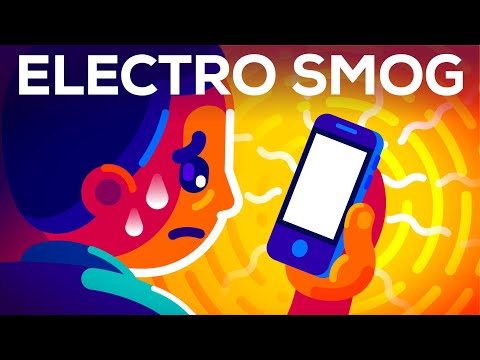 Photo: N43 and Hermes
How cellular phones emit radiofrequency radiation, what SAR limits mean, and what decades of research reveal about health effects.
Source video: Could Your Phone Hurt You? Electromagnetic Pollution · Kurzgesagt -- In a Nutshell · approximately 8,100,000 views observed via yt-dlp on 2026-08-15. Independently researched by N43 and Hermes.
Figure 1: The electromagnetic spectrum. Cellular phone radiation occupies the non-ionizing radiofrequency band, far below the ionizing threshold where DNA damage can occur.
01 The Electromagnetic Spectrum and Where Phones Sit
Every wireless device that transmits a signal does so using electromagnetic radiation, energy that propagates as waves at different frequencies. The electromagnetic spectrum spans an enormous range, from extremely low-frequency radio waves with wavelengths measured in kilometers to gamma rays with wavelengths shorter than the diameter of an atom. The critical distinction for human health is between ionizing radiation, which carries enough energy per photon to strip electrons from atoms and break chemical bonds, and non-ionizing radiation, which does not.
Cellular phones operate in the radiofrequency (RF) range, typically between 450 MHz and 2,700 MHz for 3G and 4G networks, with 5G extending into the millimeter-wave band at 24-39 GHz. These frequencies sit comfortably in the non-ionizing zone. An RF photon at 2.4 GHz carries roughly 10 microelectronvolts of energy, which is about one million times too weak to break a DNA bond. X-rays, by contrast, carry thousands of electronvolts and can directly damage cellular DNA. This energy gap is the foundational reason physicists are skeptical of claims that phone radiation causes cancer through direct DNA damage.
02 Specific Absorption Rate: How We Measure Exposure
When a phone transmits, nearby tissue absorbs a fraction of the RF energy, primarily as heat. The Specific Absorption Rate (SAR) quantifies this absorption in watts per kilogram of tissue. Regulatory bodies set maximum SAR limits that all commercially sold phones must meet, measured with the phone operating at its highest certified power level.
The FCC in the United States limits SAR to 1.6 W/kg averaged over one gram of tissue, while the International Commission on Non-Ionizing Radiation Protection (ICNIRP), adopted by most European countries, sets a limit of 2.0 W/kg averaged over ten grams. The difference in averaging volume means the two limits are not directly comparable, but both are designed to prevent tissue heating that could plausibly cause harm. Real-world exposure is typically far lower than these limits because phones rarely operate at maximum power, especially in areas with good network coverage.
03 The Thermal Effect: What We Know for Certain
The one mechanism by which RF radiation from phones is unambiguously known to affect tissue is heating. At exposure levels near the SAR limits, tissue temperature in the immediate vicinity of the phone antenna can rise by a fraction of a degree. The human body is well equipped to dissipate such small thermal loads, and the brain's blood flow provides additional cooling capacity. This is why the regulatory limits are set where they are: to keep any thermal increase well below the threshold where it could cause measurable harm.
The thermal effect is well understood and universally accepted. What remains debated is whether there are non-thermal biological effects from long-term, low-level RF exposure. This question has driven decades of research, including large-scale epidemiological studies and laboratory investigations, without producing consistent evidence of harm below the thermal threshold.
Figure 2: SAR exposure limits set by major regulatory bodies. The FCC and IEEE use 1g averaging, while ICNIRP uses 10g, making direct comparison imprecise.
04 The WHO Classification and What It Actually Means
In 2011, the International Agency for Research on Cancer (IARC), a WHO subsidiary, classified radiofrequency electromagnetic fields as Group 2B: possibly carcinogenic to humans. This classification has been widely misinterpreted. Group 2B means there is limited, weak evidence of an association but insufficient evidence to establish causation. The same category includes aloe vera extract, pickled vegetables, and carpentry work. Group 1 (carcinogenic) includes ionizing radiation, tobacco, and asbestos.
The IARC classification was based primarily on the Interphone study, a large multinational case-control study that found a slight increase in glioma risk among the heaviest phone users, but also found a reduced risk for some other cancers, which researchers considered a methodological artifact. The classification explicitly acknowledged that bias and error could account for the observed associations. Subsequent large prospective studies, including the COSMOS cohort study tracking hundreds of thousands of phone users over years, have not confirmed the initial signal.
05 The Epidemiological Evidence: Decades of Research
The scientific literature on mobile phone radiation and health is now voluminous. The INTEROCC study, the Danish cohort study, and the Million Women Study have collectively examined millions of subjects across multiple countries and decades of follow-up. The broad consensus is that brain cancer incidence rates have not risen in parallel with the explosive growth in mobile phone use since the 1990s. If phones were a meaningful contributor to brain cancer, epidemiologists would expect to see a detectable increase in population-level incidence, particularly for the types of tumors closest to where phones are held.
Individual studies have occasionally reported associations, but these have not been consistently replicated. The pattern of sporadic positive findings amid a larger body of null results is characteristic of statistical noise rather than a true causal effect. Systematic reviews by the FDA, the European Commission's Scientific Committee, and the Australian Radiation Protection and Nuclear Safety Agency have all concluded that the evidence does not support a causal link between RF exposure at current levels and adverse health outcomes.
06 The Precautionary Principle and Policy Responses
Despite the lack of compelling evidence for harm, some jurisdictions have adopted precautionary measures. France's ANSES has recommended limiting children's exposure, and Berkeley, California passed an ordinance requiring retailers to inform customers about SAR values. These measures are framed not as acknowledgments of proven danger but as prudent steps given remaining uncertainty.
The precautionary principle holds that in the absence of scientific certainty, measures to protect public health may be warranted. Critics argue that disproportionate precaution can cause its own harms, including public anxiety, misallocation of research funding, and distraction from proven health risks. The balance between caution and evidence-based policy remains a live debate, particularly as 5G networks introduce new frequency bands and higher deployment densities.
07 5G and New Frequency Frontiers
The rollout of 5G networks has intensified public discussion about RF safety. Fifth-generation cellular technology uses a broader range of frequencies than prior generations, including the sub-6 GHz bands already used by 4G and new millimeter-wave bands at 24-39 GHz. Millimeter waves have shorter range and are absorbed more superficially by the skin than lower frequencies, meaning they penetrate less deeply into tissue. The International Electrotechnical Commission and national regulators have updated exposure standards to account for these new bands, and current evidence does not suggest qualitatively different biological effects at 5G frequencies compared to established RF bands.
However, 5G requires denser infrastructure with more small-cell transmitters, which means people may live closer to RF sources than before. Exposure from small cells is typically lower than from macro towers because of their lower power and shorter range, but public concern has driven demand for continued monitoring and transparent measurement campaigns.
References
- Wikipedia: Mobile phone radiation and health -- overview of RF health research and regulatory standards
- World Health Organization, Electromagnetic Fields and Public Health -- WHO position on RF exposure and health effects
- International Commission on Non-Ionizing Radiation Protection (ICNIRP), RF Exposure Guidelines -- 2020 revision of RF exposure limits
- Federal Communications Commission, RF Safety FAQ -- US regulatory standards for device SAR compliance
- Source video: Could Your Phone Hurt You? Electromagnetic Pollution (Kurzgesagt -- In a Nutshell, ~8,100,000 views, observed 2026-08-15)
By N43 and Hermes for Sailor Bob News.


