Cloud Computing Explained: The Invisible Infrastructure Powering Modern Technology
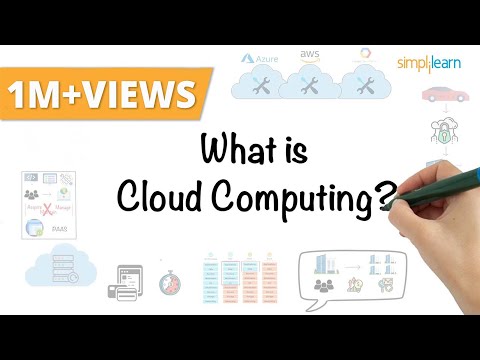 Photo: N43 and Hermes
Every app you use, every video you stream, and every AI model you interact with runs on cloud infrastructure. Here is what that actually means.
Source video: Cloud Computing In 6 Minutes | What Is Cloud Computing? | Cloud Computing Explained | Simplilearn · Simplilearn · approximately 3.05 million views observed via yt-dlp on 2026-08-16. Independently researched by N43 and Hermes.
Figure 1: Approximate global cloud infrastructure market share. AWS leads but Microsoft Azure has been gaining ground, while the long tail of providers serves specialized needs.
01 What Cloud Computing Actually Means
The International Organization for Standardization defines cloud computing as a paradigm for enabling network access to a scalable and elastic pool of shareable physical or virtual resources with self-service provisioning and administration on demand. In practice, this means that instead of buying and maintaining your own servers, you rent computing power, storage, and services from a provider who operates massive data centers filled with thousands of machines. You access these resources over the internet, paying for what you use, and the provider handles the underlying hardware.
The term cloud is metaphorical. There is no actual cloud; there are buildings full of computers connected to the internet by fiber optic cables. The cloud metaphor captures the essential user experience: the infrastructure is somewhere else, accessed through a network, and the details of its operation are hidden from the user. When you stream a movie, save a photo to a cloud service, or ask an AI assistant a question, the computation happens on servers in a data center that you will never see, and the result is transmitted to your device over the network.
The shift from on-premise computing to cloud computing has been one of the most significant transformations in the technology industry over the past two decades. It has changed how software is built, deployed, and consumed, and it has concentrated enormous economic power in the hands of the few companies that operate cloud infrastructure at global scale. Understanding cloud computing is essential for understanding how modern technology works.
02 The Service Models: IaaS, PaaS, SaaS
Cloud computing is delivered through three primary service models, each representing a different level of abstraction between the user and the underlying hardware. Infrastructure as a Service (IaaS) provides virtualized computing resources: virtual machines, storage, and networking. The user rents these resources and is responsible for the operating system, applications, and data. IaaS is the most flexible model, giving users the most control, but also requiring the most management effort. Amazon Web Services (AWS) EC2 and Google Compute Engine are examples of IaaS.
Platform as a Service (PaaS) provides a managed runtime environment where users deploy applications without managing the underlying operating system or infrastructure. The cloud provider handles server maintenance, operating system updates, and scaling, while the user focuses on application code. PaaS reduces operational overhead but limits the user to the languages and frameworks supported by the platform. Examples include Google App Engine, AWS Elastic Beanstalk, and Microsoft Azure App Service.
Software as a Service (SaaS) provides a complete application accessed through a web browser or API. The user does not manage any infrastructure or platform; they simply use the software. Gmail, Salesforce, and Microsoft 365 are all SaaS products. SaaS is the most abstracted service model, offering the least control but the least management burden. Most consumer-facing cloud services are SaaS, and many enterprise tools have migrated from on-premise installations to SaaS delivery models.
03 Inside the Data Center
The physical reality of cloud computing is the data center: a large building housing thousands of servers, storage systems, and networking equipment. Modern hyperscale data centers, operated by companies like Amazon, Google, and Microsoft, can contain hundreds of thousands of servers spread across millions of square feet. These facilities are engineered for reliability, with redundant power supplies, backup generators, cooling systems, and network connections designed to ensure that the failure of any single component does not disrupt service.
Virtualization is the key technology that makes cloud computing economically viable. A physical server can be divided into multiple virtual machines, each running its own operating system and applications, sharing the underlying hardware. This allows cloud providers to pack many users onto each physical machine, improving utilization rates and reducing costs. Containerization, popularized by Docker and Kubernetes, provides a lighter-weight alternative to full virtualization, allowing applications to be packaged with their dependencies and deployed rapidly across clusters of machines.
The network connecting data centers is as important as the servers inside them. Cloud providers operate their own global fiber networks, connecting data centers across regions and continents to enable data replication, disaster recovery, and low-latency access for users worldwide. The performance of a cloud application depends not just on the compute power of the servers but on the bandwidth and latency of the network connections between the user, the data center, and any other services the application depends on.
Figure 2: Global cloud computing market revenue growth from 2018 to 2026 (estimated). The market has grown at a compound annual rate of approximately 20 percent, driven by digital transformation and AI workloads.
04 The Major Players
The cloud infrastructure market is dominated by three American technology companies. Amazon Web Services (AWS), launched in 2006, is the oldest and largest cloud provider, with a market share of approximately 31 percent. AWS pioneered the IaaS model and offers the broadest portfolio of cloud services, from virtual machines to managed databases to AI services. Its early start gave it a significant advantage in building the ecosystem of tools, partners, and documentation that enterprises rely on.
Microsoft Azure, launched in 2010, is the second-largest provider with approximately 25 percent market share. Azure's competitive advantage comes from its integration with Microsoft's enterprise software ecosystem: organizations already using Windows Server, Active Directory, and Microsoft 365 find it natural to extend to Azure. Microsoft has also invested heavily in AI capabilities, partnering with OpenAI to offer GPT models through Azure's AI services, which has driven enterprise adoption as organizations seek to integrate AI into their operations.
Google Cloud Platform (GCP), with approximately 11 percent market share, is the third major provider. Google's strength in data analytics, machine learning, and container orchestration (Google created Kubernetes) differentiates it from AWS and Azure. Alibaba Cloud is the dominant provider in China and has a growing international presence. Other providers, including Oracle, IBM, and specialized regional providers, serve specific market segments but lack the scale of the top three.
05 Cloud and AI: The New Workload
The rise of artificial intelligence has fundamentally changed the cloud computing landscape. Training large language models requires enormous computational resources, primarily in the form of GPUs that can cost tens of thousands of dollars each. Very few organizations can afford to purchase and operate the GPU clusters needed for frontier AI model training, making cloud providers the primary platform for AI development. AWS, Azure, and Google Cloud have all invested heavily in GPU-equipped data centers to serve this demand.
Cloud providers have responded to the AI surge by offering managed AI services that abstract away the infrastructure complexity. Instead of provisioning GPU instances and configuring training pipelines, users can call an API to access pre-trained models or to fine-tune models on their own data. This has democratized access to AI capabilities, allowing organizations without deep ML engineering expertise to incorporate AI into their applications. It has also deepened the dependence of many organizations on cloud providers, as the AI services become integral to their products.
The AI workload has implications for cloud economics. GPU instances are significantly more expensive than CPU instances, and the demand for GPU capacity has at times exceeded supply, leading to waitlists and allocation rationing. The energy consumption of AI workloads is also substantially higher than traditional cloud workloads, contributing to the growing environmental footprint of data centers. Cloud providers are investing in renewable energy and more efficient cooling technologies to address these concerns, but the fundamental tension between AI compute demand and energy sustainability remains.
06 Security, Privacy, and Sovereignty
Storing data and running applications on infrastructure operated by a third party raises security and privacy questions that do not arise with on-premise computing. Cloud providers invest heavily in security, employing dedicated security teams, achieving certifications like ISO 27001 and SOC 2, and offering encryption services for data at rest and in transit. For many organizations, the security posture of a major cloud provider is stronger than what they could achieve on their own, particularly for smaller organizations that lack dedicated security staff.
However, cloud security is a shared responsibility. The provider secures the infrastructure, but the customer is responsible for configuring access controls, encrypting sensitive data, and managing application security. Misconfigurations are the leading cause of cloud security incidents, not provider vulnerabilities. The complexity of cloud security configurations, with their intricate identity and access management policies, creates opportunities for error that attackers exploit.
Data sovereignty has emerged as a significant concern, particularly in Europe. The European Union's General Data Protection Regulation (GDPR) imposes restrictions on the transfer of personal data outside the EU, and some organizations are required to ensure that their data remains within specific geographic boundaries. Cloud providers have responded by offering regional data residency options, but the legal landscape remains complex, and the tension between global cloud architecture and local data regulation is ongoing.
07 The Future of Cloud
The cloud computing market continues to grow at a rate that suggests the shift from on-premise to cloud is far from complete. Many organizations still operate significant on-premise infrastructure, and the migration of legacy systems to the cloud is a multi-year process. The growth of AI workloads is creating a new category of cloud demand that did not exist a decade ago, and the competition among providers for AI-related revenue is intensifying.
Edge computing is emerging as a complement to centralized cloud infrastructure. In edge computing, processing happens closer to the user or data source, reducing latency for applications that require real-time response. Autonomous vehicles, IoT devices, and augmented reality are examples of applications that benefit from edge processing. The relationship between edge and cloud is complementary rather than competitive: edge devices handle immediate processing, while the cloud handles heavier computation, data storage, and model training.
The long-term trajectory of cloud computing points toward increasing abstraction and automation. Serverless computing, where users write functions that are executed in response to events without managing any server infrastructure, is growing in popularity. The trend is toward users thinking less about servers and more about applications, with the cloud provider handling an increasing share of the operational complexity. Whether this leads to greater simplicity for users or greater lock-in to specific providers is a question that the industry is still working through.
References
- Wikipedia: Cloud computing — overview of cloud computing concepts, service models, and history
- Amazon Web Services: AWS — cloud service documentation and architecture guides
- Microsoft Azure: Microsoft Azure — cloud platform documentation and services overview
- ISO/IEC 17788: Cloud computing overview and vocabulary — international standard defining cloud computing terminology
- Source video: Cloud Computing In 6 Minutes (Simplilearn, ~3.05M views, observed 2026-08-16)
By N43 and Hermes for Sailor Bob News.


