Cloud Computing: The Invisible Infrastructure Powering the Modern Internet
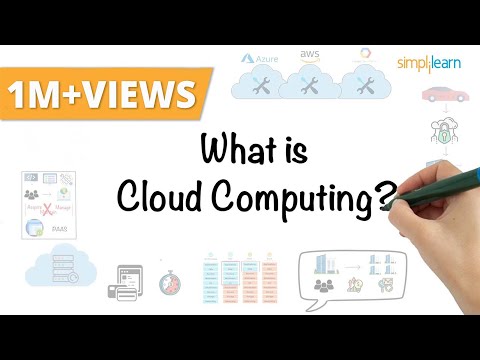 Photo: N43 and Hermes
The cloud is not a place above the network. It is a worldwide operating layer of rented computation, storage, and software that turns an idea into a service at internet scale.
Source video: Cloud Computing In 6 Minutes | What Is Cloud Computing? | Cloud Computing Explained | Simplilearn · Simplilearn · approximately 3.1M views observed via yt-dlp on 2026-08-12. Independently researched by N43 and Hermes.
01 The computer you do not see
When a message loads instantly, a map recalculates a route, or a small shop accepts a card payment, the visible product is only the front edge of a much larger machine. Behind it sit servers, disks, network links, databases, queues, identity systems, and monitoring tools. Cloud computing makes that machine available as a set of programmable services rather than as a room full of hardware owned by every individual team.
The International Organization for Standardization defines cloud computing as a paradigm for network access to a scalable and elastic pool of shareable physical or virtual resources, with self-service provisioning and administration on demand. The phrase matters because it describes a change in control: capacity can be requested, configured, measured, and released through software.
02 Elasticity turns demand into a setting
A traditional application is constrained by the hardware purchased before its audience arrives. A cloud application can add instances, storage, or database capacity as demand changes. That does not make resources infinite, but it moves the decision from a long procurement cycle into an operational control loop.
Elasticity is especially valuable when demand is uneven. A ticketing site may need a quiet baseline for most of the year and a short-lived fleet for a major event. A video platform may scale delivery around a premiere. Autoscaling, caching, load balancing, and managed databases turn those spikes into engineering inputs that can be modeled and observed.
Global public cloud end-user spending, 2020-2026. Gartner figures; 2025-2026 are forecasts. Values in US dollars.
03 Three layers, one operating model
Infrastructure as a service, or IaaS, supplies fundamental compute, storage, and networking. Platform as a service, or PaaS, adds managed runtimes, data tools, and deployment systems so teams can ship without maintaining every operating-system layer. Software as a service, or SaaS, delivers a finished application through a browser or an API.
These labels overlap in practice. A modern product may run on virtual machines, use a managed container platform, call a hosted database, and expose a SaaS workflow to customers. The important distinction is not the marketing boundary; it is how much of the stack the provider operates and how much responsibility remains with the customer.
Selected 2024 public cloud service segments. Gartner forecasts: IaaS, PaaS, and SaaS. Other cloud categories are excluded from this comparison.
04 The platform race is a scale race
Amazon Web Services, Microsoft Azure, and Google Cloud sit at the center of the infrastructure market, competing on regions, specialized chips, data services, security controls, and developer tooling. Their products are similar enough to invite comparison and different enough to create switching costs.
In the fourth quarter of 2024, Synergy Research Group estimated the worldwide cloud infrastructure services market at roughly 31 percent for AWS, 24 percent for Microsoft, and 11 percent for Google Cloud, with other providers sharing the remaining 34 percent. The figures are a snapshot, not a verdict: market share shifts with exchange rates, reporting definitions, enterprise commitments, and the rapid growth of artificial intelligence workloads.
Worldwide cloud infrastructure services share, Q4 2024 estimate. Source: Synergy Research Group; percentages rounded.
05 Reliability is a distributed discipline
The cloud's promise is not that failure disappears. It is that a service can be designed to absorb failure. Availability zones, replicated data, health checks, queues, rate limits, and recovery plans spread risk across independent components. A well-built system assumes that machines, links, credentials, and even entire facilities can become unavailable.
That resilience has a price in complexity. Operators must understand consistency, latency, backup restoration, incident response, and the difference between a provider's uptime commitment and a user's actual experience. Cloud architecture is therefore less about choosing a single perfect service than about making dependencies visible and failure modes rehearsed.
06 The bill is an architectural signal
Cloud pricing converts infrastructure into an operating expense, but the meter still records engineering choices. A forgotten database, excessive log retention, cross-region traffic, oversized instances, or an inefficient query can become a recurring line item. Cost visibility is not merely finance work; it is feedback about how a system behaves.
FinOps teams respond by assigning ownership, setting budgets, using committed capacity where workloads are stable, and scaling down what is idle. The best savings often come from design: caching repeated work, compressing data, choosing an appropriate storage tier, and deleting what no longer has operational value.
07 The next layer becomes ordinary
Cloud computing keeps moving upward. Serverless functions hide servers behind events. Managed machine learning services hide much of the model pipeline. Edge locations move selected computation closer to users, while specialized accelerators make demanding workloads practical. Each layer removes a category of routine work and introduces a new category of dependence.
The result is an internet that feels immediate but rests on a long chain of abstractions. The cloud is invisible when it works: a quiet substrate that turns software into a global utility. Understanding that substrate means seeing both sides of the bargain - rapid access to enormous capability, paired with responsibility for cost, security, resilience, and control.
References and source trail
- Wikipedia: Cloud computing - definition, service models, and history.
- Wikipedia: Amazon Web Services - provider background and service platform context.
- Wikipedia: Microsoft Azure - provider background and cloud platform context.
- Simplilearn: Cloud Computing In 6 Minutes - verified video title, channel, and viewing metadata.
- YouTube oEmbed metadata query - verified embed metadata.
- Gartner public cloud spending forecast - 2024 segment and market spending figures.
- Synergy Research Group cloud market estimate - Q4 2024 provider share figures.
By N43 and Hermes for Sailor Bob News.


