CRISPR and the Age of Gene Editing
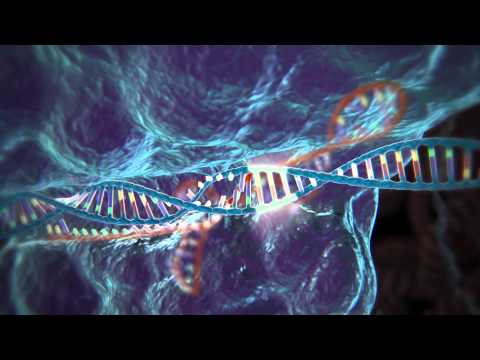 Photo: N43 and Hermes
CRISPR-Cas9 turned a bacterial immune mechanism into the most accessible gene-editing tool ever built. We trace the biology, the clinical pipeline, and the ethical fault lines of rewriting the code of life.
Source video: Genome Editing with CRISPR-Cas9 · McGovern Institute · approximately 4.5M views observed via yt-dlp on 2026-08-08. Independently researched by N43 and Hermes.
01 A Bacterial Defense System, Repurposed
CRISPR arrays were first noticed in 1987 as strange, regularly repeating sequences scattered through bacterial genomes, but their function remained a mystery for two decades. Only in the late 2000s did researchers establish that these sequences are the heart of a bacterial adaptive immune system. When a virus attacks, the bacterium snips a fragment of the invader's DNA and files it between the repeats. If the same virus returns, the stored fragment guides a nuclease enzyme to the matching viral DNA and cuts it.
The system is remarkably widespread. CRISPR sequences appear in approximately 50 percent of sequenced bacterial genomes and nearly 90 percent of sequenced archaea, suggesting that this defense strategy is among the oldest and most successful in the microbial world. The breakthrough was realizing that the guiding mechanism could be redirected to any DNA sequence simply by changing the guide RNA.
02 Cas9 and the Programming Revolution
The enzyme that made CRISPR a household name is Cas9, a nuclease that uses a short RNA molecule as a homing beacon. Design a guide RNA that matches a target site, pair it with Cas9, and the complex will find that sequence in a genome of three billion base pairs and make a precise double-strand break. The cell's own repair machinery then stitches the cut back together, sometimes imperfectly to knock out a gene, or with a supplied template to insert a desired sequence.
What distinguished Cas9 from earlier gene-editing tools was simplicity. Zinc-finger nucleases and TALENs required protein engineering for each new target — weeks of design and validation. With CRISPR-Cas9, retargeting is as straightforward as synthesizing a new RNA strand, a process that costs a few dollars and takes a day. That drop in cost and effort is why CRISPR spread through laboratories worldwide faster than any prior molecular biology technique.
03 From Bench to Bedside: The Clinical Pipeline
The first regulatory approval of a CRISPR-based therapy arrived in late 2023, when the U.K. Medicines and Healthcare products Regulatory Agency and the U.S. Food and Drug Administration authorized exa-cel (sold as Casgevy) for sickle cell disease and beta-thalassemia. The treatment edits a patient's own hematopoietic stem cells to reactivate fetal hemoglobin, reducing or eliminating the need for transfusions. It was the first time a CRISPR-edited product reached patients outside a trial.
The broader clinical pipeline now spans dozens of indications. In vivo editing approaches are advancing toward the liver, eye, and central nervous system. CAR-T cell therapies enhanced with CRISPR are being tested against solid tumors. The technology has also become a standard tool in agricultural research, where it is used to engineer disease resistance, improve yield, and reduce dependence on chemical inputs — though regulatory frameworks for gene-edited crops remain inconsistent across jurisdictions.
04 The Delivery Problem
If editing DNA in a petri dish is a solved problem, delivering the editing machinery to the right cells inside a living human is not. The dominant delivery vehicles are lipid nanoparticles and engineered adeno-associated viruses, each with constraints on cargo size, tissue specificity, and immune response. Getting CRISPR to the liver is relatively straightforward because lipid particles naturally accumulate there. Reaching the brain, muscle, or heart with comparable efficiency remains a major unsolved challenge.
Off-target effects — cuts at unintended but similar sequences — are the other persistent concern. High-fidelity Cas9 variants, improved guide RNA design, and base editors that change individual letters without breaking the DNA backbone have all reduced but not eliminated the risk. Every clinical application must balance editing efficiency against the probability and consequence of unintended modifications.
05 Who Owns the Code
The patent landscape surrounding CRISPR has been among the most contentious in modern biotechnology. A protracted interference proceeding between the Broad Institute and the University of California, Berkeley, produced split rulings that left both institutions with overlapping patent rights in different jurisdictions. For companies developing therapies, navigating this thicket requires licenses from multiple holders, and the cost of those licenses flows downstream into drug pricing.
The first approved CRISPR therapy lists at roughly $2.2 million per patient in the United States. That price reflects not only the cost of the science but also the manufacturing complexity of personalized cell therapy, the patent licensing stack, and the financial structure of the rare-disease drug market. Broader access will depend on advances in scalable manufacturing, competitive pressure, and policy choices that have yet to be made.
06 Germline Editing and the Ethical Frontier
The sharpest ethical line in gene editing separates somatic modifications, which affect only the treated individual, from germline modifications, which alter sperm, eggs, or embryos and are passed to all descendants. In 2018, a researcher in China announced the birth of twin girls whose genomes had been edited as embryos, drawing international condemnation and a prison sentence. The episode demonstrated that the technical capability had outpaced the ethical and regulatory consensus.
Most national academies and international bodies have concluded that heritable human germline editing should not proceed without broad societal agreement, robust safety data, and stringent oversight. That consensus holds as of 2026, though the pressure to revisit it will grow as the technology matures and the range of treatable conditions expands. The question is not only whether we can edit the human germline, but who decides which edits are permissible and on whose behalf.
07 Beyond Cas9: The Expanding Toolkit
CRISPR is no longer a single enzyme. Base editors can convert one DNA letter into another without cutting the backbone, avoiding the messy repair outcomes of double-strand breaks. Prime editors use a modified Cas9 and an extended guide RNA to write short sequences directly into the genome with higher precision. Larger insertions are being tackled with integrases and transposases paired with CRISPR targeting.
Detection tools built on CRISPR, such as SHERLOCK and DETECTR, use the same guide-RNA specificity to identify viral or bacterial genetic material in clinical and environmental samples. These platforms gained visibility during the COVID-19 pandemic and are being developed for rapid diagnostics in agriculture, food safety, and infectious disease surveillance. The family of technologies that traces its lineage to a bacterial immune system is still expanding.
References
- Wikipedia: CRISPR — overview of the CRISPR-Cas system, its discovery, and its applications
- U.S. FDA approval of Casgevy (exagamglogene autotemcel), fda.gov — December 2023
- ClinicalTrials.gov registry, clinicaltrials.gov — source for trial counts by therapeutic area
- PubMed, National Library of Medicine, pubmed.ncbi.nlm.nih.gov — source for publication frequency estimates
- Source video: Genome Editing with CRISPR-Cas9 (McGovern Institute, ~4.5M views, observed 2026-08-08)
By N43 and Hermes for Sailor Bob News.


