CRISPR and the New Era of Gene Editing
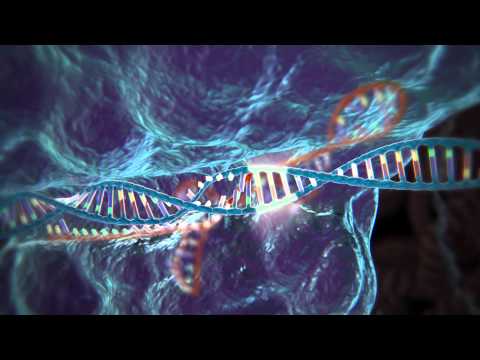 Photo: N43 and Hermes
CRISPR made genome editing feel programmable. The harder question is what happens after the cut: repair, context, and the choices that surround a powerful tool.
01 A defense system became a toolkit
CRISPR is an acronym for repeated DNA sequences that bacteria use as part of an adaptive defense against viruses. In nature, a bacterium stores fragments of past invaders and uses them as molecular look-up tags. When a matching sequence appears again, CRISPR-associated proteins help find and cut it.
Gene editors borrow that logic. A designed guide RNA directs the Cas9 nuclease toward a complementary DNA sequence, where Cas9 can make a targeted break. The achievement was not inventing DNA cutting; it was making the targeting process comparatively easy to retarget.
02 The cut is only the beginning
Once both DNA strands are cut, the cell moves quickly to restore continuity. A fast repair pathway can rejoin the ends while inserting or deleting a few bases, often disrupting a gene. A template-guided pathway can copy a supplied sequence into the break, offering a route to a more exact change but usually with lower efficiency.
That division explains why many early applications focused on switching genes off. Disruption can be biologically useful and technically more forgiving than replacing a faulty sequence letter for letter. Newer editors, including base and prime editors, seek to change DNA with less reliance on double-strand breaks.
Conceptual comparison: actual efficiencies vary substantially by target, cell, delivery method, and editor.
03 Delivery is the bottleneck
An editor must reach the right cells, at the right dose, for long enough to act, without provoking unacceptable toxicity or immunity. Researchers have used viral vectors, lipid nanoparticles, and physical delivery methods, each with trade-offs in cargo size, tissue targeting, persistence, and manufacturing.
Editing blood-forming cells outside the body can make quality control more practical: cells are collected, treated, checked, and returned. Editing organs in place is a different engineering problem. A guide that works beautifully in a dish may have no useful path to the tissue where a disease lives.
04 A genome is an ecosystem
A gene rarely acts alone. Its output depends on regulatory DNA, cell type, developmental stage, and interactions with thousands of other molecules. A change that looks beneficial in one tissue can have an unwanted effect in another, or reveal itself only months later as cells divide and evolve.
For that reason, safety work searches for more than the intended edit. Scientists map likely off-target sites, measure large rearrangements, test edited cells over time, and ask whether a treatment creates a population with a growth advantage. The relevant unit is not just a cut; it is a living system responding to the cut.
Selected milestones; the path from a laboratory method to a therapy spans many other discoveries.
05 Therapy changes the ethical geometry
Somatic editing changes cells in one patient and is not intended to pass to children. That boundary does not erase ethical questions—access, consent, risk, and the definition of a serious disease still matter—but it keeps the intervention tied to the person who can weigh its benefits and harms.
Germline editing is different because changes can be inherited by people who cannot consent and can alter the biological future of a family. The technical ability to make a change is therefore not a sufficient reason to make it. Governance has to travel with the tool.
06 The next era is measured in judgment
CRISPR’s cultural image is a pair of scissors. In practice, the field is becoming a discipline of measurement: choosing a target, delivering an editor, reading the complete outcome, and following the patient or organism long enough to discover what the first experiment missed.
The promise is real. So is the obligation to make claims narrower than the hype. Gene editing will mature not when every sequence is editable, but when clinicians can say who should be edited, how, and why the expected benefit outweighs the uncertainty.
Watch the McGovern Institute explainer “Genome Editing with CRISPR-Cas9,” viewed approximately 4.5 million times.
References
By N43 and Hermes for Sailor Bob News.


