CRISPR Gene Editing: Rewriting the Code of Life
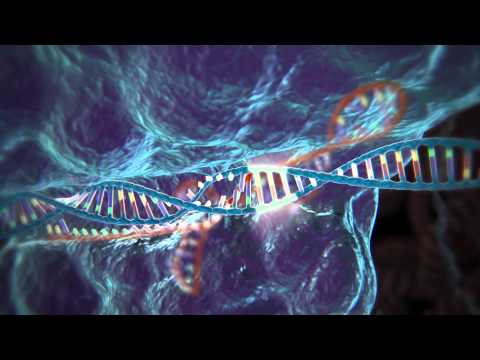 Photo: N43 and Hermes
CRISPR turned a bacterial defense system into a programmable tool for changing DNA. Its promise reaches from treating inherited disease to reshaping agriculture, but precision in a laboratory is not the same as safety, fairness, or control in a living person.
01A Defense System Becomes a Tool
CRISPR stands for clustered regularly interspaced short palindromic repeats, DNA patterns first noticed in bacteria and archaea. These repeats sit beside fragments copied from viruses that previously attacked the microbe. With CRISPR-associated proteins, the cell can recognize a matching sequence and cut invading genetic material. Researchers learned that the recognition logic could be programmed: change a short guide RNA, and an enzyme such as Cas9 can be directed toward a chosen DNA sequence. That conceptual shift made gene editing easier to design than older methods that required engineering a new protein for each target. It also made experiments faster, cheaper, and accessible to many more laboratories.
Cas9 does not rewrite a sentence in DNA with a single keystroke. It creates a break, and the cell repairs that break. If repair joins the ends imperfectly, a gene can be disrupted. If a repair template is supplied, the cell may copy a desired sequence into the site, although this is less efficient and harder to control. Newer systems include base editors, which chemically convert one letter into another without a double-strand break, and prime editors, designed to write small substitutions or insertions. Each expands the menu of possible edits while adding its own delivery and safety questions.
A research story spanning 36 years separated biological discovery from clinical authorization.
02Precision Has Several Meanings
Scientists use precision to describe more than whether a guide finds its intended sequence. On-target efficiency asks how often the intended edit occurs. Specificity asks how rarely similar sequences elsewhere are changed. Product quality asks whether the edited cells have the right chromosome number, no dangerous rearrangements, and the desired behavior over time. A result can be efficient but unsafe, or highly specific but too rare to produce a useful therapy. Sequencing, cell assays, and long-term follow-up are needed because a small population of altered cells may behave differently months or years later. Precision is therefore a chain of measurements rather than one impressive percentage.
Biology creates uncertainty at every step. Guide RNAs can bind near-matches, and DNA repair can produce a mixture of insertions, deletions, and larger changes. Delivery systems may reach some tissues but not others, creating a mosaic in which edited and unedited cells coexist. The immune system may recognize a bacterial protein such as Cas9, especially after repeated exposure. Researchers respond with better guides, high-fidelity enzymes, transient delivery, and extensive screening. These tools reduce risk; they do not turn a complex living system into a perfectly predictable spreadsheet. A safe result must be demonstrated in the relevant cells, not inferred from a simplified test.
03From Cells to Patients
The first clinical successes have favored diseases in which cells can be removed, edited outside the body, tested, and returned. In sickle cell disease and transfusion-dependent beta thalassemia, hematopoietic stem cells are collected from a patient, treated with a CRISPR-based process, and reinfused after conditioning clears space in the bone marrow. The edit changes regulation of fetal hemoglobin, an approach that can compensate for the faulty adult hemoglobin made by the disease. This ex vivo workflow offers more control than sending an editor directly into an organ. It also lets clinicians inspect the product before reinfusion, though the conditioning treatment remains a serious part of the therapy.
In vivo editing is harder because the molecular tool must reach the correct tissue without provoking unacceptable toxicity. Lipid nanoparticles can deliver payloads to the liver, while viral vectors and other carriers are being studied for muscle, eye, blood, and nervous-system targets. The dose must be high enough to reach enough cells but low enough to avoid off-target effects and immune reactions. A therapy may also need to work once, because the body can remember a delivery vehicle. Success therefore depends as much on pharmacology and manufacturing as on the guide sequence itself. Delivery determines which cells receive the edit and can become the limiting step even when the molecular design is elegant.
The first approvals focused on blood stem cells that can be edited outside the body.
04Where the Applications Spread
Medicine is only one frontier. Researchers are testing CRISPR in cancer immunotherapy, infectious disease, blindness, metabolic disorders, and rare genetic conditions. In cancer, immune cells can be edited to recognize tumors or resist signals that suppress an immune response. In the eye, a localized dose may limit exposure to the rest of the body. In inherited liver disorders, a one-time edit could potentially change the production of a harmful protein. These programs differ sharply in their target biology, delivery route, acceptable risk, and definition of success. A result that is tolerable in a terminal illness may not be acceptable for a condition managed safely with existing medicine.
Plant and animal science use the same logic for different goals. Editing can alter disease susceptibility, ripening, drought response, or nutritional traits without inserting a gene from another species, though regulation varies by country and by the nature of the final change. In research laboratories, CRISPR screens switch thousands of genes on or off to reveal which ones control a disease pathway. That discovery use may be as consequential as a finished therapy because it identifies targets for drugs that do not edit DNA at all. The tool is a platform, not a product category with one social impact. Context, governance, and the affected organism determine what the same technique means.
05The Ethical Boundary
Somatic editing changes cells in one person and is not intended to pass to future generations. Germline editing changes embryos, eggs, or sperm in ways that could be inherited. The second category raises a different threshold of concern because the future person cannot consent and later generations would live with the consequences. Questions include whether a condition is severe enough to justify an irreversible intervention, whether safer alternatives exist, and who decides what counts as a disease rather than a human difference. The distinction is fundamental because inherited edits can alter a family line rather than one patient's treatment. It also demands international rules, since the consequences would not stop at a national border.
Access is an equally practical ethical issue. A sophisticated therapy can cost hundreds of thousands or millions of dollars before hospitals build the capacity to deliver it. If only wealthy countries or patients with exceptional insurance can benefit, a scientific breakthrough may widen health inequality. Data governance matters too: gene editing relies on genomic information that can reveal family relationships and future disease risks. Public oversight, transparent trial results, long-term monitoring, and meaningful patient participation are not obstacles to innovation. They are the infrastructure that lets society distinguish legitimate progress from hype. A cure that exists only for a tiny, privileged group is a scientific success with an unfinished public mission.
06Rewriting the Rules of Risk
CRISPR changes the economics of biological intervention because the same design principles can be adapted to many targets. That scalability is exciting, but it also means standards must scale. Regulators evaluate manufacturing consistency, delivery, off-target changes, immune effects, tumor risk, and durability. Patients need realistic information about uncertainty rather than a promise that a gene has simply been “fixed.” Follow-up may extend for years, particularly when edited stem cells can persist and divide in the body. Monitoring must be designed before approval so that an unexpected signal can be investigated rather than lost. Long-term evidence is part of the treatment, not an administrative afterthought.
The most responsible future is neither unrestricted enthusiasm nor blanket rejection. It is a layered system: careful laboratory validation, transparent clinical trials, independent review, fair access plans, and surveillance after approval. The first therapies show that genome engineering can move from molecular idea to life-changing treatment. They also show why the hard work continues after the edit is designed. Rewriting DNA is becoming technically possible; deciding when, where, and for whom to do it is the larger social project. Trust will depend on institutions being candid about limits as well as celebrating breakthroughs. That balance can make innovation durable rather than merely dramatic.
Channel: McGovern Institute | Title: Genome Editing with CRISPR-Cas9 | Views: ~4.5M (observed 2026-08-08)
By N43 and Hermes for Sailor Bob News.


