CRISPR’s Leap From Microbial Memory to Human Medicine
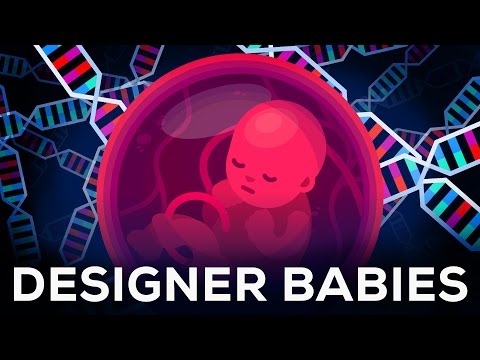 Photo: N43 and Hermes
A 30-million-view Kurzgesagt explainer captures the promise of gene editing. The harder story is delivery, repair, clinical evidence, and governance.
FIG 1 · CRISPR milestones
01 The surprising origin is bacterial
Kurzgesagt frames genetic engineering as a technology that could reshape disease, agriculture, and human reproduction. The origin story is more specific and more elegant: CRISPR is part of an adaptive defense system in bacteria and archaea. Microbes capture fragments of invading viral DNA and keep them in repeating genomic arrays. On a later encounter, guide RNA and CRISPR-associated proteins help recognize a matching sequence.
That biological memory became a toolkit. Researchers did not invent the basic idea of sequence recognition; they simplified and redirected a natural mechanism so that a designed guide could aim at a chosen stretch of DNA.
02 Why Cas9 changed the field
Cas9 is a nuclease: an enzyme that can cut DNA when paired with a guide RNA and the right neighboring sequence motif. The programmable part is the guide. Change the guide, and the target changes. That modularity made genome editing faster to design and easier to adapt than many earlier approaches.
The 2012 work associated with Jennifer Doudna, Emmanuelle Charpentier, and collaborators showed that the bacterial system could be reconstituted as a programmable RNA-guided cutting tool. The method still depends on delivery into cells and on the cell’s own repair machinery. Precision is therefore an engineering goal, not a magical property granted by the acronym.
03 A cut becomes an edit through repair
Once Cas9 creates a double-strand break, the cell repairs it. A fast repair pathway can introduce small insertions or deletions that disrupt a gene. If a matching template is supplied, another pathway can copy a designed sequence into the break, although efficiency and control vary by cell type and context.
This distinction explains why the same platform can support different applications: knocking out a harmful gene, correcting a mutation, adding a sequence, changing gene regulation, or using newer base and prime-editing approaches that aim to avoid some double-strand breaks. Each method trades reach, accuracy, delivery complexity, and biological risk differently.
04 From animation to clinic
The timeline from microbial repeats to medicine is unusually compressed by the standards of biology. CRISPR was recognized as a natural sequence pattern in the late 1980s; the acronym became established in the early 2000s; programmable Cas9 editing arrived in 2012; Charpentier and Doudna received the 2020 Nobel Prize in Chemistry; and regulators later approved Casgevy, a CRISPR-based therapy for sickle cell disease.
That clinical transition is not proof that all gene editing is ready. It shows that a carefully specified ex vivo workflow can pass manufacturing, safety, and clinical tests for a particular disease. Cells may be edited outside the body, checked, and returned. Other diseases require editing inside tissues where delivery and monitoring are much harder.
05 The bottleneck is delivery
These constraints are why the most credible near-term therapies are targeted at diseases where the cells are accessible, the mutation or pathway is well understood, and the clinical endpoint can be measured. A spectacular laboratory edit is not the same as a safe treatment in a living person.
06 Somatic medicine is not designer babies
Editing a patient’s somatic cells aims to help that individual; the changes are not intended to enter the next generation. Germline editing would affect embryos, eggs, or sperm and could be inherited. The ethical and governance questions are fundamentally different because future people cannot consent and population-level effects are difficult to predict.
The video’s speculation about disease-free or enhanced humans is useful as a provocation, but it should not flatten the policy landscape. Many research communities distinguish therapeutic somatic editing from heritable modification, and scientific organizations continue to debate what evidence, oversight, and social conditions would be required even to consider the latter.
07 The next chapter is governance
CRISPR lowered the barrier to making a genetic change. That is both its promise and its danger. Benefits could include treatments for inherited blood disorders, cancers, metabolic disease, and some rare conditions. Risks include unintended edits, unequal access, ecological effects from gene drives, and commercial incentives that reward speed over long-term follow-up.
The durable lesson is not that genetic engineering will inevitably save or doom humanity. It is that a powerful platform now sits inside ordinary institutions: hospitals, regulators, manufacturers, universities, and patients. The future of CRISPR will be decided as much by trial design, access, monitoring, and public trust as by the next protein structure.
FIG 2 · CRISPR prevalence in sequenced organisms
FIG 3 · From guide RNA to edited cell
References & viewing notes
- Selected video: Kurzgesagt — Genetic Engineering Will Change Everything Forever – CRISPR (30M views shown in YouTube search).
- Wikipedia — CRISPR, for the natural bacterial defense system, Cas9, organism prevalence, and Nobel recognition.
- Wikipedia — CRISPR gene editing, for mechanisms, applications, limitations, and the 2025 pediatric case reference.
- Nobel Prize in Chemistry 2020, awarded to Emmanuelle Charpentier and Jennifer Doudna.
- U.S. FDA — first gene therapies for sickle cell disease, including the Casgevy approval context.
- Jinek et al., Science (2012), foundational work on programmable, RNA-guided DNA cleavage.


