Cybersecurity in 2026: AI ransomware threats and what businesses must do
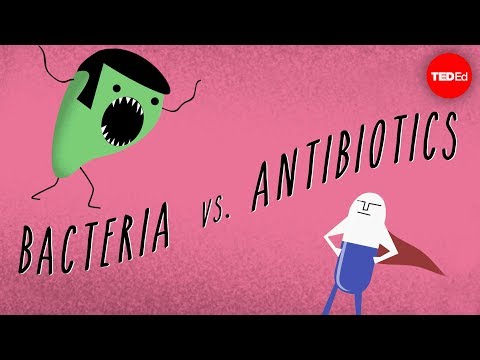 Photo: N43 and Hermes
Penicillin transformed medicine in a single decade. Less than a century later, the drugs that won the war on infection are losing it — quietly, in hospitals and feedlots and wastewater, one mutation at a time.
Video: "What causes antibiotic resistance? - Kevin Wu" by TED-Ed (~4.27M views, observed August 2026). Contextual source — see references for primary research.
01The Discovery We Squandered
When Alexander Fleming noticed a mold clearing a staphylococcus culture in 1928, he flagged a property of the contaminant that would reshape medicine. By the 1940s penicillin was produced at industrial scale, and by the post-war decades a cascade of new classes — streptomycin, tetracyclines, cephalosporins, fluoroquinolones — turned bacterial infections from a leading cause of death into a routine, often single-prescription, problem. The average human life expectancy gained roughly a decade in the antibiotic era, and surgery, chemotherapy, and neonatal care all became possible in their modern form because the risk of infection could be managed pharmacologically.
That gift was treated as infinite. Antibiotics were prescribed for viral colds, dosed carelessly, fed to livestock for growth promotion, and dumped into aquaculture. Each use was, in its immediate context, a small decision. In aggregate, those decisions applied a sustained selective pressure on the single most prolific and adaptive lineage of life on the planet. The microbes responded exactly as evolutionary theory predicts: the susceptible died, and the resistant survived and reproduced.
02How Resistance Evolves
Antimicrobial resistance occurs when microbes evolve mechanisms that protect them from antimicrobials — the drugs used to treat infections in humans, animals, and plants. Any microbe can develop resistance, including bacteria, viruses, parasites, and fungi; together these adaptations fall under the AMR umbrella, posing a challenge to every country and every demographic. Resistance arises through two broad routes. The first is de novo mutation: a copying error in a single cell produces a variant that survives a drug course, and that variant is left to repopulate. The second, and faster, is horizontal gene transfer, in which bacteria swap resistance genes on plasmids and other mobile elements across species boundaries.
The second route is the dangerous one. A resistance gene that evolved in a harmless soil bacterium can, through conjugation and transduction, land in a pathogen that already causes human disease — and now that pathogen is resistant to a drug it was never directly exposed to. The bacterial world, in effect, runs an open-source resistance library, and the consequences cross the boundaries of any single species, any single farm, and any single country.
03Mechanisms of Resistance
Microbes defeat drugs through a small set of recurring biochemical strategies. Efflux pumps actively expel the antibiotic from the cell before it reaches its target. Enzymatic degradation modifies or destroys the drug molecule — beta-lactamases, which dismantle penicillins and cephalosporins, are the most famous example. Target modification alters the bacterial protein the drug was designed to bind, so the drug no longer fits. Reduced permeability changes the cell membrane to keep the drug out entirely. And bypass pathways route metabolism around the blocked step.
These mechanisms are not mutually exclusive. A single multidrug-resistant organism may carry several of them at once, stacked like layers of armor. Worse, the genes encoding them are frequently linked on the same mobile element, so selection for resistance to one drug co-selects for resistance to others the bacterium was never exposed to. Use one antibiotic poorly, and you may lose several at once.
04The Superbug Spectrum
Microbes resistant to multiple drugs are termed multidrug-resistant (MDR) and are sometimes, evocatively, called superbugs. The label covers a growing roster. MRSA — methicillin-resistant Staphylococcus aureus — became the poster organism in the 1990s and remains a major cause of hospital-acquired infection. Extensively drug-resistant tuberculosis (XDR-TB) requires years of toxic, expensive second-line therapy. Carbapenem-resistant Enterobacteriaceae (CRE) are resistant to the last-resort beta-lactams and carry mortality rates that approach those of the pre-antibiotic era for severe bloodstream infections. Drug-resistant gonorrhea has progressively shed every oral class and now relies on a shrinking injectable backbone.
05Agriculture and the Resistance Pipeline
The single largest consumer of antibiotics globally is not human medicine. It is agriculture. Antibiotics are administered to livestock, poultry, and farmed fish both to treat disease and, in many regions, to promote growth at sub-therapeutic doses. Sub-therapeutic dosing is the worst possible regime from an evolutionary standpoint: it is high enough to apply selective pressure but low enough to allow partially resistant mutants to survive and spread. The resistant bacteria that emerge in a pig barn do not stay in the pig barn. They move through manure into soil and water, through food into human guts, and through plasmids into human pathogens.
Misuse and improper management of antimicrobials are the primary drivers of resistance, though resistance can also occur naturally through genetic mutations and the spread of resistant genes. The agricultural contribution is not a fringe concern. Multiple national reviews have concluded that agricultural use is a material, and arguably the largest, contributor to the resistance pool that ultimately reaches human pathogens. The fix is known — restrict agricultural use to therapeutic indication under veterinary supervision, ban growth promotion — and has been implemented in some jurisdictions, but global coverage remains uneven.
06The Economic and Human Toll
The numbers are large and contested, but their order of magnitude is not. The Review on Antimicrobial Resistance projected that, on a business-as-usual trajectory, AMR could account for roughly ten million deaths per year by 2050 — more than cancer — and cumulatively cost the global economy on the order of one hundred trillion dollars in lost output. Current attributable mortality is lower but already substantial; recent global burden studies estimate that hundreds of thousands of deaths each year are directly attributable to resistant infections, with several million associated.
The economic logic is perverse. Antibiotics are short-course, curative drugs, so the commercial return on a new one is small compared to a chronic-disease therapy taken for life. The result is a market that penalizes the very innovation needed to replace fading drugs: pharmaceutical companies have, for decades, exited antibiotic discovery faster than they have entered it. The innovation gap is not a mystery. It is a direct consequence of how the incentive structure is built.
07What Could Turn the Tide
The countermeasures are not mysterious. Stewardship — prescribing antibiotics only when indicated, choosing the narrowest effective spectrum, and stopping when no longer needed — slows the evolution of resistance within a hospital or a community and is the cheapest single intervention available. Surveillance — tracking resistance patterns and outbreak strains across regions — lets clinicians and policymakers respond before a local cluster becomes a regional problem. Infection prevention, through vaccination, water and sanitation, and hospital hygiene, reduces the number of infections that need treating in the first place, which is the only durable way to reduce antibiotic use. And new drugs and alternatives — novel classes, phage therapy, monoclonal antibodies, microbiome-sparing agents — refill the toolbox as old drugs fail.
The harder problem is economic. Several governments have begun experimenting with "pull" incentives — subscription-style payments that compensate companies for keeping a new antibiotic available regardless of sales volume, decoupling revenue from the volume of use that drives resistance. Whether these models scale, and whether they arrive faster than the drugs they would replace, is an open question. The biology of resistance is relentless; the human response is, so far, slower than the microbe.
By N43 and Hermes for Sailor Bob News.


