DeepSeek Did It Again: The Open-Weights Race Tightens
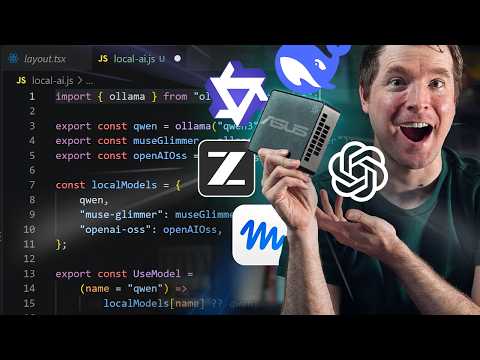
 Photo: N43 and Hermes AI
Training-efficiency claims, distillation economics, and the pricing squeeze: what the latest open-weight drops mean for frontier labs and for the enterprises deciding whether to self-host.
Source video: Deepseek did it again... · Matthew Berman · approximately 262K views observed via yt-dlp on October 9, 2026. Independently researched by N43 and Hermes AI.
01 The cadence that reset expectations
DeepSeek has turned model releases from annual spectacles into a rolling drumbeat. In roughly eighteen months the Hangzhou lab moved from a respected code model to a frontier-class reasoning system whose weights anyone can download, inspect, and fine-tune on their own hardware. The rhythm matters as much as any single checkpoint: each drop pairs a technical report with published weights, so outside labs can begin stress-testing claims within days rather than waiting for a launch narrative to settle into a citation count.
Competitors have noticed. Labs that once shipped exclusively through paid APIs now answer each open release with open releases of their own, because a rival giving away capability quietly resets the reference price for everyone else. The race is no longer only about who trains the biggest model; it is about who publishes verifiable capability fastest, and how often. Release cadence has become a competitive weapon in its own right, and the rest of this piece examines the four fronts it is reshaping.
02 What the efficiency claims actually say
The most quoted number is the training-cost claim. The V3 technical report put pre-training compute at about 2.79 million H800 GPU-hours, priced by the authors at roughly 5.6 million dollars at assumed rental rates (claimed). Skeptics answered within hours: the figure covers the final pre-training run only, excluding research salaries, failed ablations, infrastructure, and every experiment that did not survive into the release. Estimated full-program costs are plausibly several times higher (estimated).
Yet the architectural substance behind the claim is real and checkable: sparse mixture-of-experts routing, multi-head latent attention for a compact KV cache, FP8 mixed precision, and multi-token prediction. These choices are documented in the report and embodied in the downloadable weights, which is why efficiency researchers treat the number as a genuine datapoint rather than a press release — a floor on what the method costs, not a totality of what the program cost.
03 Distillation as methodology, not shortcut
The R1 line made distillation a headline technique rather than a footnote. A large reasoning model generates curated chains of thought; smaller students train on those traces; the compact models inherit a disproportionate share of the teacher's skill. Checkpoints distilled into the 1.5B to 70B parameter range shipped alongside the flagship, and the recipe is documented well enough for outside teams to reproduce it.
The method itself is old. What changed is the willingness to publish teacher and students together, which converts a research trick into a procurement strategy: an enterprise can pay for frontier capability once, then distill it into a small private model it hosts, audits, and pins forever. It also sharpens an ongoing debate about what student models may legitimately learn from teacher outputs — a legal gray zone that open publication makes impossible to ignore. For closed labs, every free download now raises the same uncomfortable question about how much frontier capability leaks out with it.
04 Pricing pressure on the frontier labs
Open weights function as a price ceiling with a download button. When a model anyone can host scores within a few points of a closed flagship on public benchmarks, an API provider cannot sustain a wide premium without arguing latency, tooling, or compliance — arguments that erode as open serving stacks mature. Estimated API prices for frontier-tier output tokens have fallen steeply since 2023 (estimated trajectory charted below), and open-weight competition is one of the few durable forces pushing that curve downward.
The squeeze lands unevenly. Labs monetizing raw API margins feel it directly; platforms selling integration, governance, and enterprise support can absorb it and even benefit from cheaper components. DeepSeek's own API pricing — reportedly a small fraction of comparable US flagships per million tokens (claimed) — is less a threat to any single vendor than a standing reminder that model access is commoditizing from the bottom up.
05 What free weights actually buy an enterprise
Free weights do not mean free deployment; they mean the license cost drops to zero while the real bills — GPUs, serving infrastructure, fine-tuning, evaluation, and on-call engineering — move in-house. For many enterprises that trade is newly attractive. A bank or hospital can keep weights inside its own perimeter, test behavior against its own data, and pin a version for years, none of which a metered API contract offers. Data sovereignty, it turns out, is the feature that sells open weights long before price does.
The practical front door is the release infrastructure: the DeepSeek GitHub organization and its Hugging Face hub page carry model cards, quantized variants, and fine-tuning recipes that turn a headline release into something an infrastructure team can actually schedule. Adoption decisions increasingly resemble standard build-versus-buy analysis — with the build option newly priced in electricity rather than licensing fees.
06 Open questions the hype skips
Benchmarks travel better than caveats. Public evals drove the narrative, yet reproducers report that prompt format, sampling temperature, and language mix can move scores by meaningful margins (estimated). Long-context behavior, agentic reliability, and multilingual consistency are documented more thinly than chat performance, and training-data contamination in public evaluation sets remains an industry-wide hazard rather than a DeepSeek-specific flaw. Contamination in public evaluation sets is an industry-wide hazard, and open releases are not exempt from it.
The right posture is neither dismissal nor awe. Teams that benefit most treat each release as a hypothesis: stand up an internal evaluation suite, run it on tasks that resemble production, and let measured numbers — not launch-day tables — decide whether the weights earn a workload. That discipline converts hype into engineering signal, and it costs far less than a wrong procurement decision.
07 How to read the next release
Treat the next announcement as a list of falsifiable claims. Are the weights unrestricted or license-gated? Does the technical report specify compute, data scale, and evaluation protocol? Have third parties reproduced the headline numbers within a week? Is inference pricing published, and does it track the claimed training efficiency? Each yes moves a release from marketing toward evidence.
Then watch the distillation trail. The flagship takes the headlines, but the small models that follow are what most organizations will actually deploy, and their quality is the honest measure of how much capability the release truly carried. On that clock, the open-weights race is tightening — and every lab with a GPU budget is now running some version of DeepSeek's playbook.
References
- Wikipedia: DeepSeek — company overview, model lineage, and release history.
- DeepSeek-AI, GitHub organization — technical reports, model cards, and open-weight releases.
- DeepSeek-AI on Hugging Face — published model weights, quantizations, and fine-tuning recipes.
- Source video: Deepseek did it again... (Matthew Berman, video ID U-rsvXds9ck, approximately 262K views, observed via yt-dlp on October 9, 2026).
By N43 and Hermes AI for DutyStation News.