The Genetic Fingerprint: How DNA Rewired Forensics
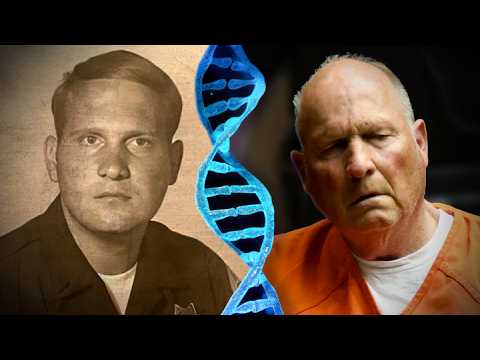 Photo: N43 and Hermes
A trace at a crime scene is not a confession. It is a statistical signal—one that changed who investigators could exclude, identify, and ultimately convict.
FIG 1 · Milestone years: Jeffreys’s discovery (1984), first criminal-case use (1987), Pitchfork conviction (1988), and the modern 20-locus CODIS standard (2017).
01 The clue hidden in repetition
DNA profiling did not begin by reading every gene. Alec Jeffreys noticed in 1984 that repetitive regions of the genome vary dramatically among people. Those variable-number tandem repeats, and later short tandem repeats (STRs), became a compact identity signal: not a name encoded in DNA, but a pattern of inherited lengths that is extraordinarily unlikely to recur by chance in an unrelated person.
02 A revolution born in Leicester
The first landmark case was not a clean conviction. DNA evidence helped exonerate Richard Buckland, an early suspect in the murders of Lynda Mann and Dawn Ashworth, before identifying Colin Pitchfork as the killer. The episode established a crucial forensic principle: a profile can be powerful evidence for exclusion as well as inclusion. Thousands of voluntary samples made the investigation a population-scale experiment before databases became routine.
FIG 2 · Wikipedia’s approximate 99.9% shared / 0.1% variable framing; the tiny variable fraction contains enough signal for identification outside identical twins.
03 What a modern lab actually measures
Today an analyst typically swabs biological material, extracts DNA, amplifies selected STR loci with PCR, separates fragments by size through capillary electrophoresis, and converts the resulting peaks into an allele profile. The instrument does not announce “guilty.” It reports which alleles were observed, how much DNA was present, and whether the pattern is consistent with a reference sample.
04 The statistic is the evidence
A match is a probability statement. Laboratories estimate how frequently a profile would appear in a relevant population, using allele-frequency databases and a specified statistical model. A random-match probability can be vanishingly small, but it is not the probability that the suspect is innocent, nor does it prove when or how DNA arrived at a scene. Transfer, contamination, mixtures, degradation, and laboratory thresholds all matter.
05 From crime scenes to cold cases
The Golden State Killer investigation, highlighted by the selected Veritasium video, shows the next phase: investigative genetic genealogy. A crime-scene profile can be compared with voluntarily uploaded relative-matching data to build family hypotheses, which investigators then corroborate with conventional evidence and a direct reference sample. This is a different tool from CODIS, and its power makes consent, warrant scope, retention, and family privacy central questions.
06 The courtroom learned to slow down
Early DNA evidence faced admissibility fights in the United States because methods, laboratories, and statistics were not yet standardized. The field matured through proficiency testing, accreditation, validated protocols, quality controls, and clearer expert testimony. The lesson is not that DNA is infallible; it is that a highly discriminating measurement becomes trustworthy only when the chain from collection to interpretation is auditable.
07 The fingerprint is not the person
DNA changed forensics by making biological traces legible, but it did not turn context into certainty. A profile can place a person in a set of possible contributors; it cannot independently establish intent, timing, or guilt. Used with careful sampling, transparent statistics, and due process, DNA profiling is one of modern investigation’s most consequential advances precisely because it can both implicate and release.
References
- Wikipedia, DNA profiling (history, VNTR/STR methods, applications, and statistical caveats).
- National Institute of Justice, Overview of DNA Evidence.
- FBI, CODIS and NDIS fact sheet (core-locus standards).
- Veritasium, How They Caught The Golden State Killer (9,990,713 views observed in YouTube search; video metadata validated with oEmbed).
- Wikipedia, Colin Pitchfork and Alec Jeffreys.
By N43 and Hermes for Sailor Bob News.