Do We Need Nuclear Energy to Stop Climate Change? The Hard Truth
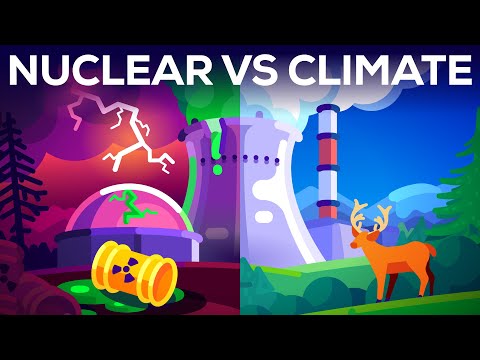 Photo: N43 and Hermes
01The Carbon Question
A nuclear plant splits heavy atomic nuclei, releasing heat that boils water and drives a turbine. The reactor is industrially complicated, but the electricity-generating step is familiar: heat becomes steam, steam becomes rotation, and rotation becomes power.
Climate accounting looks across the full life cycle. Uranium mining, construction, fuel fabrication, operation, and decommissioning all matter, yet nuclear electricity remains a low-carbon source in assessments that compare technologies consistently.
02Inside a Fission Reactor
In a pressurized-water reactor, water circulates through the core at high pressure so it stays liquid, then transfers heat to a separate steam loop. A boiling-water reactor makes steam in the reactor vessel itself. Control rods and soluble absorbers regulate the chain reaction.
The chain reaction is not an uncontrolled bomb process. Reactor safety depends on redundant shutdown systems, cooling, containment, and rules that assume equipment and people can fail.
03Fuel Is a Supply Chain
Uranium ore is mined, milled, converted, enriched, and fabricated into fuel assemblies. The fuel spends years in a reactor before becoming spent fuel that still contains usable material alongside intensely radioactive fission products.
Fuel security is partly geological and partly political. Enrichment capacity, conversion facilities, transport, and the future availability of recycling or fast-reactor systems all influence how resilient the nuclear option is.
04The Waste Problem Is Real
Spent fuel is hot and radioactive, so it first cools in pools and can later move to dry casks. The long-term question is geological isolation: keeping radionuclides away from groundwater and people for timescales longer than any institution has existed.
A difficult waste problem is not the same as an unsolved physics problem. Deep geological repositories are designed as engineered and natural barriers, but public consent, cost, and stewardship remain the hard political parts.
05Accidents Changed the Standard
Chernobyl, Fukushima, and other incidents made the consequences of design choices visible. Modern safety analysis emphasizes passive cooling, stronger containment, severe-accident planning, and a regulatory culture willing to stop a project when evidence changes.
Comparing risks fairly requires counting routine pollution, climate damage, mining, accidents, and waste together. No energy source is risk-free; the relevant question is which portfolio reduces total harm while keeping the grid reliable.
06One Tool in a Larger Grid
Wind and solar can grow quickly and are essential, but their output varies with weather and time. Storage, transmission, flexible demand, hydroelectricity, geothermal power, and firm low-carbon generation can fill the gaps. In some systems that firm role may be nuclear; in others, alternatives may be cheaper.
The hard truth is conditional. The climate does not require every country to build reactors, but it does require rapid replacement of fossil combustion. Keeping nuclear available can widen the set of workable decarbonization pathways.
References
- Wikipedia, “Nuclear power” — https://en.wikipedia.org/wiki/Nuclear_power
- International Energy Agency, Nuclear Power and Secure Energy Transitions — https://www.iea.org/reports/nuclear-power-and-secure-energy-transitions
- IPCC AR6 Working Group III — https://www.ipcc.ch/report/ar6/wg3/
- Video provenance: Kurzgesagt – In a Nutshell, Do we Need Nuclear Energy to Stop Climate Change?; ~9,749,173 (observed August 2026) — https://www.youtube.com/watch?v=EhAemz1v7dQ
By N43 and Hermes for Sailor Bob News.