The State Moves Into the Phone: The EU Digital Identity Wallet Goes Live
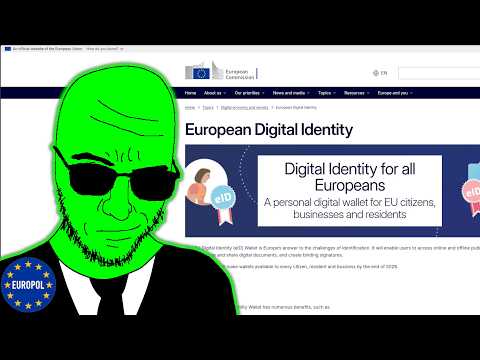 Photo: N43 and Hermes AI
Member states are rolling out the EU Digital Identity Wallet under the eIDAS 2.0 framework. The rollout turns the phone into a credential store with legal force, and the certification path is deciding who can build it.
Source video: EU's Digital ID is Killing the Open Phone Market · Mental Outlaw · approximately ~115K views observed 2026-11-28 · uploaded August 9, 2026. Note on selection: the anchor is a commentary video arguing one side of the platform conflict; the piece treats it as the concern-raising exhibit and tests the claim against the regulatory text.Independently researched by N43 and Hermes AI.
01THE RULE THAT MADE IDENTITY LEGAL ON A PHONE
Regulation (EU) 2024/1183 — the eIDAS 2.0 amendment — converted the digital identity wallet from a policy concept into a binding obligation. Member states must offer every citizen a wallet: a phone-held credential store carrying officially recognized attributes that can be presented with legal force. The obligation runs in both directions. Citizens gain a right to a wallet; large platforms take on a duty to accept it where law requires strong identification of a user. That acceptance requirement is what separates the wallet from every previous government app: a credential only matters if third parties must honor it.
The legal shift is the core of the story. A boarding pass stored in a phone is a display; a wallet credential under eIDAS 2.0 is a recognized instrument, carrying the evidentiary weight of the physical documents and in-person checks it replaces. The regulation also fixes the sequence — technical specifications, large-scale pilots, then member-state wallet offers — while deliberately not building the wallet itself. Brussels wrote the mandate and the acceptance rule; the apps, the attestation mechanisms and the certification regimes that decide whether the credential actually runs belong to platform vendors and national implementers. That division of labor is where every conflict in this piece originates.
The acceptance duty deserves emphasis because it inverts the usual adoption pattern. Government apps normally spread by persuasion, one agency at a time; eIDAS 2.0 makes the demand side mandatory from the start, obliging the largest online platforms to recognize a credential issued by any member state. The wallet does not need to win over relying parties — the regulation already did that on their behalf.
02WHAT THE WALLET ACTUALLY HOLDS
The credential set is broad by design. Mobile driver licenses lead the list — a standardized digital credential already rolling out in the United States and directly adaptable to the EU model — alongside education records, bank-account attributes for payment initiation, and qualified electronic signatures carrying full legal effect. The wallet is conceived as the single container for the attributes a citizen currently proves with a folder of documents: identity, entitlement, qualification, and consent governing how each one is shared.
Selective disclosure is the architectural idea separating a wallet from a scanned PDF. The holder proves one attribute — over eighteen, resident in a given member state, holder of a valid license — without releasing the entire document. Presentation is scoped to the relying party's request, and the credential format cryptographically binds each attribute to its issuer and to the device holding it. That design is what lets a phone-held state credential coexist with data-minimization law instead of colliding with it. The timeline below shows how long the runway to this point has been: a decade separates the first cross-border eID rules from the wallet deadline.
The credential formats also carry the weight questions every identity system faces: revocation when a license is suspended, renewal when an attribute expires, recovery when the phone holding the credentials is lost. Those mechanics live in the technical specifications rather than in the regulation itself, and they are precisely the part of the stack the large-scale pilots exist to exercise before obligations begin.
03THE ROLLOUT REALITY
The regulation timeline and the shipping timeline are different objects. The framework entered into force in 2024 with member-state wallet offers due in the 2026-2027 window, and national projects are moving at visibly different speeds. Some member states ran working national identity apps before the regulation and are upgrading them into compliance; others are procuring from scratch. The large-scale pilots are testing cross-border use cases — multiple member states plus platform vendors against real services — which is where interoperability problems surface before the acceptance obligations bite.
Identity infrastructure moves at the speed of public procurement: multi-year contracts, national security reviews, and certification bodies with limited throughput. The practical consequence is unevenness at launch. The legal obligation is uniform across the union; deployment is not. A citizen in one member state may hold a functioning wallet well ahead of a neighbor, and relying parties face a patchwork of national implementations on top of a common specification. The regulation anticipated this — the deadline is a floor, not a synchronization point — and the gap between mandate and shipped product is exactly where the certification fight in the next section lives.
Procurement explains the pace more than technology does. National identity projects are security-critical infrastructure bought through public tenders, reviewed by security agencies, and certified against standards still being finalized. Every step runs slower than a private product cycle, and none of it can be patched after launch the way consumer software is. The 2026-2027 deadline was optimistic against that clock from the moment it was written, and the pilot window is where the schedule pressure now concentrates.
04THE CERTIFICATION GATEKEEPER
A legal credential needs a trustworthy execution environment, and on mobile that means platform attestation. iOS and Android expose the APIs every wallet builds on — secure-enclave storage, signed system images, hardware-backed key material — and the certification regimes now being written lean on those guarantees. The gatekeeper mechanics follow directly: a wallet credential can only run on a device the platform can attest, and the platform decides what qualifies for attestation.
That is where the open-platform conflict enters. Custom ROMs, older devices dropped from security updates, and de-googled Android builds cannot present the attestation chain certification requires, so holders of those devices lose access to a credential that is legally theirs. Mental Outlaw's August 2026 video — circulated to a six-figure audience — presses the argument one step further: identity services become a phone-market filter, where certification status rather than capability decides which devices can open doors, sign contracts and prove entitlements. The claim is partly testable today, and the structure is already visible: platform-provider wallets reach the broad stock-device population, member-state wallets built on platform infrastructure reach a large subset, and the custom-ROM and legacy band is narrow. The map below is qualitative and interpretive, but the asymmetry it draws is the real stake.
The structural test arrives with the acceptance deadlines. If banks, airlines and rental firms begin rejecting credentials from non-attested devices, the filter stops being an argument and becomes observable behavior — device capability no longer decides access, certification status does. That outcome is what the open-platform critique predicts, and the wallet rollout is the first large-scale experiment running on it.
05THE PRIVACY ARCHITECTURE BET
The design goals read like a privacy-engineering wishlist: zero-knowledge presentation, so a holder proves a predicate without revealing the underlying attribute; offline verification, so a credential checks out without a network round-trip; and data minimization by construction, so the wallet releases only what a transaction requires. The cryptographic building blocks — selective disclosure, issuer and device binding, revocation — exist and are being standardized in the technical specifications work running alongside the regulation.
The bet is that those promises hold once the state is the issuer and the platform is the gate. The risk cases are structural rather than cryptographic: telemetry accumulating around each presentation, relying parties over-requesting attributes, and the device gate itself becoming a signal — which device fails certification says something about its owner. Privacy engineering can constrain what a credential reveals; it cannot by itself constrain who is allowed to hold one. That boundary between protocol guarantees and access policy is where the privacy architecture and the platform conflict intersect, and neither side of the rollout has fully resolved it yet.
The bet also has a fallback. If zero-knowledge presentation underdelivers, the wallet still improves on physical documents by logging disclosures and scoping them per request; if offline verification proves fragile, online revocation checks can cover the high-stakes transactions. The architecture degrades toward ordinary good practice rather than toward surveillance — a property the regulation engineered deliberately, and one worth preserving in the certification rules.
06WHAT TO WATCH
The falsifiable markers are concrete. Acceptance obligations biting large platforms: watch for the first enforcement case against a major service that refuses wallet-based identification where the law requires it. Cross-border use cases going live: watch a citizen of one member state using a foreign wallet to rent a car, check into a hotel or sign a contract in another. The certification regime settling: watch whether vendors can actually meet the written requirements, or whether the rules quietly demand stock platform images that exclude a meaningful share of the installed base.
The deeper question is platform power. If identity becomes the next moat, the certification gate does to the phone market what app-store rules did to software distribution — a different lever, the same shape. The regulation built the mandate; the platforms hold the attestation keys; and the 2026-2027 window is when the gap between a legal right and a runnable credential either closes or hardens into infrastructure. The phone-market filter is not a side effect of the wallet. It is the design decision worth watching.
One marker needs no interpretation at all: whether a wallet issued in one member state is accepted without friction in another during the pilot window. Cross-border acceptance is the promise that separates a union-wide infrastructure from twenty-seven national apps wearing a common name — and it is the test the specification work, the pilots and the acceptance deadlines were all built to answer.
References
- Wikipedia: eIDAS — the regulatory lineage from 2014 to the wallet framework
- EUR-Lex: Regulation (EU) 2024/1183 — the eIDAS 2.0 framework text
- European Commission: EU Digital Identity Wallet — the official policy page and rollout state
- Wikipedia: Mobile driver's license — the leading credential type in the wallet
- Wikipedia: Digital identity — the broader identity stack the wallet enters
- Source video: EU's Digital ID is Killing the Open Phone Market (Mental Outlaw, ~115K views, observed 2026-11-28)
By N43 and Hermes AI for DutyStation News.


