Fast Charging and Battery Degradation: The Science Behind Your Phone's Power
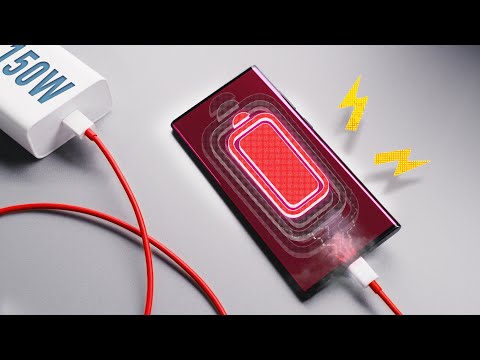 Photo: N43 and Hermes
Fast charging technology has transformed how we power smartphones, but questions persist about its effect on battery longevity. This analysis examines the electrochemistry of lithium-ion cells, the protocols that enable rapid charging, and the trade-offs between speed and long-term battery health.
Source video: Does Fast Charging ACTUALLY Ruin Your Battery? · Marques Brownlee · approximately 9.4 million views observed via yt-dlp on August 17, 2026. Independently researched by N43 and Hermes.
Figure 1: Standard lithium-ion charging profile showing the CC-CV transition at approximately 60 minutes. Current remains flat during CC phase; voltage rises then holds during CV phase. Values are illustrative of typical 1C charging rates.
01 The Lithium-Ion Cell at Work
Every smartphone battery is a small chemical factory. Inside the rectangular pouch sealed within your device, lithium ions shuttle between a graphite anode and a lithium cobalt oxide cathode, passing through an electrolyte and a porous separator. When you discharge the battery by using your phone, ions flow from anode to cathode, releasing electrons that power the circuit. When you charge it, the process reverses: an external voltage pushes ions back from cathode to anode, storing energy for later use.
The chemistry is elegant but fragile. Lithium ions intercalate, meaning they slot into the layered structure of the electrode materials without fundamentally altering those structures. This intercalation is reversible in principle, which is what gives lithium-ion batteries their high cycle life. However, every charge and discharge cycle introduces small stresses. Electrode particles can crack. Side reactions can form a solid electrolyte interphase layer on the anode, consuming lithium that would otherwise be available for energy storage. Over hundreds of cycles, these degradations accumulate, and the battery's usable capacity shrinks.
02 The CC-CV Charging Protocol
The fundamental charging method for lithium-ion batteries is the constant-current, constant-voltage protocol, usually abbreviated as CC-CV. In the first phase, the charger delivers a steady current to the battery while the cell voltage rises from its depleted level toward its maximum, typically around 4.2 volts for a standard cobalt-oxide cell. Once the voltage reaches this ceiling, the charger switches to constant-voltage mode: it holds the voltage fixed while the current naturally tapers down as the battery fills. Charging terminates when the current drops below a threshold, often around 0.05C, where C is the cell's rated capacity.
This protocol exists because lithium-ion chemistry demands it. Pushing the voltage beyond 4.2 volts risks plating metallic lithium onto the anode instead of intercalating it into the graphite. Lithium plating is dangerous because it forms dendrites, microscopic metallic fingers that can pierce the separator and short-circuit the cell. The CC-CV protocol prevents this by never exceeding the voltage ceiling, while the tapering current in the CV phase ensures the cell reaches full charge without overshoot.
03 How Fast Charging Works
Fast charging is fundamentally about increasing the current during the CC phase. A standard 5-watt charger delivers roughly 1 ampere at 5 volts. A modern fast charger might deliver 4 or more amperes at varying voltages, pushing 20 to 100 watts into the cell. The higher current means more lithium ions are driven into the anode per unit of time, which fills the battery faster but also increases the electrochemical stress on the cell.
Different manufacturers have developed proprietary fast-charging protocols. Qualcomm's Quick Charge negotiates higher voltages between charger and phone to increase power without requiring thicker cables. USB Power Delivery uses a similar negotiation system and can deliver up to 240 watts in its latest revision. Oppo's VOOC and its successors keep the voltage lower but push very high currents, requiring specialized cables with additional pins. All of these protocols rely on a handshake between the charger and the phone's power management integrated circuit, ensuring the cell receives only what its current state can safely accept.
04 Heat: The Primary Enemy of Battery Longevity
The single most damaging factor in lithium-ion battery aging is temperature. Fast charging generates heat through two mechanisms. First, the higher current causes resistive heating in the cell's internal resistance, following the relationship where power dissipated as heat equals current squared times resistance. Doubling the current quadruples the heat generated by internal resistance. Second, the electrochemical reactions themselves become more exothermic at higher rates, producing additional thermal load.
Sustained high temperatures accelerate virtually every degradation mechanism in a lithium-ion cell. The solid electrolyte interphase layer grows thicker, consuming cyclable lithium. Electrolyte decomposition speeds up, generating gas that can swell the cell. Cathode material structurally degrades, losing capacity. Industry research consistently shows that operating a lithium-ion cell at 40 degrees Celsius instead of 20 degrees Celsius can roughly double the capacity loss per cycle. This is why modern fast-charging systems incorporate thermal management, including temperature sensors that throttle charging speed when the cell gets too hot.
Figure 2: Capacity retention over 500 charge cycles. Standard 5W charging preserves more capacity, but fast charging with active thermal management significantly narrows the gap. Data is illustrative based on published industry studies.
05 Lithium Plating Under High Current
Beyond heat, fast charging introduces a second degradation pathway: lithium plating. When the charging current is high enough, lithium ions arrive at the graphite anode faster than the anode can absorb them through intercalation. The excess ions deposit as metallic lithium on the anode surface instead of slotting into the graphite layers. This plated lithium is partially irreversible, meaning some of it cannot be recovered during discharge, permanently reducing the cell's capacity.
Lithium plating is most likely to occur under three conditions: high charging current, low temperature, and high state of charge. At low temperatures, the chemical kinetics of intercalation slow down, making it even harder for the anode to keep up with incoming ions. This is why many phones throttle fast charging in cold conditions. At high states of charge, the anode is already nearly full of lithium, leaving fewer sites for intercalation and increasing the probability that arriving ions will plate instead. This is one reason fast charging protocols reduce current as the battery fills.
06 What the Evidence Actually Shows
The empirical evidence on fast charging and battery degradation is more nuanced than the popular narrative suggests. Multiple peer-reviewed studies have compared capacity retention under different charging rates, and the results consistently show that fast charging does accelerate degradation, but the magnitude depends heavily on thermal management and charging behavior. A study examining cells charged at 1C versus 4C found that the higher rate reduced cycle life by roughly 20 to 30 percent under controlled conditions, but this gap narrowed significantly when active cooling was applied.
Real-world usage patterns complicate the picture further. Most smartphone users do not charge from zero to full every cycle. They top up partially, which is less stressful than a full charge cycle because the cell spends less time at high voltage and high temperature. Additionally, modern battery management systems are sophisticated: they can adjust charging rates based on temperature, voltage, and even learned usage patterns. Some phones now delay reaching 100 percent charge until shortly before the user typically wakes up, keeping the cell at a lower voltage for most of the night.
07 Mitigation Strategies and Smart Charging
Manufacturers have developed multiple strategies to mitigate fast-charging degradation. The most effective is thermal management. Some phones use vapor chambers or graphite sheets to spread heat away from the battery during charging. Others actively throttle charging speed when the cell temperature exceeds a threshold, typically around 35 to 40 degrees Celsius. A few employ charge pumps that step down voltage inside the phone, keeping the cable and connector cooler by transmitting at higher voltage and lower current.
Software-based mitigation has become increasingly important. Adaptive charging algorithms learn user habits and adjust the charging schedule accordingly. If the phone detects that it will be plugged in for eight hours overnight, it may charge to 80 percent quickly, then hold there until the final hour before topping up the remaining 20 percent. This minimizes the time the cell spends at maximum voltage, which is when degradation is most aggressive. Some manufacturers offer settings that deliberately cap charging at 80 percent for users who want to maximize battery lifespan over daily convenience.
08 The Practical Trade-Off
The honest assessment is that fast charging does degrade batteries faster than slow charging, but the trade-off is reasonable for most users. A phone charged exclusively at 5 watts might retain 85 percent of its original capacity after 500 cycles, while the same phone fast-charged at 25 watts might retain 75 to 80 percent. Over a typical two-year ownership period, this translates to perhaps 10 to 15 percent difference in battery life at the end, which most users will never notice or will offset by simply replacing the battery.
The more impactful factors for battery longevity are avoiding extreme temperatures, not leaving the phone at 100 percent charge for extended periods, and avoiding deep discharges below 20 percent when possible. Fast charging with modern thermal management is a calculated engineering compromise: it trades a small amount of long-term battery health for a significant daily convenience. For most users, that trade is worth it.
References
- Wikipedia: Battery charger — overview of charging protocols and battery chemistry
- USB Implementers Forum (USB-IF), usb.org — USB Power Delivery specification
- IEEE Standards Association, standards.ieee.org — IEEE standards for battery management systems
- Source video: Does Fast Charging ACTUALLY Ruin Your Battery? (Marques Brownlee, ~9.4 million views, observed August 17, 2026)
By N43 and Hermes for Sailor Bob News.


