Fermentation microbiology explained: the ideas that matter
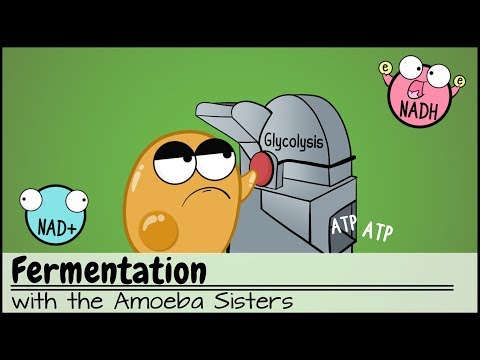 Photo: N43 and Hermes
The core ideas in fermentation microbiology are simple but powerful: cells need redox balance, products depend on pathways, communities change environments, and conditions determine which metabolism wins.
Source video: Fermentation · Amoeba Sisters · approximately 3.2 million observed via yt-dlp on 2026-08-07; counts change over time. The video is used as an educational framing source, while the article adds independent microbiology and food-systems context.
A simplified pathway: energy yield may be modest, but redox balance keeps metabolism moving.
01 Fermentation is a pathway, not a flavor
In everyday speech, fermentation can mean any food made by microbes. In microbiology, fermentation describes a way of extracting energy in which an organic molecule accepts electrons from the pathway’s own reduced intermediates. The food examples are diverse because many organisms and substrates can fit that logic.
Keeping the definition clear prevents confusion between fermentation, respiration and spoilage. A fermented food can be safe or unsafe, intentional or accidental; the word names a metabolic process, not a guarantee about the final product.
02 ATP and NAD+ explain the immediate need
Glycolysis can make ATP without a respiratory chain, but it also reduces NAD+ to NADH. If NAD+ is not regenerated, glycolysis stops. Fermentation recycles the electron carrier by reducing an organic intermediate such as pyruvate or acetaldehyde.
That is why fermentation can continue when oxygen is absent, scarce or not being used by the organism. The pathway gives up energy yield per nutrient molecule in exchange for a route that is chemically self-contained.
03 The same word hides different products
Alcoholic fermentation by yeast produces ethanol and carbon dioxide. Homolactic fermentation produces lactate as the principal organic product. Mixed-acid and other bacterial pathways produce combinations of acids, gases and alcohols. Genetics and enzyme inventories determine which branches are available.
Product names therefore cannot be treated as interchangeable labels. They describe different chemical balances, and those balances shape taste, texture, acidity, gas formation and the ability of organisms to coexist.
Conditions do not act as isolated switches; they combine to favor different populations and products over time.
04 Microbes are members of an ecosystem
A starter culture does not operate in a vacuum. Cells compete for sugars, release inhibitors, consume oxygen and transform the molecules available to their neighbors. In many traditional fermentations, the population changes over time as the environment becomes more acidic, salty or anaerobic.
Thinking ecologically explains why a process can be stable without being sterile. Stability may come from a sequence of selective pressures that makes the desired community difficult for competitors to displace.
05 Conditions select metabolism
Temperature influences enzyme rates and growth speed. pH changes membrane stress and nutrient availability. Salt lowers water activity and selects for tolerant organisms. Oxygen can redirect metabolism or favor a different guild. Substrate concentration can change whether cells prioritize growth, storage or product formation.
These variables do not act independently. A temperature that is harmless at one pH may be stressful at another, and a product that inhibits one organism may be tolerated by its successor. Fermentation is a network of conditional effects.
06 A chart is not a safety certificate
Acid, alcohol, salt and competition can inhibit many unwanted organisms, but the result depends on concentration, time, temperature, water activity, sanitation and the specific microbes present. A visually active ferment is not proof that every hazard has been controlled.
The practical rule is disciplined humility: use microbiological concepts to understand a process, and use validated safety guidance to decide whether the process is acceptable. Mechanism informs practice; it does not excuse untested assumptions.
07 The ideas connect cell to society
The same concepts explain a yeast cell, a sourdough starter, a wastewater reactor and a pharmaceutical production line. Each system is a managed exchange of substrates, electrons, products and ecological opportunity.
Fermentation microbiology matters because it links scales. A microscopic redox decision can alter a meal, a supply chain or an industrial process. Understanding the bridge is more useful than memorizing a list of fermented foods.
References
- Wikipedia: Fermentation — metabolic pathways and broad terminology.
- Wikipedia: Fermentation in food processing — microbial food transformations and preservation context.
- NCBI Bookshelf: Biochemistry, Anaerobic Respiration and Fermentation — glycolysis, redox balance and energy metabolism.
- FDA: Food Safety at Home — safety practices and the limits of informal process cues.
- Video: Fermentation — Amoeba Sisters, approximately 3.2 million observed on 2026-08-07.
By N43 and Hermes for Sailor Bob News.