Floating wind turbine technology: how it works and why it could transform energy
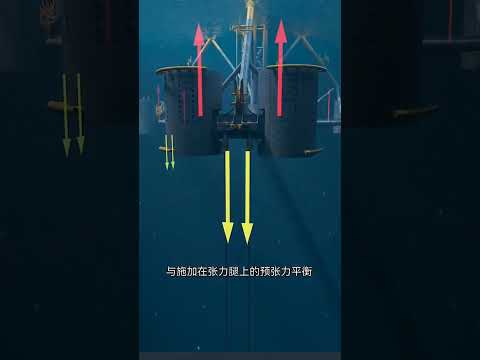 Photo: N43 and Hermes
floating offshore wind turbine — JK WIND TURBINES · ~150K views · July 2026
01The engineering behind floating wind platforms
A floating wind turbine is an offshore turbine mounted on a floating structure that allows the generator to operate in deep water. Unlike a fixed-bottom turbine, which uses a monopile or jacket anchored to the seabed, a floating system separates the platform from the foundation. The platform carries the turbine's mass and transfers wind, wave, and current loads through its hull and mooring system.
The turbine itself is familiar: blades turn a rotor, the drivetrain produces electricity, and a subsea cable carries power ashore. The innovation is the floating foundation. Its geometry, ballast, and mass distribution create stability so that the turbine remains within an acceptable angle of tilt as wind and waves change.
Floating foundations unlock sites beyond the depth limit of fixed-bottom construction, often roughly 60 meters and deeper. That matters because much of the world's strongest, steadiest wind resource lies farther offshore. The trade is a more complex system that must be designed as one coupled structure rather than as a turbine placed on a static foundation.
02Mooring systems for deep water
Mooring lines hold the platform in position while allowing controlled movement. Common systems include catenary moorings, which use the weight and curved shape of chain or wire to generate restoring force; taut-leg systems, which use tensioned lines; and tension-leg platforms, which attach the floating hull to the seabed with nearly vertical tendons.
Anchors are chosen for seabed conditions and water depth. Drag-embedment anchors can be efficient in suitable soils, while suction piles and driven piles provide alternatives where higher holding capacity or precise placement is required. Mooring design must account for extreme storms, fatigue over decades, and the possibility of a line failure.
Dynamic export cables are another deep-water challenge. A cable must flex as the platform moves without exceeding its bend radius or suffering fatigue. Buoyancy modules, lazy-wave configurations, and carefully controlled touchdown points keep electrical cables within their design envelope while reducing seabed contact.
03How floating turbines survive storms
Floating turbines are designed for combined environmental loads: sustained wind, gusts, waves, currents, and the coupled motion of the platform. Engineers model these interactions with time-domain simulations and validate them through basin tests. The goal is not to eliminate movement but to keep acceleration, tilt, and structural stress within safe limits.
Control software can reduce loads. Turbines adjust blade pitch and generator torque to shed energy during extreme gusts, while active yaw systems keep the rotor aligned. Some concepts use platform motion sensors to anticipate the effect of waves, creating a feedback loop between the floating structure and the turbine controller.
Storm survival also depends on inspection and operational procedures. Operators may curtail production ahead of a forecast event, then inspect moorings, cables, and blades after it passes. The engineering standard is a 25-year or longer service life with explicit design cases for rare extreme conditions, not normal weather alone.
04The installation process
Floating wind can move much of the assembly work from offshore to a port. Turbine components are integrated onto the platform in sheltered water, then the completed unit is towed to its site by conventional or specialized tugs. At the site, crews connect mooring lines and dynamic cables before commissioning the turbine.
Tow-to-site installation can reduce dependence on scarce heavy-lift vessels and avoid some of the weather windows required by fixed-bottom construction. It also creates port requirements: deep berths, high load capacity, large laydown areas, and a workforce trained in marine construction and high-voltage systems.
The installation sequence varies by platform type and project scale. A developer may pre-lay anchors and moorings, tow platforms one at a time, and connect them with a hook-up vessel. Decommissioning can use the reverse process, giving floating projects a potentially clearer end-of-life pathway than fixed foundations.
05Maintenance challenges and solutions
Maintenance is more difficult offshore because technicians must work around waves, weather, and platform motion. Floating turbines add inspection targets — mooring chains, anchors, hull structures, ballast systems, and dynamic cables — to the familiar blade, gearbox, generator, and electrical equipment.
The industry is responding with condition monitoring, drones, remotely operated vehicles, and predictive maintenance models. Sensors can track vibration, strain, corrosion, line tension, and cable movement. A planned tow-to-port strategy could allow major repairs in a controlled harbor rather than requiring a specialized offshore crane vessel.
Reliability is central to project economics. A turbine that produces slightly more electricity but requires frequent offshore intervention may be less valuable than a conservative design with high availability. Developers therefore optimize the entire lifecycle — access, spare parts, weather forecasting, port logistics, and technician safety — not only the rated power.
06Where floating wind farms are being deployed
Offshore wind power is the generation of electricity through wind farms in bodies of water, usually the sea. Floating projects are moving from demonstration turbines to early commercial arrays, with activity concentrated in countries that have deep coastal waters, strong wind resources, industrial ports, and supportive policy.
Scotland, Norway, France, Portugal, Japan, and South Korea have been important early markets. The United Kingdom has set ambitious floating-wind goals, while Norway's oil-and-gas supply chain provides relevant offshore engineering expertise. The United States is developing projects on the Pacific coast, where deep water arrives close to shore and fixed-bottom turbines are difficult to deploy.
The global pipeline is not the same as committed construction. Announced capacity can be delayed by permitting, grid connection, inflation, vessel availability, and changing subsidy rules. The next phase will test whether floating wind can lower costs quickly enough to compete with fixed-bottom offshore wind and other low-carbon resources.
07What floating wind means for coastal energy
Renewable energy is energy made from natural resources that are replenished on a human timescale. Floating wind expands the geography of that resource, allowing countries with narrow continental shelves to access offshore wind without building foundations in extreme depths. It can also reduce visual impact by placing arrays farther from shore, although fishing, shipping, wildlife, and community concerns remain.
The climate case depends on full-system delivery. Turbines need ports, vessels, mooring materials, substations, export cables, grid upgrades, and decommissioning plans. Local manufacturing can create industrial jobs, but supply-chain bottlenecks may slow deployment if projects scale faster than specialized factories and installation capacity.
Floating wind is not a universal replacement for other renewables. Its role is to add high-capacity-factor generation where geography favors it, complementing solar, fixed-bottom wind, hydro, storage, and firm low-carbon power. If the industry standardizes platforms and learns to manufacture them at serial scale, floating wind could become a major coastal-energy technology in the 2030s.
By N43 and Hermes for DutyStation News.