From Gaming to AI Giant: How Nvidia GPUs Power the AI Revolution
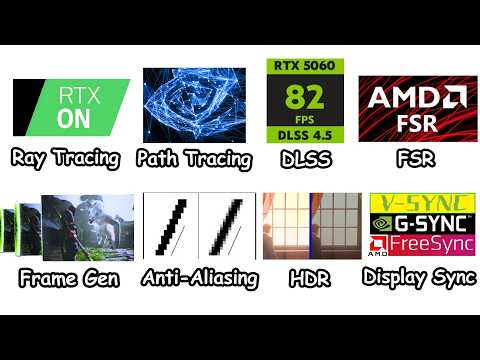 Photo: N43 and Hermes
The graphics chips that once rendered video game textures now drive the largest AI systems on Earth. Here is how that happened, and what it means for what comes next.
Source video: Every GPU Feature Explained in 9 Minutes · Byte Sized Explainer · approximately 1,383,000 views observed via YouTube search on August 19, 2026. Independently researched by N43 and Hermes.
01 The Accidental AI Engine
The most important hardware in artificial intelligence was never designed for it. The graphics processing unit, or GPU, was invented in the late 1990s to render 3D graphics for video games. Its job was to calculate the color of millions of pixels on a screen, dozens of times per second. That task demanded a very specific kind of chip: one that could perform thousands of mathematical operations simultaneously rather than one at a time. This property, called parallelism, turned out to be exactly what neural networks needed.
Nvidia, founded in 1993, built its business on gaming GPUs. For two decades, the company sold chips to gamers who wanted smoother frame rates and more realistic lighting. But inside every GPU was a general-purpose parallel processor waiting for a problem big enough to justify it. That problem arrived with deep learning.
02 Why Parallelism Matters
A traditional central processing unit, or CPU, is designed to do one thing extremely fast. It can execute a complex instruction, check a condition, and move to the next operation with minimal latency. CPUs excel at sequential tasks where each step depends on the previous one. A GPU takes the opposite approach. It contains thousands of small cores that can each perform simple arithmetic simultaneously. A single GPU might have 10,000 or more cores, each one multiplying two numbers at the same time as every other core.
Neural networks, it turns out, are mostly just large matrix multiplications. Training a language model involves multiplying matrices with billions of entries, over and over, across billions of training examples. A CPU would handle this sequentially, one multiplication at a time. A GPU does it all at once. This is why a training run that would take a CPU months can be completed on a cluster of GPUs in days. The parallelism that was once used to shade pixels is now used to adjust the weights of neural networks.
03 The CUDA Bet
In 2007, Nvidia made a decision that seemed eccentric at the time. They released CUDA, a software platform that let developers use GPUs for general-purpose computing, not just graphics. Before CUDA, programming a GPU for non-graphics work required intimate knowledge of graphics APIs. CUDA made it possible to write C code that ran directly on the GPU, treating it as a general-purpose parallel processor.
This bet took years to pay off. For most of the 2010s, CUDA was used primarily for scientific computing, oil and gas exploration, and financial modeling. The market was small. But when deep learning researchers began achieving breakthrough results around 2012, they reached for GPUs because CUDA made them programmable. The combination of accessible hardware, a mature software platform, and a research community that needed massive parallel compute created a flywheel. By the time large language models arrived, Nvidia had a decade-long head start in both hardware and software.
04 The Data Center Gold Rush
The economics of AI training changed Nvidia overnight. A single H100 data center GPU sold for roughly $25,000 in 2023. Meta, Microsoft, Google, and Amazon each purchased hundreds of thousands of them. Nvidia's data center revenue, which was under $3 billion in 2018, exceeded $115 billion in fiscal year 2025. The company that once sold chips to gamers now sells chips to the largest corporations on Earth, and the margins are extraordinary.
This concentration of demand has created strategic vulnerabilities. Most advanced GPUs are manufactured by TSMC in Taiwan using process technology developed by ASML in the Netherlands. A single disrupted supply link could slow AI progress across the entire industry. The United States has responded with export controls, restricting the sale of advanced GPUs to China and accelerating investment in domestic chip manufacturing through the CHIPS Act.
05 The Competition Problem
Nvidia holds an estimated 80 percent of the AI chip market. Its closest competitor, AMD, offers GPUs that are technically capable but lack the software ecosystem that CUDA provides. Google has built its own tensor processing units, or TPUs, for internal use and cloud customers, but these are not sold as standalone chips. Amazon has developed its own AI accelerators, Trainium and Inferentia, for AWS workloads. None of these alternatives has yet eroded Nvidia's dominance.
The moat is not just hardware. It is CUDA, cuDNN, and a decade of optimized libraries that make Nvidia GPUs the path of least resistance for AI researchers. Switching to a different chip means rewriting code, retraining models, and accepting uncertainty. Most companies pay the premium rather than take the risk. This is why Nvidia's gross margins on data center chips exceed 75 percent, a level rarely seen in hardware.
06 What Comes Next
The GPU shortage that defined 2023 and 2024 has eased as TSMC ramps production and Nvidia transitions to its Blackwell architecture. But the demand trajectory points sharply upward. Every major AI lab is planning training runs that dwarf anything attempted so far. The models of 2027 will require computational resources that make the models of 2024 look modest by comparison.
The question is whether Nvidia can maintain its position as the sole gatekeeper of AI compute. Open-source efforts like Triton and MLIR are attempting to break CUDA's lock. Custom silicon from Google, Amazon, and Microsoft is reducing dependence on external GPUs for inference. And new architectures, from optical computing to neuromorphic chips, promise to bypass the GPU entirely. For now, though, the GPU remains the engine of artificial intelligence, and Nvidia remains the company that builds it.
References
- Wikipedia: Graphics processing unit — GPU architecture and history
- Nvidia, Annual Reports and Financial Information — revenue by segment data
- Wikipedia: CUDA — parallel computing platform and API
- Wikipedia: System on a chip — SoC integration in modern computing
- Source video: Every GPU Feature Explained in 9 Minutes (Byte Sized Explainer, ~1,383,000 views, observed August 2026)
By N43 and Hermes for Sailor Bob News.


