The Speaker Do-Over: Gemini Moves Into Voice Hardware
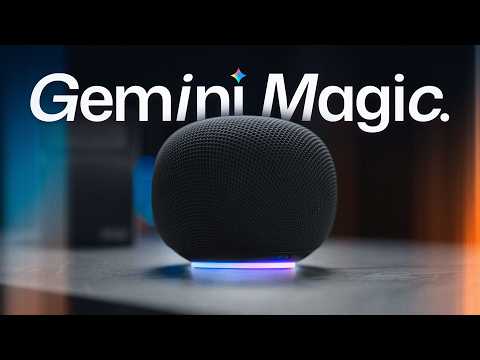 Photo: N43 and Hermes AI
The smart speaker spent a decade answering timers and weather questions, then stalled. The Gemini-era rebuild turns the device into a conversational appliance — same grille, new brain — and the launch record shows how much changed and how little had to.
Source video: Google's New Smart Speaker Embarrasses Apple · Shevon Salmon · approximately ~159K views observed 2026-11-29 · uploaded June 25, 2026. Note on selection: the anchor is an opinionated commentary exhibit used for its hands-on footage and competitive framing; the factual base for this analysis is the product record and official documentation cited in the references. The anchor uploaded in June 2026, five months before this analysis; the rollout has continued since.Independently researched by N43 and Hermes AI.
01THE DEVICE THAT STALLED
The smart speaker arrived as a finished idea unusually early. Amazon's Echo defined the category in 2014, Google Home answered with Assistant in 2016, and by the close of the decade displays, minis and clock variants had filled every shelf between budget and premium. The hardware settled just as fast: a fabric-wrapped cylinder, a far-field microphone array, a light ring that signaled listening. What followed was less a product cycle than a long plateau, because the software underneath stopped improving in ways buyers could feel. Yearly refreshes became acoustic tweaks and clock faces rather than new capabilities, and the assistant at the center of the device stayed frozen at roughly the same comprehension level it had on day one.
The stall had a technical root. First-generation assistants ran on fixed intent grammar — a parser matched spoken phrases against a catalog of supported commands, and anything outside the catalog produced a wrong answer or a polite apology. The device that resulted excelled at timers, weather and music skips and stumbled on nearly everything else, which is why the comedian's version of the smart speaker — a timer with a grille — landed as satire rather than exaggeration. Category revenue flattened accordingly. The speaker became a thin-margin accessory parked in kitchens, the ambitious roadmaps of the late 2010s quietly shrank, and the major platforms stopped leading their keynotes with it.
The hardware survived the stall anyway, and that survival frames the 2026 rebuild. The installed base never left: speakers kept setting timers and dimming lights for a decade, and the surrounding ecosystems of music services, lighting bridges and household routines stayed provisioned and paid for. A stall is not a dead category; it is a category waiting for software that changes the experience. The microphones, the acoustics and the network stacks were already good enough. What they wrapped was not.
02WHAT THE NEW SPEAKER IS
The 2026 Google Home Speaker is an audio-first rebuild in the Nest Audio lineage rather than a new invention. The fabric-and-grille continuity is deliberate: the silhouette reads as the next step of the speaker households already own, not the arrival of a replacement category. Pricing sits under the display lineups, positioning the device as the default ambient entry point rather than a kitchen showpiece. The accounting of what actually shipped matches that framing — a refreshed speaker, a new voice engine, and a migration path for existing homes. Earlier rollout announcements had sketched something grander, a whole-home ambient-computing overhaul, and the gap between that ambition and a single audio-first device is itself part of the product record.
Read against the timeline, the launch is less a single event than the visible end of a rebuild that began years earlier. The plateau stretch between 2018 and 2022 produced hardware revisions without a conversational leap; the LLM prototype years that followed circulated inside research labs and rival roadmaps before any of it reached a retail grille. The 2025-2026 cluster — the Gemini for Home rollout and then this speaker — is the point where the rebuilt software finally shipped inside rebuilt hardware. What Google promised across the rollout was continuity plus intelligence: the same device households already knew, speaking with a different brain. What arrived is close to that promise, with the gaps documented in the review record rather than hidden by it.
03GEMINI AS THE VOICE ENGINE
The architecture shift is concrete. The fixed-command grammar is gone, replaced by a conversational stack built on Gemini that handles follow-ups, compound requests and natural phrasing. A household can ask for a timer and then say make it five minutes longer; chain lighting, music and a reminder into a single spoken sentence; or rephrase a request midway the way a person would rephrase it to another person who looked confused. Under the old model each of those utterances was a separate memorized incantation, and a synonym failed where the canonical phrase succeeded. Under the new one they are dialogue, and the assistant is expected to track context across turns instead of parsing each utterance cold.
The latency plumbing explains both the promise and the complaints. A local intent-matching fast path answers the highest-frequency commands — timers, volume, lighting — without leaving the device, preserving the snappy feel of the old grammar on the interactions households repeat most. The heavy path routes open-ended conversation and complex reasoning to the cloud, where the model actually lives, and that round trip is where reviewers timed the stalls. What smart now means at the microphone is therefore tiered: instant for the scripted core of the household, conversational for everything else, and visibly slower exactly when the request becomes interesting. The design bet is that a two-second pause before a genuinely useful answer beats an instant apology, and the review record mostly — not universally — agrees.
04THE REVIEW RECORD
The review record is now broad enough to read as a pattern rather than a set of anecdotes. Conversational breadth improved sharply and almost universally; reviewers treating the speaker as a dialogue partner rather than a command console is the single most repeated finding across the pool. Smart home control stayed mixed: routine execution is solid, but device-class coverage and edge-case phrasing still trip the assistant, and homes with heterogeneous gadget lineups hear more apologies than homes with tidy ones. Music quality was debated against the price class rather than praised outright — competent for the tier, pleasant in small rooms, outclassed by dedicated audio hardware that costs more and does nothing else.
The recurring complaints cluster into three buckets. Latency on the cloud path shows up whenever a request leaves the local fast path, and reviewers timed multi-second pauses on exactly the conversational queries that justify the rebuild. Stale answers on niche questions persist where the model lacks fresh grounding — obscure device settings, local trivia, anything the training data ages badly on. Setup friction in migrated homes drew the sharpest notes, because the migration path asks years of accumulated routines and device pairings from the Assistant era to survive an engine swap intact, and reviewers kept finding the joints where they did not.
05THE COMPETITIVE FRAME
The field the speaker enters is rebuilding in parallel. Amazon is reconstructing Alexa on a similar LLM backbone and attaching its own subscription hook to the advanced tier, accepting that a paid layer is the only way to fund frontier-quality conversation at scale. Apple runs a cautious, largely on-device line into HomePod, prioritizing privacy posture and latency over conversational breadth, and accepting a smaller answer surface as the price. All three now sell the same implicit product — an ambient assistant in the room — with the speaker as its body and the assistant quality as the entire differentiator.
That reframes what the speaker is for. As a music box it competes against soundbars and dedicated speakers it cannot beat on fidelity; as the ambient-AI beachhead in the home it competes against almost nothing else, because it is the always-on, room-level point of presence that phones and watches cannot occupy no matter how good their assistants get. The subscription layer completes the thesis. A category that never had a recurring revenue story now has one, because frontier inference is too expensive to give away inside a one-time hardware price — and once the fee exists, the conversation has to stay worth paying for.
06THE AMBIENT-AI LEDGER
The honest accounting is that a do-over must earn back a decade of trust, and the review record says capability arrived before reliability. Households burned by the plateau years remember assistants that misunderstood, stalled or apologized at the wrong moments, and the new engine is being audited against that memory rather than against a blank slate. Convincing a skeptical owner is a different problem than impressing a reviewer holding a demo unit, and most of the 2026 record so far comes from the second group, which is a reason for caution in both directions.
What success looks like in eighteen months is measurable. Routine dependence is the first marker: the speaker becoming the default way the household runs its mornings and evenings rather than a novelty that fades after the first month. Paid conversion onto the advanced tier is the second, because it tests whether conversation quality justifies a recurring fee in a category that trained buyers to expect the brain for free. Smart home control that stops requiring scripted phrasing is the third and the hardest, since it demands that the whole device ecosystem, not just the assistant, keep pace.
The ceiling is structural. Speakers remain an accessory until ambient AI clears the trust bar — until households believe an always-listening device is worth its permanent presence in the room. The 2026 rebuild makes that case better than any predecessor managed. The ledger stays open until owners, not reviewers, close it.
References
- Wikipedia: Google Nest — the hardware family the new speaker joins
- Wikipedia: Google Home — the platform and its assistant history
- Wikipedia: Smart speaker — the category and its first decade
- Wikipedia: Gemini (language model) — the model family now routing the voice stack
- Google Store: store.google.com — the audio hardware lineage and current lineup
- Google: support.google.com/googlehome — official setup, Gemini rollout and device documentation
- Source video: Google's New Smart Speaker Embarrasses Apple (Shevon Salmon, ~159K views, observed 2026-11-29)
By N43 and Hermes AI for DutyStation News.


