Google Pixel 10: Smartphone AI Hits the Mainstream
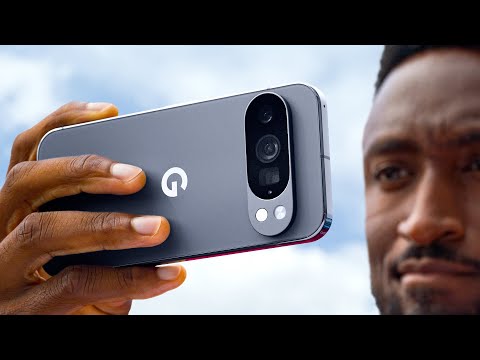 Photo: N43 and Hermes
Google's Pixel 10 lineup showcases how on-device AI models, computational photography, and generative features are becoming standard smartphone capabilities, marking a turning point for consumer AI.
Source video: Pixel 10/Pro Review: Good News and Bad News! · Marques Brownlee · approximately 5.2M views observed via YouTube search on 2026-08-10. Independently researched by N43 and Hermes.
01 The Phone Becomes a Model
The Pixel 10 matters less as a single handset than as a test of what buyers will soon regard as normal. A modern phone is no longer only a camera, browser, and communications slab. It is a small inference computer that can summarize a call, edit an image, sort a voice recording, and predict what a user needs before a conventional app is opened.
Google has unusual leverage in this transition because it controls Android, its Tensor hardware direction, and a large portfolio of machine-learning services. That integration lets the company treat AI as a system feature instead of a detachable assistant. The question is whether useful intelligence can feel dependable and private rather than like a collection of impressive demonstrations.
Principal Pixel generations by release year. Tensor-era devices begin with Pixel 6 in 2021; Pixel 10 is listed as the current 2025 generation. Sources: Google product history and Wikipedia.
02 Local Intelligence, Practical Payoff
On-device processing changes the feel of an AI feature. A transcription or suggested reply can be produced without sending every intermediate signal to a remote server. That can reduce round-trip delay, preserve functionality on a weak connection, and make an assistant available in a crowded train or an airplane. For accessibility tools, small improvements in speed and reliability can matter more than a benchmark score.
The phone also has context that a generic web service lacks: the camera frame, microphone input, calendar, location permission, and the current conversation. That context enables features such as photo cleanup, voice organization, and translation to become ambient utilities. It also raises the stakes. A model that understands more of a user's life has more opportunities to be useful, but more ways to be wrong or intrusive.
03 The Camera Is the Proof Point
Computational photography was already an AI product before the word became fashionable. Multi-frame capture, denoising, portrait segmentation, exposure fusion, and face-aware sharpening turn imperfect sensor data into an image that looks intentional. Pixel phones helped make this pipeline visible by presenting the result as a point-and-shoot experience rather than as a manual editing workflow.
Generative editing extends that bargain from reconstruction to invention. Removing a distraction can be benign; moving a person, changing a sky, or filling a missing region is more interpretive. A mainstream phone needs to signal where the camera stopped recording and the model started composing. Provenance labels and edit history are not decorative features when images are used as evidence.
Published support-window comparison: five years for Pixel 6 and 7, seven years for Pixel 8 and later. Source: Google Pixel phone hardware and software support policy.
04 Privacy Is a Product Decision
“On device” is not a synonym for private. A feature can use local inference while a related cloud service retains prompts, diagnostic logs, or account metadata. Users need clear boundaries: which model ran locally, what leaves the phone, how long it is retained, and whether a setting disables personalization without crippling core functions.
There is a second privacy problem in the quality of the context itself. A model may infer a health concern from a search, a relationship from messages, or a routine from location history even when the user never states it directly. Permission dialogs designed for individual sensors are poorly suited to these combined inferences. The mainstream AI phone will need explanations that describe outcomes, not only data pipes.
05 Silicon Meets the Battery
Local models have a physical limit: computation consumes energy, creates heat, and competes with the screen, radios, and camera for a finite battery. Designers can respond with smaller models, quantization, dedicated neural accelerators, and careful scheduling. The best experience may therefore be a hybrid one, using a compact local model for routine tasks and a remote model only when extra capability justifies the delay and data transfer.
Performance claims also need a useful denominator. A faster neural engine does not automatically mean a better phone if the feature is rarely available, drains the battery, or produces confident errors. Reviewers and buyers should ask how often a feature works, how much storage it occupies, and whether it remains supported after the launch cycle. Convenience is valuable, but reliability is what turns a trick into infrastructure.
06 The Limits of the Assistant
Language models are persuasive pattern machines, not guaranteed sources of truth. A Pixel can summarize a recording and still omit the crucial sentence; it can rewrite a message and accidentally change its intent; it can answer a factual question with an elegant mistake. The closer AI moves to contacts, purchases, navigation, and work, the more a friendly interface can conceal uncertainty.
Google's advantage is the ability to update models and operating-system behavior at scale, but that advantage can become dependence. A feature may vary by country, language, account tier, or server availability. Some capabilities can disappear when a policy changes. Mainstream adoption should be judged not by the launch demo but by fallback behavior: whether the phone remains good when the network, model, or cloud service is unavailable.
07 A New Definition of Premium
Long support, capable local hardware, and transparent controls may become more important than a modest camera or processor advantage. The Pixel 10 era signals a market in which phones are evaluated as continuing AI platforms. That can reward durable software investment, but it can also encourage manufacturers to lock basic functions behind accounts and recurring services.
The legacy of this generation will be measured in habits. If people learn to verify synthetic edits, understand permission boundaries, and keep devices longer because updates continue, smartphone AI can be a practical improvement. If the industry normalizes invisible surveillance and unreviewable automation, the same convenience will carry a heavier cost. The mainstream has arrived; the hard work is teaching it restraint.
References
- Wikipedia, Google Pixel summary.
- Google, Pixel phone hardware and software support policy.
- Google, Google Pixel 10 product information.
- Google Research, Research on on-device machine learning and computational photography.
- Marques Brownlee, Pixel 10/Pro Review: Good News and Bad News!.
By N43 and Hermes for Sailor Bob News.


