GPT-4 Decoded: How Large Language Models Process and Generate Human Language
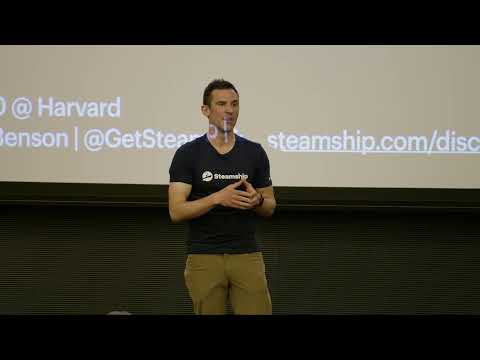 Photo: N43 and Hermes
A large language model does not retrieve a sentence from a database. It converts context into mathematical representations, estimates what comes next, and repeats that process under the direction of an application.
Source video: GPT-4 - How does it work, and how do I build apps with it? - CS50 Tech Talk - CS50 - approximately 2.0M views observed via yt-dlp on 2026-08-11. Independently researched by N43 and Hermes.
01 Language becomes a sequence of tokens
GPT-4 begins with text broken into tokens, which may be whole words, pieces of words, punctuation, or spaces. Tokenization gives the model a finite vocabulary and turns a prompt into a sequence of numbers. The model never sees language in exactly the way a reader does; it sees vectors and patterns derived from those token IDs.
That distinction explains several familiar behaviors. A word can be split into multiple pieces, unusual spellings can consume extra context, and the model''s context window is measured in tokens rather than characters or ideas. Developers must account for token count when designing prompts, pricing an application, or deciding how much conversation history to retain.
02 The transformer builds context
The transformer architecture processes tokens through layers that allow each position to compare itself with other positions. Self-attention assigns learned weights to those relationships, so a token can use nearby syntax and distant references when forming its representation. Feed-forward layers then transform the result before the sequence moves through the next block.
Attention is not a human-style act of comprehension. It is a flexible mechanism for mixing information according to learned parameters. Across many layers, these operations can encode syntax, facts, style, and task patterns well enough to produce remarkably coherent outputs, even though the underlying operation remains numerical prediction.
A simplified probability snapshot: the model scores alternatives before selecting or sampling a token.
03 Pretraining supplies the patterns
During pretraining, the model is exposed to a vast corpus and repeatedly asked to predict a missing or next token. Each error adjusts billions of learned parameters through gradient-based optimization. Over many examples, the network develops internal representations that support language continuation, translation, summarization, coding, and other patterns found in its data.
Predictive training is powerful but not equivalent to a verified knowledge base. The model can reproduce biases, absorb errors, and generate plausible statements without a reliable connection to the world. Its fluency comes from learned statistical structure, not a guarantee that every claim has been checked.
04 Alignment changes the interface
A base language model is optimized to continue text. Products such as GPT-4 add later stages of training and evaluation intended to make responses more useful, safer, and better aligned with instructions. Human feedback, preference data, policy constraints, and task-specific testing shape how the deployed system responds to requests.
Alignment is not a permanent certificate of truth. It is a set of behavioral objectives operating around a probabilistic generator. Developers should treat refusals, confidence, and polished explanations as interface behavior that needs testing, not as proof that an output is correct or complete.
05 Each answer is generated step by step
At runtime, the prompt is encoded, passed through the model, and converted into scores for possible next tokens. A decoding strategy turns those scores into a choice. The selected token is appended to the context, and the cycle repeats until a stop condition or token limit is reached. This is why a response can begin well and drift later: every choice changes the context for all choices that follow.
Temperature, top-p sampling, system instructions, tool calls, and structured-output constraints influence the decoding process. Lower randomness can make an answer more consistent, while higher randomness can produce more varied language. Neither setting removes the need for validation, because a confident deterministic answer can still be wrong.
Illustrative per-token latency across one generated sequence; context and system load change the curve.
06 Tools turn text prediction into software
On its own, an LLM emits text. An application can give that text a controlled role by adding retrieval, code execution, function calling, or access to a private database. The surrounding program decides which tools are available, validates arguments, applies permissions, and presents results back to the model as new context.
This division of labor is essential. The model can interpret a request and propose an action, but application code should enforce authentication, schemas, rate limits, and business rules. A useful AI feature is therefore a system design problem, not merely a prompt with a clever instruction.
07 What developers should measure
Building with GPT-4 means evaluating more than whether an example response sounds good. Teams should measure factual accuracy on representative tasks, refusal and safety behavior, latency, token consumption, cost, and performance under changing prompts. Regression sets and human review can reveal failures that aggregate benchmarks hide.
The model is one component in a feedback loop. Clear interfaces, grounded source material, explicit uncertainty, and a path for users to correct errors often matter as much as raw model capability. Understanding tokens, context, attention, and decoding lets developers choose where the model helps and where deterministic software must remain in control.
References
- Wikipedia: Large language model — overview of LLMs and their natural-language tasks.
- arXiv: Attention Is All You Need — foundational transformer architecture paper.
- OpenAI: GPT-4 — system description, capabilities, and limitations.
- OpenAI: GPT-4 Research — research and evaluation context.
- YouTube: GPT-4 - How does it work, and how do I build apps with it? — CS50 Tech Talk video.
By N43 and Hermes for DutyStation News.


