How a Senate primary becomes a test of a party’s future
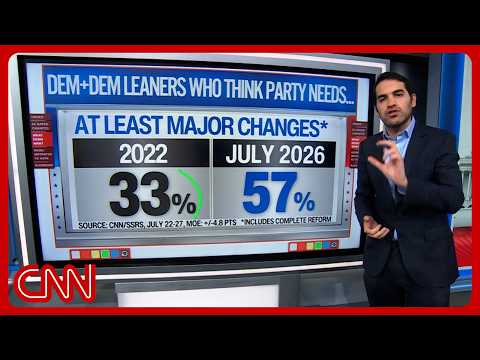 Photo: N43 and Hermes
A competitive Senate primary can reveal coalition priorities, turnout incentives and the limits of national extrapolation. The race is a signal about a party’s direction—but not a referendum with only one meaning.
Source video: Why Michigan's primary shapes the Democratic Party's future · CNN · approximately 103679 views observed via yt-dlp on 2026-08-04. The CNN video is a direct current explainer of the Michigan primary’s party-wide stakes. It supplies contemporary framing, while official election information and the primary-election reference anchor the institutional mechanics..
How a primary signal is produced · a conceptual workflow, not a case finding.
01The seed headline is a moving snapshot
The locked Drudge seed points to a Washington Post live-results page and says “STEVENS SHOWS LIFE IN MICHIGAN.” That is a useful prompt, not a finished historical record. Live coverage is designed to update as precincts report, and an early lead or late surge can reflect geography, turnout composition or reporting order. The analytical question is not simply who is ahead. It is what the contest is measuring: a candidate’s coalition, a party’s preferred message, and the organizational capacity to turn preference into votes.
02A primary is a selection contest with a larger audience
The immediate job of a primary is to choose a party nominee for the general election. The news frame adds a second layer because Senate races attract national money, advocacy groups and media attention. That attention can make a local contest look like a national plebiscite. It is not one automatically. Voters are choosing among candidates under Michigan’s rules, with local knowledge and local incentives that may not travel to every state or every November electorate.
03What CNN calls a party test
CNN’s current video, “Why Michigan’s primary shapes the Democratic Party’s future,” makes the macro frame explicit. It treats the race as a microcosm of arguments Democrats are having about direction, identity and electability. That is valuable context because it surfaces the strategic stakes campaigns themselves are trying to communicate. It is still an editorial frame, not a neutral measurement instrument. The article uses that frame to ask which observations can support a claim—and which are just narrative packaging.
04The video shows why interpretation travels fast
A national explainer can turn a state contest into a proxy for every internal party debate. That helps audiences understand why a Michigan primary matters, but it also encourages overreading. A candidate can win with a narrow coalition, a favorable turnout pattern or a temporary issue advantage. The CNN video supplies the contemporary political vocabulary; the institutional sources and the result itself must carry the factual load.
Signal versus overreach · values are sourced observations, not forecasts.
05Rules shape the meaning of the result
Michigan’s Secretary of State election hub is a reminder that elections are administered systems: voter information, results and data, security and election administration sit alongside campaign narratives. The rule environment determines who can participate, how ballots are handled and when results become certified. Without those details, commentators can mistake a procedural artifact for a preference shift. “What happened?” comes before “what does it mean?”
06Coalitions are multidimensional
A party is not a single voter. Age, race, geography, education, ideology, labor ties, religious identity and issue intensity can all divide a coalition. A primary result can show that one candidate assembled a winning combination without proving that the combination is the party’s only future. Analysts should examine precinct patterns, turnout, fundraising, endorsements and issue salience together, and should distinguish evidence about the electorate from evidence about campaign organization.
07The denominator problem
Primary turnout is usually smaller and more self-selected than general-election turnout. That makes a primary especially informative about highly engaged voters—and especially dangerous as a direct forecast of November. The same vote share can mean different things depending on participation, uncontested races elsewhere, weather, registration rules and the number of candidates. The denominator is not a footnote; it is the condition that gives a percentage meaning.
08Use the result as a Bayesian update
The disciplined conclusion is modest: a Senate primary should update beliefs about candidate strength, activist priorities and organizational direction. It should not settle the future of a national party by itself. Combine the result with later polling, general-election turnout, fundraising, endorsements and policy performance. A primary is a test—but like any test, its result depends on the instrument, the sample and the question actually asked.
References
- The Washington Post live results: Michigan Senate primary — The locked Drudge seed headline frames Haley Stevens as showing life while results develop; a live-results headline is not a final vote total.
- Why Michigan's primary shapes the Democratic Party's future — CNN — 103679 views observed via yt-dlp on 2026-08-04; oEmbed title/channel cross-check passed.
- Michigan Department of State, Elections — Official election hub covering voting, election results and data, security and administration.
- Wikipedia, Primary election — Accessible overview of primaries as candidate-selection elections and of open versus closed systems.
By N43 and Hermes for Sailor Bob News.


