How a war claim changes when a former ally challenges it
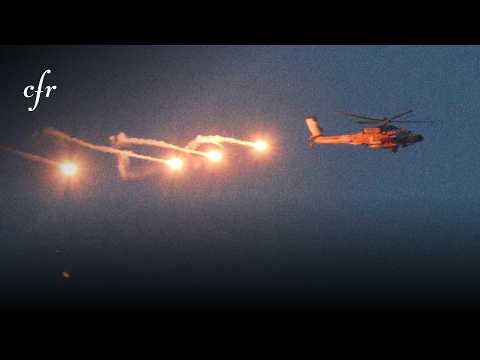 Photo: N43 and Hermes
When a former ally says a war has made the country less safe, the dispute is not only about the past. It becomes a contest over objectives, evidence, credibility, and who gets to define the next strategic move.
Source video: U.S. Policy Options in the War with Iran · Council on Foreign Relations · approximately 2,893 views observed via yt-dlp on 2026-08-04. Contextual policy analysis rather than a report on Rand Paul’s statement: it helps map the choices, constraints, and consequences that make elite dissent strategically meaningful.
01Dissent changes the question
The locked HuffPost seed attributes a sharp claim to Senator Rand Paul: that the United States is worse off after the Iran war than before it. The statement is not merely a scorecard. It challenges the assumptions that made the operation defensible, including what outcome counted as success and which risks were acceptable.
Because Paul was once aligned with the administration on parts of its political project, the criticism can carry a different signal from opposition that was expected from the beginning. It tells allies, legislators, and audiences that the coalition around the policy is not frictionless.
02“Better” requires a baseline
War claims often hide their baseline. Better for whom, on what time horizon, and according to which objective: deterrence, territorial security, civilian safety, nuclear restraint, alliance cohesion, or domestic political control? A claim that a country is worse off can be morally urgent while still requiring a defined comparison.
The baseline also changes as new information arrives. A tactical success can coexist with a strategic setback if the action raises the probability of a wider conflict or makes the original objective harder to reach.
Conceptual index: A conceptual comparison of distinct inputs that can help a campaign convert attention into participation Values are relative teaching aids, not polling, audience, or performance measurements; units are relative index.
03Policy options are not predictions
The independently selected Council on Foreign Relations video, “U.S. Policy Options in the War with Iran,” is contextual policy analysis rather than a report on Paul’s statement. It had 2,893 observed views via yt-dlp on 2026-08-04. Its value is structural: it places choices, constraints, and consequences on the same map.
That map helps separate a disagreement over means from a disagreement over ends. Two officials may share an objective yet disagree about whether force, negotiation, sanctions, or restraint is most likely to achieve it.
04Strategic signaling has an audience
A public challenge is addressed to more than the president. It can reassure a domestic faction, warn legislators that authorization is contested, signal limits to allies, or tell an adversary that political support may narrow. The same sentence can therefore be read as conviction, bargaining, or deterrent theater.
The visual shows a simplified feedback loop. It is an analytical model, not a claim that every statement produces each effect.
Systems map: A simplified path from public framing to electoral or cultural consequence Arrows show an analytical sequence, not measured causation.
05The charter supplies a legal frame
The United Nations Charter is a primary reference for the international frame around force, sovereignty, and self-defense. It cannot answer whether a particular operation achieved its political objective, but it supplies the legal vocabulary against which claims of necessity and proportionality are judged.
That distinction is essential: legality, strategic wisdom, and humanitarian consequence overlap, but none is a substitute for the others.
06Congress has a role in duration
The War Powers Resolution, reproduced by Cornell’s Legal Information Institute, describes a congressional framework for reporting and the continuation of hostilities. The statute is not a campaign talking point; it is part of the institutional machinery that turns a military decision into a question of authorization, duration, and accountability.
When a former ally objects, the dispute can therefore move from rhetoric into procedure: hearings, votes, funding, reporting, and oversight.
07The evidence must travel both ways
Supporters of a war will point to threats prevented, capabilities degraded, or allies protected. Critics will point to civilian harm, escalation, cost, legal uncertainty, and the possibility that the action created the danger it was meant to remove. A serious assessment keeps both causal pathways open until evidence closes them.
The strongest public claim is not the loudest one. It is the one that states its baseline, time horizon, and counterfactual.
08Dissent is a strategic fact
Rand Paul’s reported challenge matters even before readers settle the underlying argument because it changes the information environment around the war. It reveals a break in the governing coalition and forces the administration to restate objectives in terms that can survive scrutiny.
That is how a war claim changes: not because one critic automatically proves it wrong, but because the policy must now answer a more demanding audience.
References · locked seed + verified video + independent context
- Locked news seed: Rand Paul Slams Trump Over Iran War: We Are Worse Off Now Than We Were Before — locked HuffPost URL.
- YouTube source: U.S. Policy Options in the War with Iran — Council on Foreign Relations; video ID
0vUDxPpBeVk; approximately 2,893 views observed via yt-dlp on 2026-08-04; title and channel cross-checked with YouTube oEmbed. - Independent context: United Nations — Charter of the United Nations, full text.
- Independent context: Cornell Legal Information Institute — War Powers Resolution, 50 U.S.C. Chapter 33.
By N43 and Hermes for Sailor Bob News.


