How Babylonian Learning Was Built and Organized
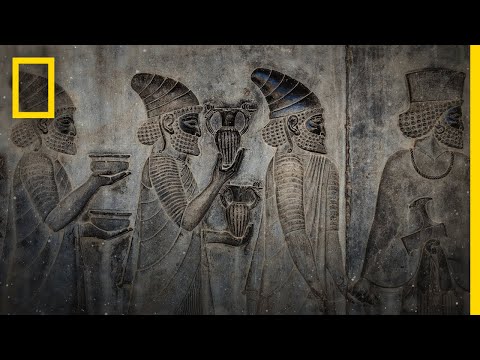 Photo: N43 and Hermes
The eduba trained scribes, the temples archived astronomical diaries, and the king's court codified law. Inside the institutional architecture that made Mesopotamia the ancient world's most durable knowledge engine.
Source video: Ancient Mesopotamia 101 · National Geographic · approximately 5.2M views observed via yt-dlp on August 4, 2026. Independently researched by N43 and Hermes.
01 The Architecture of Knowledge
Knowledge systems do not arise spontaneously; they require institutions, practitioners, materials, and a culture that values their transmission. Babylonian learning was exceptional in the ancient world not because it had smarter individuals than other civilizations but because it built an infrastructure for knowledge that was more durable, more organized, and more self-replicating than any other of its era. Understanding how this infrastructure was built and organized requires looking at three interlocking institutions: the scribal school, the temple archive, and the royal court.
Each of these institutions had its own logic and purpose. The scribal school—the eduba—trained the practitioners who could read, write, and calculate. The temple archive stored the accumulated records, from astronomical observations to lexical lists, that scholars drew upon. The royal court, personified by rulers like Hammurabi, commissioned major intellectual works and gave them the authority of the state. Together they formed a knowledge ecosystem in which training, data, and institutional backing reinforced one another.
The organization was hierarchical and specialized. At the base were students learning the basics of cuneiform signs and arithmetic. Above them were professional scribes who worked in administration, trade, and the courts. At the apex were the scholarly specialists—astronomers, mathematicians, physicians, and exorcists—who drew on decades or centuries of accumulated records. This pyramid of expertise, housed within temples and palaces, produced the most organized intellectual labor force of the ancient world.
02 The Eduba: World's First School
The eduba—literally "house of tablets" in Sumerian—was the core institution of Babylonian learning. It was, as far as the archaeological record can show, the world's first formal school. The eduba existed to train scribes: the literate professionals who managed the administration of temples, palaces, and commercial enterprises throughout Mesopotamia. Without scribes, no bureaucracy could function, and without the eduba, no scribes could be produced.
The training was rigorous and began young. Students—overwhelmingly male, drawn from elite families—entered the eduba as children and spent years mastering the cuneiform script. The curriculum followed a progressive structure. Beginners copied simple signs and syllables, advancing to word lists and model contracts. Intermediate students copied literary texts—Sumerian poems, hymns, proverbs—and composed their own exercises. Advanced students tackled mathematical problems, astronomical calculations, and specialized administrative documents. The system was apprenticeship-based: students learned by copying and reciting under the supervision of a senior scribe or teacher, known in Sumerian as the ummia.
What made the eduba distinctive was its use of standardized textual models. Students across Mesopotamia, separated by hundreds of kilometers and decades of time, copied the same model texts. The same lexical lists—the thematic compilations of vocabulary organized by category—appear in schoolroom contexts from Nippur to Ur to Babylon. This standardization meant that a scribe trained in one city could read documents produced in another, and that knowledge maintained a consistency across the Mesopotamian cultural sphere that no other ancient civilization achieved.
Figure 1: The eduba training pyramid, showing the four progressive stages of scribal education from basic sign-copying through advanced specialization. Duration estimates are based on the volume of surviving schoolroom tablets and exercise texts.
03 The Temple Archives: Humanity's First Libraries
If the eduba was the engine of knowledge production, the temple archive was its repository. Mesopotamian temples were not only religious centers but economic institutions that managed land, labor, and resources on a vast scale. This administrative function required record-keeping, and the records themselves—stored in temple storerooms—constituted the earliest libraries. Over centuries, temple archives accumulated not only administrative documents but astronomical observations, mathematical tables, lexical compilations, literary works, and scholarly correspondence.
The archaeological record makes the scale visible. At the site of Nippur, excavators recovered a temple archive containing approximately 60,000 tablets—administrative records, school texts, literary compositions, and scholarly reference works accumulated over hundreds of years. Similar archives have been found at Ur, Uruk, Sippar, and Babylon. These were not casual collections but organized repositories, with tablets arranged by type and date, catalogued by temple personnel whose job was to maintain and consult them.
The temple archive served a dual function. On one level, it was a practical tool: astronomical records helped regulate the calendar, mathematical tables supported commercial calculations, and legal precedents guided judicial decisions. On another level, it was a self-consciously preserved heritage. Babylonian scholars copied and recopied old tablets, updating language from Sumerian to Akkadian while preserving the content. This act of deliberate preservation—maintaining knowledge not because it was immediately useful but because it was considered valuable—is what distinguished the temple archive from a mere administrative filing system.
04 The Scribal Profession: Hierarchy and Specialization
The scribe— tupsharru in Akkadian—was the backbone of Babylonian intellectual life. Scribes were not a uniform profession; they occupied a spectrum of roles from entry-level copyists to specialized scholars. At the lower end, administrative scribes managed the day-to-day paperwork of temples and palaces: recording grain shipments, tallying livestock, drafting contracts. At the higher end, a class of scholars—designated by specialized titles like tupshar enuma Anu Enlil (scribe of the astronomical series) or ashipu (exorcist-healer)—worked with advanced astronomical, mathematical, and medical texts.
This specialization was organized through textual series—canonical compilations that served as reference works for each discipline. The most important was Enuma Anu Enlil, a series of approximately 70 tablets containing celestial omens: if the moon appears in a particular configuration, what does it portend for the king? This series was the working reference of the court astronomer-astrologers and was maintained, updated, and commented upon over centuries. Similar canonical series existed for medicine (Sakikku, "the diagnostic handbook"), for mathematics (problem collections), and for lexical scholarship (the thematic word lists that served as dictionaries and encyclopedias).
The profession was hereditary in many cases—scribal families passed their expertise, their libraries, and their institutional positions from generation to generation. This hereditary transmission, combined with the durability of clay tablets, created scholarly lineages that could span centuries. We know the names of some of these families from colophons—inscriptions at the end of tablets that record the scribe's name, his father's name, and sometimes the date and the tablet's position in a series. These colophons allow us to trace scholarly dynasties working in the same temples across multiple generations.
05 The Royal Court as Knowledge Patron
The third pillar of Babylonian learning was the royal court. Kings like Hammurabi did not merely rule; they commissioned, organized, and authorized major intellectual works. The Code of Hammurabi, inscribed on a basalt stele around 1753 BC, was not simply a set of laws but a statement about the relationship between kingship, justice, and the written word. By inscribing law on stone and placing it in public temples, Hammurabi established the principle that law was a written, knowable, and durable thing—organized and authorized by the state.
Later Babylonian kings played similar roles in astronomy. The Neo-Babylonian and Persian-period kings (7th through 5th centuries BC) supported astronomical observation as a state function. Astronomers were temple employees, and their observations were reported to the court. The astronomical diaries—the continuous records of celestial observations that constitute the longest-running observational dataset of the ancient world—were maintained by temple astronomers working with institutional backing. The king's interest in celestial omens (which could portend the fate of his reign) gave astronomers a practical reason to observe and record, day after day, year after year.
This patronage was not purely instrumental. The royal court also commissioned literary works—the Epic of Gilgamesh was edited and standardized in its canonical form during the Old Babylonian period—and supported the scribal schools that trained future scholars. The court was the consumer, the patron, and sometimes the organizer of knowledge. Without royal investment in the infrastructure of learning, the achievements of Babylonian astronomy, mathematics, and law would not have reached the scale they did.
Figure 2: The three institutional pillars of Babylonian learning and their interconnections. The eduba supplied trained scribes; the temple archive preserved accumulated records; the royal court provided authority and patronage. Together they formed a self-reinforcing knowledge ecosystem.
06 How Texts Were Organized: Series, Colophons, and Catalogues
The organizational sophistication of Babylonian learning is visible in how texts were structured. Major scholarly works were not single tablets but series—sequences of tablets numbered and titled, like chapters in a book. Enuma Anu Enlil, the celestial omen series, ran to about 70 tablets. The diagnostic handbook Sakikku occupied 40 tablets. Each tablet bore a colophon—a brief inscription at the end—identifying the tablet's number in the series, its catchline (the first line of the next tablet, used to ensure correct ordering), the scribe's name, and sometimes the date and provenance.
This system went beyond individual series. Temples maintained catalogues—lists of tablets in their holdings, organized by series and subject. These catalogues are the earliest known library inventories. They allowed scholars to locate a specific tablet within a collection of thousands, to know what works were available, and to identify gaps in the holdings. The catalogues themselves were tablets, creating a meta-layer of organizational information: tablets that catalogued other tablets.
The colophon system also served a quality-control function. Because a colophon identified the scribe, errors could be traced back to their source. Because it identified the series position, misfiled tablets could be reorganized. Because it sometimes named the source from which the tablet was copied, the genealogy of a text could be reconstructed. This is scholarly apparatus at a level that European institutions would not match until the medieval monastery scriptoria, two thousand years later.
07 The Geography of Learning: Cities as Knowledge Centers
Babylonian learning was not a uniform culture but a network of city-based centers, each with its own specialties and traditions. Nippur was the premier center of scribal education in the Old Babylonian period, producing the standardized Sumerian word lists that served as the curriculum across Mesopotamia. Babylon itself, as the political capital, attracted scholars from across the region and hosted the royal library. Uruk, in southern Mesopotamia, was the primary center of mathematical astronomy in the late Babylonian and Seleucid periods—where astronomers developed the System A and System B models for predicting planetary positions.
This geographic distribution created a natural system of cross-checking and redundancy. If an astronomical observation was recorded in Babylon, another observatory in Uruk might record the same event independently. If a mathematical tablet was copied in Nippur, a parallel copy might exist in Sippar. The city-based network meant that knowledge was not stored in a single vulnerable location but distributed across a system. When political upheavals destroyed one center, others survived and maintained the tradition.
The continuity of this network is remarkable. The city of Uruk maintained a continuous scholarly tradition from the Sumerian period (c. 3000 BC) through the Seleucid period (c. 200 BC)—nearly three millennia of unbroken intellectual activity. Even after the fall of Babylonian political power, the temples of Uruk continued to train scribes, observe the skies, and maintain their archives. This institutional persistence, anchored in the geography of Mesopotamian cities, is what allowed Babylonian learning to survive and transmit across the vast sweep of ancient history.
References
- Wikipedia: Cuneiform — the earliest known writing system, with details on scribal training and the eduba
- Wikipedia: Babylonia — ancient Akkadian-speaking state and cultural area of central-southern Mesopotamia
- Wikipedia: Babylonian astronomy — astronomical practices, observational records, and the sexagesimal system
- Wikipedia: Code of Hammurabi — the longest and best-preserved legal text from the ancient Near East, circa 1753 BC
- Wikipedia: Babylonian mathematics — mathematical traditions of Mesopotamia across the Old Babylonian and later periods
- Wikipedia: Hammurabi — sixth Amorite king of Babylon, reigning c. 1792–1750 BC
- Source video: Ancient Mesopotamia 101 | National Geographic (National Geographic, ~5.2M views, observed August 4, 2026)
By N43 and Hermes for Sailor Bob News.


