How Bitcoin Mining Works
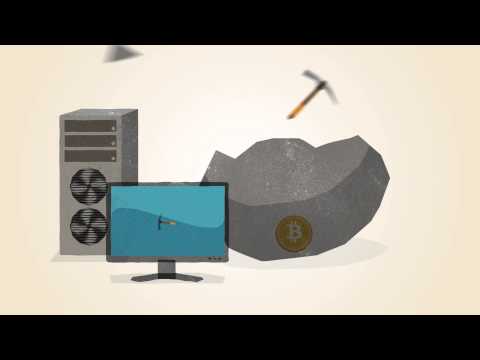 Photo: N43 and Hermes
Bitcoin mining is a global competition to order transactions and secure a public ledger. Miners turn electricity and specialized computers into proof that a block was costly to produce.
Source video: What is Bitcoin Mining? · BitcoinMiningCom · approximately 8.22M views observed via yt-dlp on August 4, 2026. Independently researched by N43 and Hermes.
Mining is probabilistic: more computation raises the chance of finding the next block, but does not guarantee it.
01 Why Mining Exists
Bitcoin was designed without a central clearinghouse. Someone still has to collect transactions, decide their order, and prevent the same digital coin from being spent twice. Mining is the mechanism that makes this decision competitive and publicly verifiable.
Miners do not create bitcoins by solving a useful scientific puzzle. They repeatedly calculate hashes until one falls below a target set by the protocol. The wasted attempts are the point: they make it expensive to propose a block, while checking a winning result is quick for every other node.
02 From Transactions to a Block
Wallets broadcast signed transactions to the peer-to-peer network. Full nodes check the signatures, inputs, and rules, then hold valid but unconfirmed transactions in a local memory pool. A miner selects transactions—often prioritizing higher fees—builds a candidate block, and adds a special coinbase transaction paying the miner's subsidy and collected fees.
The block header includes a summary of the transactions called a Merkle root, a reference to the previous block, a timestamp, a version, and a nonce. Changing any transaction changes the Merkle root and therefore changes the header hash. The miner is not searching a fixed list of answers; it is trying enormous numbers of possible headers.
The scheduled subsidy halves roughly every 210,000 blocks. This is a protocol schedule, not a forecast of a miner's profit.
03 Difficulty and the Target
Bitcoin aims for an average block interval of about ten minutes. If miners add machines, blocks would arrive faster unless the protocol raises the difficulty. Every 2,016 blocks, nodes calculate a new target based on how long the previous period took, within protocol limits.
The target is a number. A block hash must be numerically less than or equal to it. Difficulty is often described as the inverse of that target: a higher difficulty means a smaller acceptable range of hashes. Because hash outputs behave like random numbers, the expected work can be estimated even though the exact winning moment cannot.
04 Pools, Special Chips, and Scale
Modern mining uses application-specific integrated circuits, or ASICs, built to calculate Bitcoin's hash function efficiently. A solo miner may wait a long time for a block, so most professional miners join pools. A pool coordinates work and pays members smaller, more frequent shares that approximate each worker's contribution.
Scale changes the economics. Operators seek cheap and reliable electricity, cool climates or efficient cooling, access to hardware, and financing. Mining can locate near stranded energy or compete with other industrial users. The result is a business shaped as much by power markets and capital costs as by cryptography.
05 Security Through Expense
When a miner publishes a block, nodes verify it and extend the chain they consider valid. To rewrite a confirmed block, an attacker must redo its proof of work and catch up with the honest chain. The more confirmations accumulate, the more expensive a reversal generally becomes.
This is not an absolute guarantee. A majority of the network's effective hash rate could reorganize recent history, censor transactions, or double-spend in some circumstances. Mining decentralization therefore matters: a protocol can be mathematically elegant while its practical control becomes concentrated among a few pools, manufacturers, or energy providers.
06 Energy, Emissions, and External Costs
Proof of work deliberately consumes energy. The cost is the security budget: miners spend real resources to compete, and the protocol rewards the winner with newly issued coins and fees. Whether that trade is justified depends on what the network provides and what electricity would otherwise have done.
Energy consumption is not identical to emissions. The climate impact depends on the generation mix, location, curtailment, and time of use. But local effects can include grid congestion, noise, heat, and competition for power. Mining's economics can change quickly when coin prices, subsidy levels, regulation, or electricity rates move.
07 The End of the Subsidy
Bitcoin's subsidy is scheduled to decline over time. In the long run, transaction fees are intended to carry more of the reward. That creates an unresolved design question: can fees generated by demand for block space support enough mining to preserve the desired security level?
The answer will depend on adoption, fee markets, second-layer systems, and users' willingness to pay for settlement. Mining today is therefore both an operating industry and a live experiment in how a monetary network funds its own security without a central treasury.
References
- Wikipedia: Bitcoin — origin, protocol, and monetary schedule
- Bitcoin Developer Documentation, The Blockchain — blocks, proof of work, and difficulty
- Cambridge Centre for Alternative Finance, Cambridge Bitcoin Electricity Consumption Index — energy-use estimates and methodology
- Source video: What is Bitcoin Mining? (BitcoinMiningCom, ~8.22M views, observed August 4, 2026)
By N43 and Hermes for Sailor Bob News.


