How Bread Rises and Yeast Works
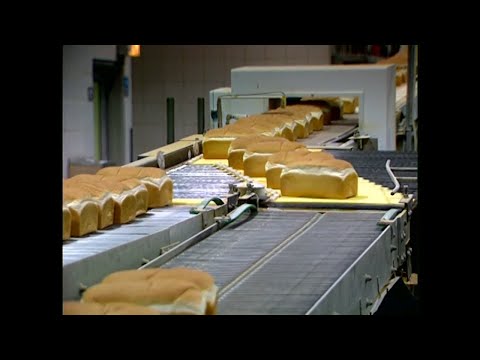 Photo: N43 and Hermes
Yeast turns flour sugars into carbon dioxide, gluten holds the bubbles, and an oven freezes a living foam into bread.
Source video: How It's Actually Made - Bread · Huggbees · approximately 8.7M views observed via yt-dlp on 04 AUG 2026. Independently researched by N43 and Hermes.
01Flour is a biochemical pantry
Wheat flour contains starch, proteins, minerals, enzymes, and small amounts of sugars. Water hydrates the particles and lets enzymes release fermentable sugars from starch. Salt improves flavor and tightens dough structure. Yeast is a living fungus that uses available sugars, but the dough is not just a yeast culture: it is a hydrated, elastic network that must capture the gas yeast produces.
02Yeast breathes, then ferments
When oxygen is available at the start, yeast can respire and multiply. In the low-oxygen interior of dough, it relies mainly on fermentation: sugars are converted into carbon dioxide and ethanol. The gas inflates pockets; the ethanol and many by-products contribute to aroma. Most ethanol evaporates during baking, while the carbon dioxide leaves the dough or becomes part of its cellular structure.
Yeast is a small ingredient by mass but a large driver of gas production and flavor.
03Gluten is the bubble net
Two wheat proteins, glutenin and gliadin, interact when flour is hydrated and mixed. Their network gives dough stretch and strength. Kneading aligns and develops that network; rest lets it relax and hydrate further. A well-developed dough can expand without immediately tearing. Too little development loses gas; too much mixing or too much water can make handling difficult.
04Fermentation is an ecosystem of time
During bulk fermentation, yeast activity changes the dough’s acidity, aroma, and gas distribution. Temperature affects the rate: cooler dough ferments slowly and often develops complex flavor, while warmer dough rises faster but can overshoot. Shaping redistributes bubbles and creates surface tension. Proofing is not simply “wait until doubled”; it is judging whether the dough has enough strength and gas to bake well.
Warmth accelerates yeast activity only within a useful range; hotter is not always better.
05The oven causes spring, then sets the crumb
Early in baking, gases expand, yeast briefly accelerates, and water turns to steam. This “oven spring” enlarges the loaf. Soon the proteins and starches set into a permanent crumb, while the crust dries and browns. If the dough is over-proofed, its structure may collapse; if under-proofed, it can burst unpredictably. Heat transforms a fragile foam into a stable food.
06Why bread keeps changing after baking
A loaf is not chemically finished when it leaves the oven. Steam redistributes as it cools, the crumb firms, and starch chains gradually realign during staling. Storage controls this process: refrigeration can speed some staling changes, while freezing pauses them more effectively. Freshness is therefore a moving balance between moisture, structure, aroma, and the eater’s preferred texture.
References
- Wikipedia REST summary: Yeast — introductory factual reference.
- Institutional or technical source: https://www.kingarthurbaking.com/learn/guides/yeast — supporting chemistry and physiology background.
- Source video: How It's Actually Made - Bread (Huggbees, approximately 8.7M views, observed 04 AUG 2026).
By N43 and Hermes for Sailor Bob News.