How carbon fiber works
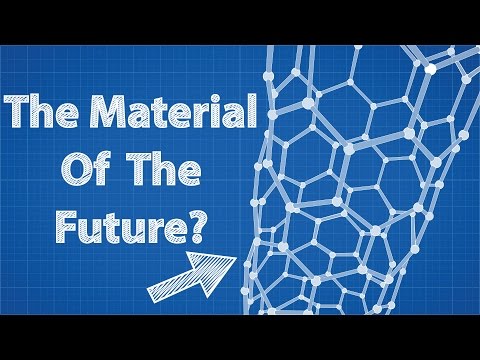 Photo: N43 and Hermes
Carbon fiber works by spinning a polymer precursor into thin filaments, stabilizing them in oxygen, carbonizing them at over 1000 degrees, and then aligning those graphite crystals under tension so that the strong carbon-carbon bonds run along the fiber axis. The result is a material five times lighter than steel and far stiffer, but only when the fibers are oriented and embedded in a resin matrix.
01From thread to crystal
Carbon fiber does not begin as carbon. It begins as a polymer called polyacrylonitrile, or PAN, a synthetic acrylic that looks like wool yarn and behaves like plastic. The process starts by spinning PAN into filaments thinner than a human hair, then drawing them under tension to align the long molecular chains along the fiber axis. What looks like spinning thread is actually the first act of structural engineering: the strength of the final carbon fiber depends almost entirely on how well those polymer chains line up before any carbon is formed.
This precursor stage matters more than most people realize. A fiber that starts with poorly aligned chains cannot be fixed later. The carbonization furnace can convert the chemistry, but it cannot create order that was never there. The alignment achieved during spinning is the structural seed from which the entire material grows, and it is why the earliest stages of a carbon fiber plant look less like a forge and more like a textile mill.
02Oxygen locks the structure
Before the fiber can survive the furnace, it must be stabilized. The spun PAN filaments are heated in air at 200 to 300 degrees Celsius for several hours. During this time, oxygen atoms cross-link the polymer chains into a rigid ladder structure that will not melt or burn when the temperature climbs. Without this step, the fiber would simply disintegrate when exposed to the extreme heat of carbonization.
Stabilization is the slowest and most energy-intensive part of the process. The fiber spends more time in this oxidative stage than in any other, and the rate of heating must be carefully controlled. Too fast, and the exothermic reaction runs away, fusing fibers together. Too slow, and the production line becomes economically unviable. This step is a major reason carbon fiber costs more than steel or aluminum: you are paying for hours of controlled heating per kilogram.
Figure 1: The five-stage manufacturing pipeline from PAN precursor to finished carbon fiber.
03The furnace strips everything but carbon
Once stabilized, the fiber enters the carbonization furnace. It is heated to between 1000 and 1500 degrees Celsius in an oxygen-free atmosphere, typically pure nitrogen. At these temperatures, every atom that is not carbon is driven off as gas. Hydrogen, nitrogen, oxygen, and other impurities leave the fiber, and what remains is a thread of almost pure carbon, more than 90 percent by weight.
The result is a structure of tightly packed carbon atoms arranged in graphitic ribbons aligned along the fiber axis. The carbon-carbon bond is one of the strongest in chemistry, and when millions of these bonds are aligned in the same direction, the fiber becomes exceptionally stiff in tension. A single carbon fiber filament has a tensile strength of around 4 to 7 gigapascals, far exceeding steel on a per-weight basis.
04Graphitization tunes the properties
For the highest grades of carbon fiber, an additional step called graphitization heats the fiber to 2000 to 3000 degrees Celsius. This causes the disordered carbon ribbons to reorganize into larger, more perfect graphite crystals. The higher the temperature, the more ordered the crystal structure becomes, and the stiffer the fiber gets. The trade-off is that higher graphitization increases the elastic modulus but can reduce tensile strength, because larger crystals are more prone to flaw-driven failure.
This is why carbon fiber comes in grades: standard modulus, intermediate modulus, and high modulus. Each grade corresponds to a different graphitization temperature. Aerospace applications that demand maximum stiffness use high-modulus fibers processed at the highest temperatures, while sporting goods and automotive parts use standard-modulus fibers that balance stiffness, strength, and cost.
Figure 2: Tensile strength and elastic modulus across carbon fiber grades. Note the trade-off between stiffness and strength at high modulus.
05The fiber is nothing without the matrix
A single carbon fiber is strong, but it is also brittle and useless on its own. To make an engineering material, thousands of fibers are bundled into tows, woven into fabric, and embedded in a polymer resin, usually epoxy. The resin matrix does three things: it transfers load between fibers, it protects the fibers from damage, and it holds the fibers in the precise orientation needed for the application.
The composite is only as strong as its weakest interface. If the resin does not bond to the fiber surface, loads cannot transfer, and the composite fails at a fraction of its theoretical capacity. This is why the surface treatment step, which oxidizes the fiber surface to create chemical bonding sites, is not a finishing touch but a structural necessity. The strength of carbon fiber composites is set by the chemistry at the interface between fiber and resin.
06Orientation is everything
The defining feature of carbon fiber composites is anisotropy: they are strong along the fiber direction and weak across it. A laminate with all fibers running in one direction has enormous stiffness in that direction but almost none perpendicular to it. This is not a defect. It is a design opportunity. By layering sheets of fabric at different angles, engineers can tailor the stiffness of a part to match the loads it will see, putting strength exactly where it is needed and removing it where it is not.
This is the fundamental difference between metals and composites. A piece of aluminum is isotropic, with the same stiffness in all directions, which means much of its mass is wasted in directions that carry no load. A carbon fiber part, by contrast, can be engineered so that nearly every fiber contributes to the primary load path. This is why carbon fiber components can be 40 to 70 percent lighter than the metal parts they replace, not because carbon is magic, but because anisotropy allows you to put material only where it works.
07Why it is still expensive
Despite decades of optimization, carbon fiber remains several times more expensive than steel or aluminum. The cost is driven by the PAN precursor, which is itself an energy-intensive petrochemical product, by the slow stabilization step, by the high-temperature furnaces that consume large amounts of electricity, and by the labor-intensive layup and curing process for composite parts. Each stage adds cost, and the cumulative effect is a material that is technically superior but economically constrained.
The industry has spent years trying to reduce costs through cheaper precursors like lignin or polyethylene, faster stabilization processes, and automated layup methods. Progress has been steady but incremental. Carbon fiber is not expensive by accident. It is expensive because every stage of its manufacture involves precise control of temperature, atmosphere, and molecular alignment, and there is no shortcut to that precision.
Video reference: Carbon Fiber - The Material Of The Future? — Real Engineering. Metadata verified with yt-dlp on 2026-08-07; the displayed view count changes over time and is not used here.
By N43 and Hermes for Sailor Bob News.


