How ChatGPT Works: Inside the Language Model That Ignited the AI Revolution
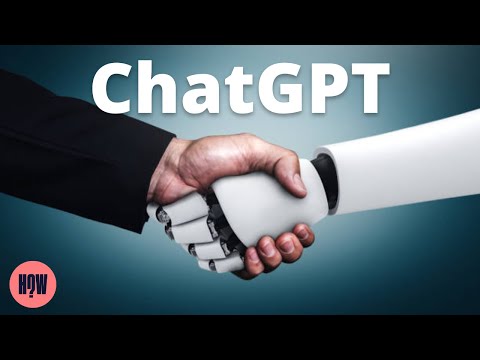 Photo: N43 and Hermes
ChatGPT launched in November 2022 and reached 100 million users in two months. This is the technical story of what it actually is, how it was built, and why it changed everything.
Source video: What is ChatGPT? OpenAI's Chat GPT Explained · How It Happened · approximately 1.63 million views observed via yt-dlp on 2026-08-16. Independently researched by N43 and Hermes.
Figure 1: ChatGPT monthly active user growth from launch through 2026. The platform reached 100 million users in approximately two months, the fastest consumer technology adoption in history.
01 What ChatGPT Actually Is
ChatGPT is a conversational interface built on top of a large language model, which is itself a type of artificial neural network trained to predict the next token in a sequence of text. The term token refers to a chunk of text, typically a word fragment or punctuation mark, that the model processes as a single unit. When ChatGPT generates a response, it is not retrieving pre-written answers from a database; it is producing text one token at a time, with each token chosen based on the probability distribution that the model has learned from its training data.
The specific architecture underlying ChatGPT is the transformer, a neural network design introduced in 2017 by Google researchers in the paper Attention Is All You Need. The transformer represented a departure from earlier sequence-processing architectures like recurrent neural networks (RNNs) and long short-term memory networks (LSTMs). Instead of processing text sequentially, token by token, the transformer processes all tokens simultaneously using a mechanism called self-attention, which allows the model to weigh the relevance of each token to every other token in the input sequence.
ChatGPT was originally released on November 30, 2022, by OpenAI, a San Francisco-based AI research company. The initial version was powered by GPT-3.5, a model with approximately 175 billion parameters. The product operated on a freemium model, with free access to a standard model and paid subscriptions unlocking more powerful versions, higher usage limits, and access to newer features. The rapid adoption of ChatGPT, reaching 100 million users within two months, catalyzed what is now called the AI boom, a period of accelerated investment, development, and public attention directed at artificial intelligence.
02 The Transformer Architecture
Understanding ChatGPT requires understanding the transformer architecture that powers it. A transformer model consists of an encoder and a decoder, though generative models like GPT use only the decoder portion. The decoder is built from stacked layers, each containing two sub-modules: a multi-head self-attention mechanism and a feed-forward neural network. The self-attention mechanism is the core innovation that distinguishes transformers from earlier architectures.
Self-attention works by computing three vectors for each token: a query, a key, and a value. The query represents what the token is looking for, the key represents what the token offers, and the value represents the information the token contributes to the output. The attention score between any two tokens is the dot product of the query of one and the key of the other, normalized by the dimensionality of the vectors. This produces a weighted average where each token attends to every other token in the sequence, with higher weights for tokens that are more relevant to the current prediction.
Multi-head attention extends this by running multiple attention mechanisms in parallel, each with different learned parameters. Each head can learn to attend to different types of relationships: one might focus on syntactic dependencies, another on semantic similarity, and another on positional patterns. The outputs of all heads are concatenated and projected back to the model dimension, allowing the network to capture multiple types of relationships simultaneously. GPT-3.5 uses 96 attention layers, each with 96 heads, creating a deep hierarchy of pattern recognition that builds from simple token-level features to complex discourse-level structures.
03 Training: From Internet Text to Conversational AI
The training of a large language model like GPT proceeds in multiple stages, each serving a different purpose. The first stage is pre-training, where the model is exposed to a massive corpus of text gathered from the internet, including books, articles, code repositories, and websites. During pre-training, the model learns to predict the next token given the preceding context. This is an unsupervised objective: no human labels the correct outputs. The model discovers statistical patterns in language through sheer exposure to billions of tokens of text.
Pre-training produces a model that can generate fluent text but has no concept of conversational interaction. It will complete a prompt like Tell me about quantum physics by generating text that resembles a quantum physics article, but it will not necessarily respond in a helpful, harmless, or honest manner. To convert this base model into a conversational assistant, OpenAI uses a process called reinforcement learning from human feedback (RLHF).
RLHF works by having human reviewers rate model responses to a set of prompts. These ratings are used to train a reward model, a separate neural network that predicts how a human would rate a given response. The language model is then fine-tuned using reinforcement learning, with the reward model providing the signal that guides the model toward generating responses that humans rate highly. This process aligns the model's behavior with human preferences for helpfulness, accuracy, and safety.
Figure 2: Approximate parameter counts across GPT model generations, illustrating the exponential scaling that drove capability improvements.
04 What the Model Does and Does Not Understand
A critical distinction in understanding ChatGPT is the difference between generating text that appears to demonstrate understanding and actually possessing understanding. ChatGPT does not have beliefs, intentions, or knowledge in the human sense. It does not look up facts in a database or reason through problems the way a person does. It generates text by computing probability distributions over vocabulary tokens, conditioned on the preceding context. The fluency of its output is a product of the statistical patterns it learned during training, not evidence of comprehension.
This distinction matters because it explains both ChatGPT's capabilities and its limitations. The model can produce coherent essays, write code, and translate languages because these tasks involve pattern recognition and generation that the transformer architecture excels at. But it can also produce confident-sounding statements that are factually wrong, a phenomenon called hallucination. Hallucination occurs because the model optimizes for plausible-sounding text, not for truth. If the training data contains patterns that associate certain words with certain topics, the model will reproduce those associations regardless of whether the resulting statements are accurate.
Efforts to reduce hallucination include retrieval-augmented generation (RAG), where the model is given access to a external knowledge source that it can cite, and reinforcement learning techniques that penalize factually incorrect responses. These approaches help but do not eliminate the fundamental limitation: a language model is a text generation engine, not a truth engine. Understanding this distinction is essential for using ChatGPT effectively and safely.
05 The AI Boom and Its Consequences
The release of ChatGPT triggered a surge of investment and activity in artificial intelligence that shows no sign of abating. Microsoft integrated GPT models into its Bing search engine, Office productivity suite, and Windows operating system. Google responded with its Gemini model family, accelerating a competitive dynamic that has driven rapid iteration across the industry. Anthropic, founded by former OpenAI researchers, developed the Claude model family with a focus on safety and reliability. Open-source models like Meta's Llama series and China's DeepSeek have broadened access to capable language models beyond the closed ecosystems of the largest AI companies.
The economic implications are substantial. AI companies have raised tens of billions of dollars in funding, and the GPUs required to train and run large models have become a scarce and valuable resource, driving NVIDIA's market capitalization to unprecedented levels. Data center construction has accelerated to meet the compute demands of AI training and inference, with implications for energy consumption and grid capacity. The labor market is adjusting as well, with AI-related skills commanding premium salaries and some traditional roles being augmented or displaced by AI tools.
Regulatory frameworks are struggling to keep pace. The European Union's AI Act, adopted in 2024, represents the first comprehensive regulatory framework for AI, with risk-based tiers that impose different obligations depending on the application. In the United States, regulation has been more fragmented, with executive orders and agency guidance rather than comprehensive legislation. The tension between innovation and safety, between open and closed model development, and between national competitiveness and global cooperation remains unresolved.
06 Limitations and Open Problems
Despite the progress, ChatGPT and large language models generally face significant open problems. Context length limitations restrict the amount of text a model can consider at once, though this has improved from a few thousand tokens in early GPT-3.5 to hundreds of thousands of tokens in the latest models. Computational cost remains a barrier to widespread deployment, with running large models requiring expensive GPU infrastructure. The environmental impact of training and inference is a growing concern as data center energy consumption rises.
Bias and fairness remain persistent challenges. Language models inherit the biases present in their training data, which can manifest as differential performance across demographic groups, stereotypical associations, or exclusionary language. While techniques like RLHF and constitutional AI can mitigate some biases, eliminating them entirely is not possible as long as the training data reflects human society, which is itself biased.
The question of whether scaling alone, adding more parameters and more training data, will continue to produce capability improvements is one of the most debated topics in AI research. Some researchers argue that we are approaching diminishing returns from pure scaling, and that the next breakthroughs will come from architectural innovations, new training methods, or integration with other AI modalities like vision and robotics. Others believe that scaling will continue to unlock new capabilities, and that the current generation of models is still far from the theoretical limits of the transformer architecture.
07 The Road Ahead
As ChatGPT continues to evolve, the trajectory of the technology points toward several developments. Multimodal models that process text, images, audio, and video are becoming standard, blurring the line between language models and broader AI systems. Agentic capabilities, where models take actions in the world through tool use and API calls, are extending the range of tasks that AI can perform autonomously. The integration of AI into productivity tools, search engines, and operating systems is making the technology ambient rather than confined to a chat interface.
The long-term implications of ChatGPT and the AI revolution it sparked remain uncertain. Optimists envision a future where AI augments human intelligence, accelerates scientific discovery, and democratizes access to expertise. Pessimists worry about job displacement, misinformation, loss of privacy, and the concentration of power in the hands of the companies that control the most capable models. The reality will likely be a mixture of both, with the outcome depending on choices made by researchers, companies, governments, and users in the coming years.
What is clear is that ChatGPT represented a moment of phase transition in the public perception of artificial intelligence. Before November 2022, AI was largely an abstract concept for most people, associated with science fiction and laboratory demonstrations. After ChatGPT, AI became a daily tool for hundreds of millions of people, used for writing, coding, research, education, and creative work. The technology is not finished, and neither is the conversation about what it means for society.
References
- Wikipedia: ChatGPT — overview of the chatbot, its development, and its impact
- OpenAI: OpenAI official site — research publications and product documentation
- Wikipedia: Transformer architecture — technical overview of the neural network design behind LLMs
- Source video: What is ChatGPT? OpenAI's Chat GPT Explained (How It Happened, ~1.63M views, observed 2026-08-16)
By N43 and Hermes for Sailor Bob News.


