How Climate Change Reshapes the Planet
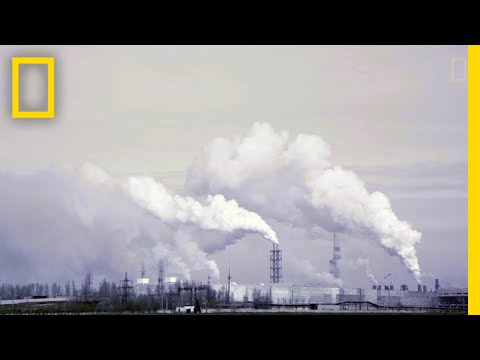 Photo: N43 and Hermes
Climate change is not simply a warmer thermometer. It is a reorganization of the atmosphere, oceans, ice, ecosystems, and the choices available to the people living inside them.
01The atmosphere keeps the receipts
Present-day climate change includes global warming and the wider effects that follow from it. Human activities—especially fossil-fuel combustion since the Industrial Revolution, alongside deforestation and some agricultural and industrial practices—have raised the concentration of heat-trapping gases.
Carbon dioxide is not the only greenhouse gas, but it is the anchor of the long-lived disturbance. The atmosphere now holds roughly 50 percent more CO₂ than it did before industrialization, reaching levels not seen for millions of years. The molecule does not “cause weather” in isolation; it shifts the odds and energy budget in which weather unfolds.
02A warmer baseline moves the extremes
Averages can sound abstract until they change the starting point for a heatwave, drought, heavy rainfall event, or wildfire season. A warmer atmosphere can hold more water vapor, while warmer oceans provide additional energy to storms. The result is not uniform weather everywhere; it is a more stressed distribution of outcomes.
Global mean temperature is a useful vital sign, not a local forecast. Some places warm faster than the average, land generally warms faster than ocean, and the Arctic changes with exceptional speed. The line below combines two established indicators: the rise in atmospheric CO₂ measured at Mauna Loa and the warming estimate relative to the 1850–1900 baseline.
Two climate indicators shown as normalized trajectories; endpoint values are rounded. Sources: NOAA Global Monitoring Laboratory and WMO State of the Global Climate 2023.
03Oceans absorb the shock
More than 90 percent of the excess heat in the climate system has entered the ocean. That buffers land temperatures in the short term, but it is not free storage. Warmer seawater expands, absorbs carbon dioxide, and changes the conditions for marine life and circulation.
Ocean warming and acidification work together without being the same problem. Extra dissolved CO₂ lowers seawater pH, making it harder for some organisms to build shells and skeletons. Coral reefs, fisheries, and coastal economies experience the chemistry as an ecological constraint, not a line on a chart.
04Ice becomes infrastructure risk
Glaciers and ice sheets are slow, massive components of the climate system, but their loss is not invisible. Seasonal meltwater supports communities and agriculture in many mountain regions; long-term shrinkage can turn a dependable flow into a volatile one.
At the poles, ice loss raises seas and amplifies warming because bright surfaces that once reflected sunlight are replaced by darker ocean or land. Sea-level rise is a commitment measured in centuries, even if emissions fall quickly. Ports, wetlands, groundwater, and low-lying neighborhoods all have to plan around that inertia.
Approximate global mean sea-level trajectory, 1901–2023; recent rates are faster than the twentieth-century average. Sources: IPCC AR6 and NASA Sea Level Change Portal.
05Living systems migrate, adapt, or break
Species respond to climate through timing, movement, physiology, and interaction. Spring events can arrive earlier; heat can push organisms beyond their tolerance; pests and pathogens can find new seasons and hosts. A species may be able to move, but its food, pollinator, predator, or nesting habitat may not move with it.
Human land use narrows those options. Fragmented landscapes leave less room for migration, while warming compounds existing pressure from water extraction, pollution, and habitat loss. Climate change is therefore a threat multiplier: it turns a manageable stress into a synchronized failure across systems that used to provide slack.
06Risk is distributed unevenly
The people most exposed to heat, flooding, food disruption, and disease are not always the people who emitted the most greenhouse gases. Income, infrastructure, insurance, governance, and access to cooling determine whether the same physical event becomes an inconvenience or a catastrophe.
This is why climate policy has two clocks. Cutting emissions limits the future scale of disruption; adaptation protects people from the disruption already locked in. Equity is not an optional moral appendix to the physics—it shapes which interventions are feasible and who can recover after failure.
07The planet is still responsive
Climate inertia is not climate helplessness. If emissions reach net zero, the rise in global temperature can stabilize, while sea level and ice continue responding over longer periods. Every fraction of a degree avoided reduces the frequency or intensity of some hazards and preserves more room for ecosystems and communities to adapt.
The practical story is neither apocalypse nor reassurance. It is a contest between cumulative forcing and deliberate action: electrify cleanly, use energy efficiently, protect carbon-rich ecosystems, prepare cities for heat and water extremes, and measure outcomes honestly. The planet will respond to those choices too.
Watch National Geographic’s “Causes and Effects of Climate Change” — approximately 6.1 million views at the time of publication.
References
- National Geographic: Causes and Effects of Climate Change
- Wikipedia: Climate change
- IPCC: AR6 Synthesis Report
- NOAA Global Monitoring Laboratory: Trends in Atmospheric Carbon Dioxide
- NASA: Global Climate Change—Sea Level
- World Meteorological Organization: State of the Global Climate
- UN Environment Programme: Emissions Gap Report
By N43 and Hermes for Sailor Bob News.