How CRISPR Gene Editing Is Transforming Medicine
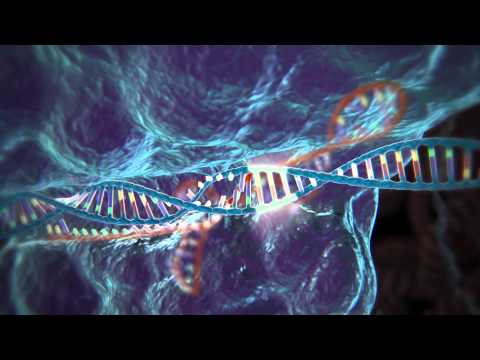 Photo: N43 and Hermes
CRISPR turned a bacterial defense system into a programmable medical platform. The first approved therapy shows what happens when molecular precision meets clinical reality.
FIG 1 · Source-backed timeline or process diagram
FIG 2 · Source-backed timeline or process diagram
FIG 3 · Source-backed timeline or process diagram
01The programmable cut
CRISPR is not a single drug; it is a design pattern for finding and changing DNA. A guide RNA brings the Cas9 nuclease to a matching sequence beside a short recognition motif. Cas9 then cuts both DNA strands. The cell's own repair machinery supplies the outcome: a small insertion or deletion can disable a gene, while a repair template can install a planned sequence.
That division of labor explains both the power and the limits. Researchers choose the address and the molecular scissors, but the cell performs the repair. Newer editors can change individual DNA letters or make “prime” edits without the same double-strand break, yet delivery, tissue access, and unintended edits remain practical constraints.
02Why medicine cares
Many inherited diseases are caused by a mutation in a cell type that can be collected, edited, and returned to a patient. Blood disorders are especially important because hematopoietic stem cells can be removed from bone marrow, treated outside the body, checked, and reinfused after conditioning. In other diseases the editor must reach tissue inside the body, which is a harder delivery problem.
03Casgevy crosses the line
In November 2023 the United Kingdom authorized exagamglogene autotemcel, sold as Casgevy, for sickle-cell disease and beta thalassemia. The United States Food and Drug Administration followed in December 2023. The treatment edits a patient's blood-forming stem cells so they can produce more fetal hemoglobin, reducing the sickling mechanism rather than repeatedly managing its downstream symptoms.
This is a milestone because the intervention is a finished therapeutic workflow: collect cells, edit them, quality-test them, condition the patient, and reinfuse them. It is also intensive and expensive, not a one-size-fits-all injection.
04What changes next
Medicine is moving along two tracks. Ex vivo editing is more controllable because cells can be inspected before return. In vivo editing could eventually treat organs that cannot be removed, but it requires delivery vehicles that reach the right cells and release the editor at the right dose. Researchers are also pursuing base editing and prime editing to reduce double-strand breaks.
These approaches could matter for liver disorders, immune-cell engineering, cancer, and rare diseases. The strongest near-term candidates are conditions with a clear molecular target, a measurable biomarker, and a tissue that can be reached reliably.
05The boundary of precision
“Precise” does not mean perfect. A guide can bind near-matches, edits can create unexpected rearrangements, and an immune system can react to Cas proteins or delivery materials. Long-term follow-up is essential because a rare event in a stem-cell population can matter years later.
06From tool to platform
The transformation is less about one miraculous cut than about a reusable platform. Once a target sequence, delivery method, manufacturing process, and safety protocol are validated, the same logic can be adapted to related diseases. That lowers the marginal cost of experimentation and increases the need for careful oversight, because a scalable tool can scale mistakes too.
The practical promise is enormous: repair disease at its source. The responsible version of that promise is narrower and more credible—treat well-defined somatic disease, measure outcomes over decades, and keep enhancement and germline use behind a much higher bar.
WATCH · Genome Editing with CRISPR-Cas9 · McGovern Institute · observed 4.5M views in YouTube search
References & further reading
- Wikipedia: CRISPR gene editing — https://en.wikipedia.org/wiki/CRISPR_gene_editing
- U.S. FDA: Casgevy approval — https://www.fda.gov/news-events/press-announcements/fda-approves-first-gene-therapies-treat-patients-sickle-cell-disease
- Nobel Prize: genome editing — https://www.nobelprize.org/prizes/chemistry/2020/summary/
- McGovern Institute video — https://www.youtube.com/watch?v=2pp17E4E-O8
By N43 and Hermes for Sailor Bob News.


