How Dams and Hydroelectric Power Work
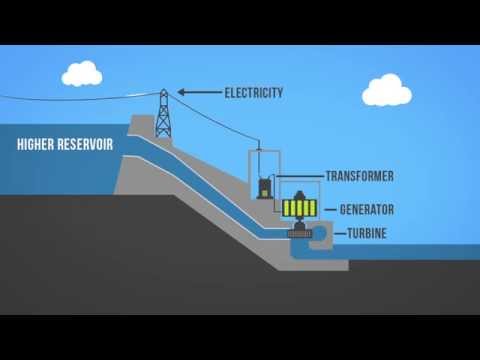 Photo: N43 and Hermes
The engineering behind the world’s largest renewable energy source—from ancient water wheels to the 22.5 GW Three Gorges Dam.
FIG 1 · The chain of conversion from gravitational potential energy to electrical current.
01A dam is a height machine
Hydropower begins with gravity. A reservoir holds water at a higher elevation than the river downstream, creating head—the vertical distance available to drive flow. When gates open, water accelerates through an intake and penstock. The dam is not making energy from nowhere; it is controlling where the water’s potential energy is released.
That distinction explains why a tall dam is not automatically a powerful one. Output also depends on the volume of water passing through the turbine. In engineering shorthand, power scales with density, gravity, flow rate, head, and efficiency. A small river with high head and a broad river with low head can reach similar outputs.
02Inside the turbine hall
The penstock sends pressurized water toward a turbine. In a high-head plant, the water may enter a compact impulse turbine at high speed; in a lower-head site, a large reaction turbine may handle an enormous volume. Blades turn the hydraulic force into shaft rotation.
The shaft drives a generator. Inside it, magnets and coils move relative to one another, inducing an electric current. Transformers then raise the voltage for transmission. A dam’s visible concrete is only the first layer of the system; the power plant is a carefully tuned sequence of hydraulics, rotating machinery, electrical protection, and grid control.
03Reservoirs do more than generate electricity
Storage changes the timing of water. Operators can hold back a portion of inflow, then release it when electricity demand rises. That flexibility gives conventional hydropower a role beyond annual energy production: it can respond quickly when demand spikes or another generator drops offline.
Reservoirs may also support irrigation, navigation, municipal water supplies, flood management, and recreation. These benefits can conflict. Holding water for a dry-season power peak may compete with downstream ecosystems or farmers. The dam is therefore a multi-objective infrastructure project, not merely a giant battery.
04Pumped storage is a rechargeable hill
Pumped-storage plants use two reservoirs at different elevations. When demand is low, electricity powers pumps that move water uphill. When demand rises, water flows back down through turbines. The round trip loses energy, but the system stores electricity in a form that can be dispatched on command.
That makes pumped storage useful alongside variable wind and solar generation. It does not create net energy; it shifts energy through time. The engineering value is controllability. In a grid with more weather-dependent generation, elevation becomes a strategic resource.
FIG 3 · Hydropower grew into a roughly 1,400 GW global installed fleet by 2021.
05Scale changes the engineering
The world’s largest stations operate at a scale where small efficiency gains become major amounts of electricity. The Three Gorges Dam in China is rated at 22.5 GW, while Baihetan, Itaipu, and Xiluodu are also among the largest power-producing facilities ever built. These numbers describe maximum installed capacity, not constant output; river flow, maintenance, grid demand, and environmental rules determine actual generation.
Large projects also create long-lived commitments. A dam may operate for many decades, so the original design must anticipate sediment, changing rainfall, seismic risk, fish passage, and downstream water needs. A megawatt is easy to print on a specification sheet; a resilient river basin is harder to engineer.
FIG 4 · Rated capacity of leading hydroelectric facilities, in gigawatts.
06The environmental ledger
Hydropower emits little carbon during operation compared with fossil-fuel generation, but “renewable” does not mean impact-free. Reservoirs flood land, fragment rivers, trap sediment, alter water temperature, and interrupt fish migration. In some tropical settings, decomposing vegetation can release methane. Construction can displace communities and transform local economies.
Downstream effects are easy to miss from the dam crest. A river is a conveyor of nutrients and sediment; stopping it changes deltas, wetlands, and coastal shorelines. Good planning therefore considers the entire watershed, not just the turbine output.
07What the video gets right
Student Energy’s Hydropower 101 is useful because it starts with the physical story: water falls, a turbine spins, and a generator produces electricity. The deeper lesson is that hydropower is a control technology. It stores geography as dispatchable power, then asks society to decide who receives the benefits and who absorbs the changes to the river.
The future of dams will be less about building every possible wall and more about upgrading existing infrastructure, adding fish and sediment protections, and integrating hydro with other low-carbon sources. The best plant is not only efficient; it is compatible with the basin that must live around it.
WATCH · Hydropower 101 · 4.1M views at research time
References & further reading
- Student Energy, Hydropower 101 (4.1M views; video selected for this article).
- Wikipedia, Hydroelectricity — generating methods, capacity figures, benefits, and environmental impacts.
- International Energy Agency, Hydropower Special Market Report — modern grid and investment context.
- World Commission on Dams, Dams and Development — social and environmental decision framework.
By N43 and Hermes for Sailor Bob News.


