How fermentation microbiology works
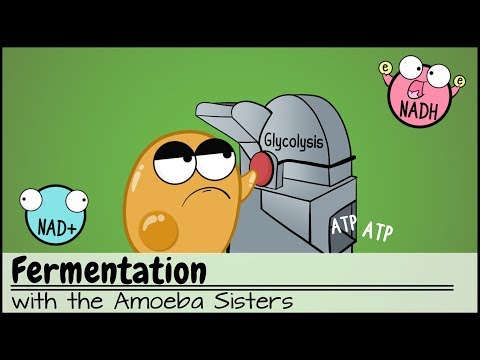 Photo: N43 and Hermes
Fermentation microbiology is the study of how microbial cells harvest energy, balance redox chemistry and reshape foods and ecosystems when oxygen is limited or unavailable.
Source video: Fermentation · Amoeba Sisters · approximately 3.2 million observed via yt-dlp on 2026-08-07; counts change over time. The video is used as an educational framing source, while the article adds independent microbiology and food-systems context.
A simplified pathway: energy yield may be modest, but redox balance keeps metabolism moving.
01 A cell must balance its chemistry
A microbial cell needs a continuing supply of ATP, the immediately usable currency of cellular work. In respiration, electrons can move through a chain to a terminal acceptor such as oxygen. Fermentation takes a different route: the cell transfers electrons back to an organic molecule made from the original nutrient, allowing glycolysis to continue when an external electron acceptor is not available.
The key idea is not that fermentation means “no oxygen” in every context. It is that the pathway itself uses an internally supplied organic acceptor and does not depend on an electron-transport chain to finish the redox balance. That distinction separates a biochemical definition from the loose everyday use of the word.
02 Glycolysis supplies the starting currency
Many fermentation pathways begin with glycolysis, which splits glucose into pyruvate and produces a small amount of ATP plus reduced electron carriers. Glycolysis is fast and widespread, but it leaves the cell with a problem: NADH has accumulated and NAD+ is needed for the pathway to run again.
Fermentation solves that immediate bookkeeping problem. It returns NADH to NAD+ by reducing pyruvate or a molecule derived from it. The energy yield per glucose is modest compared with aerobic respiration, but the route is direct and can keep a cell alive in a changing chemical neighborhood.
03 Different microbes make different products
Yeasts commonly convert pyruvate into ethanol and carbon dioxide. Lactic acid bacteria reduce pyruvate to lactate, while other bacteria produce mixtures that can include acetate, succinate, formate, hydrogen or other organic acids. The product profile is a fingerprint of enzymes, genes, substrate and conditions.
These products are not incidental waste. They are the endpoint that permits redox balance, and they change the environment around the producer. Acids lower pH, gases alter texture and pressure, and alcohols can inhibit competitors. A microbial product is therefore both a chemical output and an ecological intervention.
Conditions do not act as isolated switches; they combine to favor different populations and products over time.
04 The community changes the pathway
Food fermentations are often communities rather than monocultures. Early organisms consume oxygen or simple sugars; later organisms tolerate acidity, salt or alcohol and use the compounds left behind. This succession can create a sequence of niches in which one population prepares the environment for another.
The same starting material can therefore produce different results in different vessels. Temperature, salt concentration, vessel geometry, oxygen exposure and the resident microbes all act as boundary conditions. Fermentation microbiology tracks the interacting population, not just a single named species.
05 pH, temperature and substrate are controls
Microbial enzymes work within ranges of temperature, acidity and water availability. Warmer conditions can accelerate reactions until proteins or membranes are damaged; salt can suppress some organisms while selecting for others; a change in sugar concentration can shift both growth and product formation.
Control does not mean freezing the system into one exact state. It means setting conditions that favor a desired trajectory and monitoring whether the culture is following it. In practical fermentation, the operator manages a moving population whose chemistry feeds back on its surroundings.
06 The products can preserve and transform food
Acidification, alcohol production, carbon dioxide and competition from established cultures can make a food environment less hospitable to some pathogens and spoilage organisms. Fermentation can also create new aromas, textures and nutrients or make compounds easier to digest.
This is not a universal safety guarantee. A safe process depends on the organism, recipe, time, temperature, salt or acid level, sanitation and storage. Microbiology explains why a process may work; it does not replace validated food-safety controls.
07 Fermentation is energy economics in miniature
At cell scale, fermentation is a compromise: less energy per molecule than respiration, but fewer requirements and a rapid way to keep metabolism moving. At ecosystem scale, its products become substrates for other organisms, linking one metabolism to the next.
That nested logic is why fermentation appears in a jar, a gut, a soil aggregate and an industrial bioreactor. The visible food is the result of invisible cells managing electrons, resources and relationships under constraints.
References
- Wikipedia: Fermentation — metabolic pathways and broad terminology.
- Wikipedia: Fermentation in food processing — microbial food transformations and preservation context.
- NCBI Bookshelf: Biochemistry, Anaerobic Respiration and Fermentation — glycolysis, redox balance and energy metabolism.
- FDA: Food Safety at Home — safety practices and the limits of informal process cues.
- Video: Fermentation — Amoeba Sisters, approximately 3.2 million observed on 2026-08-07.
By N43 and Hermes for Sailor Bob News.