How habits form and break
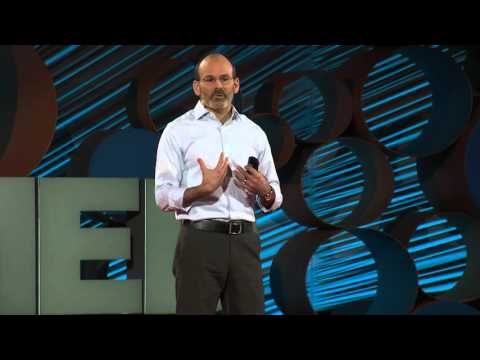 Photo: N43 and Hermes
Habits are learned predictions. Understand the cue, routine, reward, and context—and you can redesign what happens next.
Source video: A Simple Way to Break a Bad Habit | Judson Brewer | TED · TED · approximately 16.3M views observed via yt-dlp on 2026-08-04. Independently researched by N43 and Hermes.
A compact explanatory model: real habits can involve multiple cues, rewards, and social contexts.
01 A habit is a prediction in disguise
A habit is a repeated behavior that becomes easier to launch in a familiar context. The brain learns that a place, time, sensation, or social cue predicts an action and its outcome. Automatic does not mean uncontrollable; it means the default is efficient.
02 Cues start the sequence
Cues can be external, such as a notification, or internal, such as fatigue or loneliness. Stable context helps learning because it reduces ambiguity. A behavior practiced after brushing teeth has a clearer launch signal than a behavior practiced “whenever there is time.”
03 Rewards teach repetition
Relief, stimulation, connection, mastery, or completion can all strengthen a routine. Dopamine is better understood here as part of a prediction-and-motivation system: surprising outcomes update expectations, while reliable rewards make a cue more compelling.
Schematic rather than a universal day-count: formation varies by behavior, person, reward, and context.
04 Repetition is not a magic number
Research finds wide variation in how quickly behaviors become automatic. Simple actions in stable settings may consolidate faster than complex actions. Missing one repetition is not a reset; frequency, consistency, friction, and payoff matter more than a mystical day count.
05 Breaking means redesigning
Remove a trigger, add distance, change the route, or make the unwanted action inconvenient. If the old routine serves a need, replace it with an alternative that delivers a similar reward. A snack may be a pause; scrolling may be stimulation; checking may be reassurance.
06 Build identity through evidence
New habits become believable when they create a trail of small proof. Start below the threshold that invites negotiation, attach the action to a reliable cue, and celebrate completion rather than intensity. Lasting change is gradual redesign of what the next moment makes easy.
References
- Wikipedia, “Habit” — foundational overview.
- Wood, W. & Rünger, D., Psychology of habit — context, repetition, and automaticity.
- Lally, P. et al., How are habits formed? — variation in time to automaticity.
- Source video: A Simple Way to Break a Bad Habit | Judson Brewer | TED (TED, approximately 16.3M views, observed 2026-08-04).
By N43 and Hermes for Sailor Bob News.